







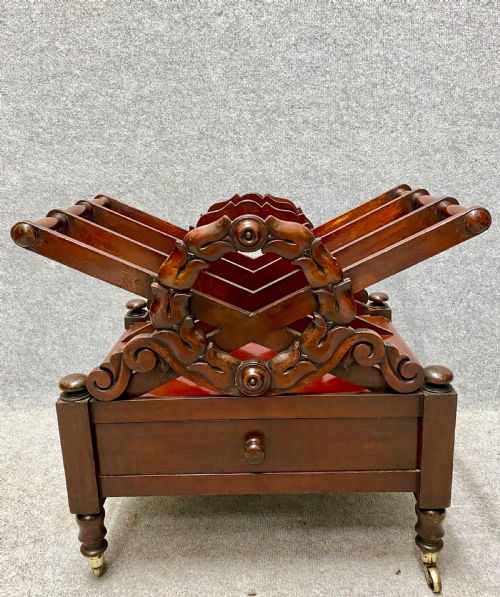
Carved Wooden Music Canterbury
A carved wooden music canterbury organises scores and sheets with multiple slatted partitions, uniting practical storage with handsome nineteenth-century cabinetmaking.
Carved Wooden Music Canterbury
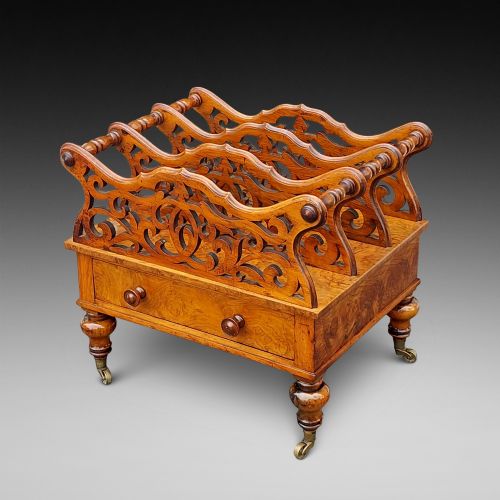
A carved wooden music canterbury is a low stand designed to hold sheet music, periodicals, and newspapers, typically featuring partitioned vertical sections above a low drawer. These pieces emerged to keep domestic sheet music orderly in nineteenth-century drawing rooms and parlours.
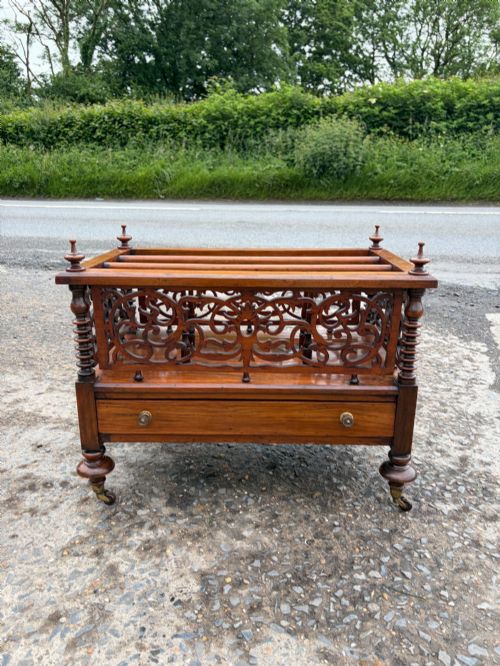
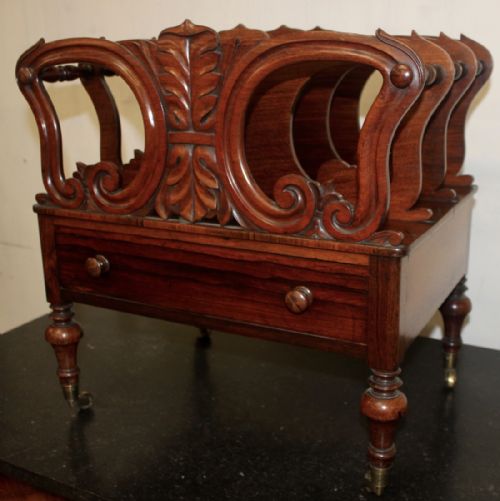
The versions most commonly met on this page date from the Victorian and Regency periods, rendered in rich timbers like mahogany, rosewood, and burr walnut. Many incorporate turned columns, pierced scroll divisions, and low castors for manoeuvrability across carpets.
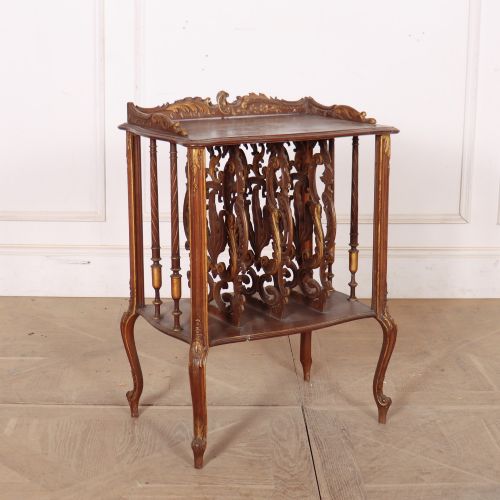
Makers occasionally combined the form with an occasional table or a small display shelf overhead, creating hybrid furniture pieces often termed canterbury whatnots. These dual-purpose items served families who needed both surface space and compartmented storage within compact rooms.
How they were made
Cabinetmakers constructed these stands using dense hardwoods such as mahogany, rosewood, and walnut, often selecting highly figured burr veneers for prominent exterior surfaces. Timber panels were shaped into serpentine forms or pierced with scrollwork partitions to create lightweight yet sturdy divisions.
Metal components like brass casters and ceramic or porcelain castor wheels allowed heavy timber stands to glide across floorboards without snagging. Decorative elements such as inlay, fretwork, and foliate carvings were executed by hand to distinguish finer parlour pieces from simpler utility racks.
Carved Wooden Music Canterbury Retail Price Guide 2026
Typical asking prices for carved wooden music canterbury among the pieces listed under this phrase on Sellingantiques today, from the lower quarter to the upper quarter. They describe what is for sale here now, not the wider market.
What varies in quality
The hierarchy of quality rests primarily on the choice of timber and the ambition of the carving. Finely figured burr walnut and rich rosewood sit at the upper end, accompanied by crisply executed foliate carving, pierced scrollwork, and delicate fretwork rather than plain flat panels.
Construction details also separate standard utility stands from bespoke workshop pieces. Integrated lower drawers with precise dovetailing, robust turned corner columns, and original brass or ceramic castors indicate superior original manufacture.
Henry Ogden & Son·Gillows of Lancaster·J.C.Loudon
The Carved Wooden Music Canterbury Glossary
- Canterbury
- A low stand with upright partitions designed to hold sheet music, folios, and newspapers. The name reportedly derives from an archbishop who commissioned an early rack of this type.
- Whatnot
- A set of open display shelves standing upon one another, frequently combined with a canterbury base during the nineteenth century. This hybrid format provided both vertical display space and lower compartment storage.
- Pierced scroll division
- An internal partition cut through in decorative curved patterns to separate sections of sheet music. This technique lightens the visual weight of dense timbers like mahogany and rosewood.
- Burr walnut
- A veneer sliced from the knotty growth of a walnut tree, yielding a swirling, highly decorative grain pattern. Cabinetmakers reserved this prized material for the top surfaces and drawer fronts of superior Victorian furniture.
Carved Wooden Music Canterbury: Frequently Asked Questions
What is a music canterbury used for?
These stands were built to hold folio volumes, sheet music, and periodicals upright within compartmented partitions. They kept drawing rooms tidy while keeping musical scores close to the piano.
Today, the vertical dividers work equally well for sorting vinyl records, magazines, and modern art books. Their low profile allows them to sit neatly beside sofas or desks.
How do I date a wooden canterbury?
Stylistic clues and timber choices help narrow down the decade of manufacture. Regency and William IV pieces often display clean rosewood or mahogany lines, whereas Victorian examples favour burr walnut, intricate fretwork, and inlaid details.
Hardware offers further guidance, as original brass castors, turned wooden knobs, and hand-cut dovetails inside drawers point firmly to nineteenth-century production methods.
Where should I place a canterbury at home?
Their traditional home was the Victorian drawing room, positioned near a piano or a reading chair. Their compact footprint makes them useful beside modern seating areas for storing daily reading materials.
Because many examples feature finished backs and decorative turning, they look effective placed freestanding rather than pushed strictly against a wall.
What timber was used for these pieces?
Cabinetmakers relied on durable hardwoods such as mahogany and rosewood during the early nineteenth century. By the Victorian era, figured walnut and burr walnut veneers became dominant choices for fashionable interiors.
Secondary woods like pine or oak were occasionally employed for internal drawer linings and hidden framework while the primary display surfaces remained polished exotic timber.