



Carved Wooden Marriage Box
These carved wooden marriage box pieces are heavy timber storage chests made across centuries for household alliances.
Carved Wooden Marriage Box
A carved wooden marriage box functions as a substantial receptacle for household goods, linen, and personal wealth gathered for a wedding. These objects emerge from various cultural traditions spanning the seventeenth century through to the end of the nineteenth century.
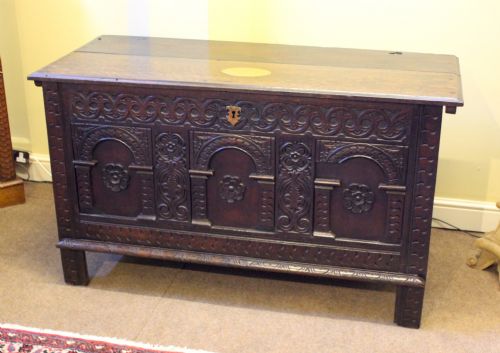
The versions most commonly met on this page include heavy oak coffers and mule chests from English and Continental workshops, alongside painted folk examples from Hungary, Spain, and India. Each piece reflects the domestic storage needs and regional design vocabularies of its specific period.
How they were made
Makers constructed these chests primarily from solid domestic timbers such as oak and walnut, occasionally utilising pine, teak, or iron for structural reinforcement and hardware. Panels were often joined using traditional framing techniques and secured with iron hinges and locks.
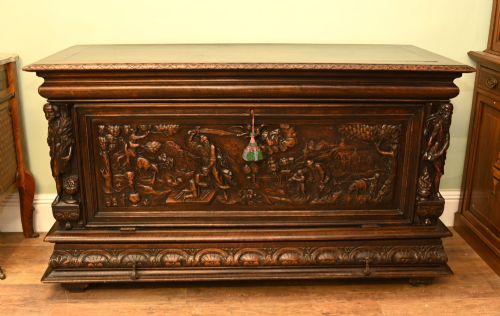
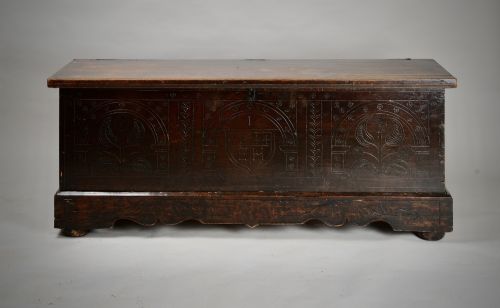
Surface decoration relies on deep chisel carving, inlay, and applied mineral pigments or paint. Italian examples feature gilt gothic ornamentation, whilst Hungarian and Spanish pieces display distinctive folk motifs and painted finishes.
Carved Wooden Marriage Box Retail Price Guide 2026
Typical asking prices for carved wooden marriage box among the pieces listed under this phrase on Sellingantiques today, from the lower quarter to the upper quarter. They describe what is for sale here now, not the wider market.
Many sixteenth and seventeenth-century marriage chests feature hidden internal compartments designed specifically to keep secret love letters safe from prying family members.
What varies in quality
The distinction between standard utility storage and exceptional craftsmanship lies in the depth and crispness of the carved ornamentation. Finer examples display harmonious proportions, integrated ironwork, and well-preserved original painted or gilded surfaces.
Structural integrity also separates individual pieces, with superior boxes retaining their original timber floors, hinges, and lids without excessive replacement or modern alteration.
The Carved Wooden Marriage Box Glossary
- Cassone
- A large Italian chest traditionally used for holding bridal trousseau items. These Renaissance and later pieces often feature walnut construction and elaborate gilded decoration.
- Mule chest
- A traditional storage chest featuring one or more drawers beneath the main lifting lid. They combine the storage capacity of a coffer with the accessible drawer space of a lowboy.
- Coffer
- A heavy wooden box used for storing valuables, documents, or clothing. Early examples are typically constructed from solid oak with hand-carved front panels.
- Gilt
- A thin layer of gold leaf applied to the wooden surface for decorative enrichment. This technique appears frequently on formal Italian cassone chests.
- Dowry chest
- A container commissioned or utilised to hold the property a bride brought to her marriage. These items vary widely in regional style, from carved English oak to painted Indian and Spanish variants.
Carved Wooden Marriage Box: Frequently Asked Questions
How were marriage chests used?
These boxes served as secure containers for a bride's linens, garments, and household valuables during and after the wedding ceremony.
They often doubled as furniture within the main living quarters, functioning as benches or tables when closed.
How do I date an oak coffer?
Dating relies on examining the construction joints, tool marks, and style of carving present on the timber panels.
Earlier pieces from the seventeenth century typically employ boarded or pegged frame construction without modern metal screws.
Where were cassone chests made?
Cassone chests originated primarily in Italy during the Renaissance and subsequent centuries for wealthy merchant and noble families.
Master craftsmen constructed them using local walnut, often applying elaborate paint, carving, or gilding to display family lineage.
How do I care for painted folk chests?
Painted surfaces require stable room humidity and protection from direct sunlight to prevent pigment fading and timber movement.
Cleaning should be limited to gentle dusting with a dry cloth, avoiding harsh chemical polishes that can damage historic finishes.
What is the difference between a coffer and a mule chest?
A standard coffer opens only from the top lid and consists solely of a deep upper compartment.
A mule chest incorporates one or more functional drawers beneath the main box section, bridging the design between a chest and a chest of drawers.