



Carved Wooden Folding Stand
A carved wooden folding stand offers a practical surface that packs away neatly, moving easily from room to room.
Carved Wooden Folding Stand
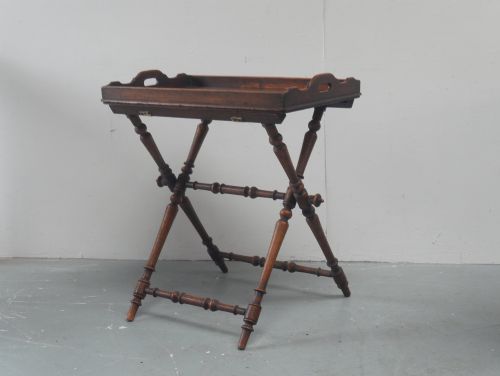
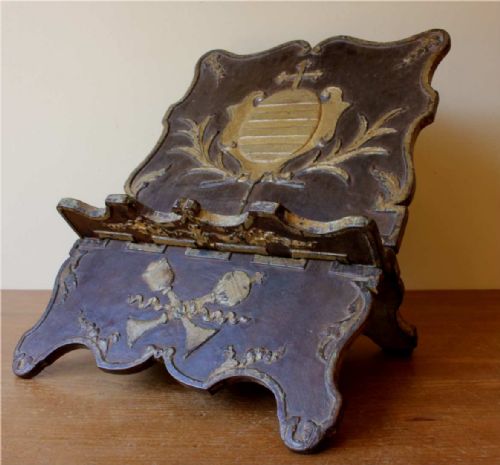
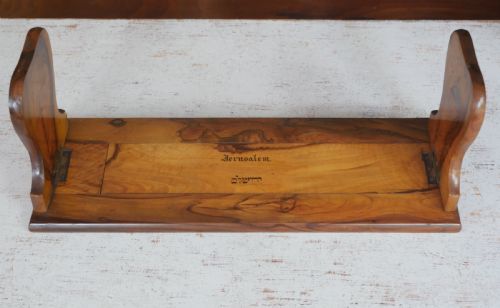
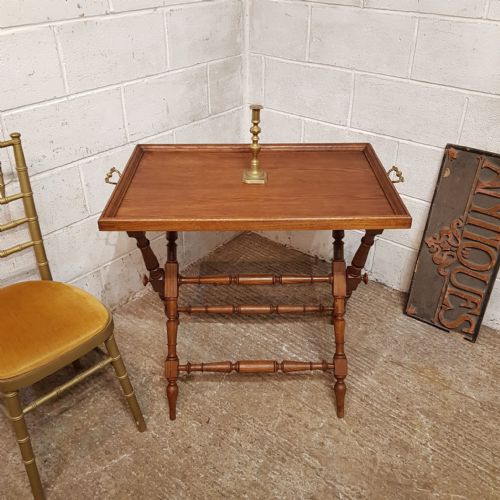
A carved wooden folding stand encompasses portable furniture designed for versatility, spanning occasional tables, tray tables, and book rests. You will frequently encounter tray tables and butler's trays mounted on collapsible bases, alongside carved book slides and reading stands.
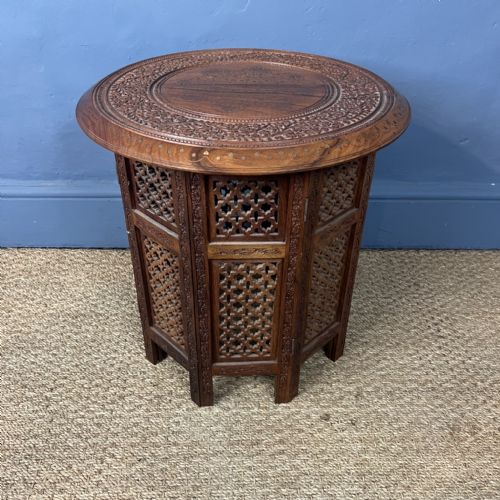
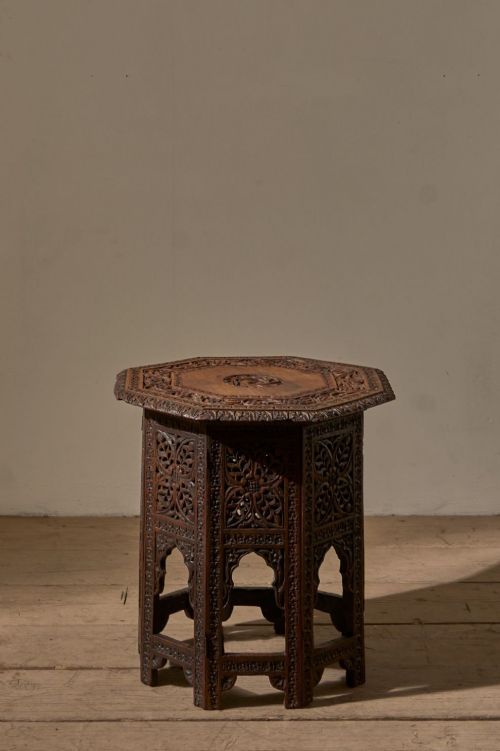
The selection ranges from nineteenth-century English oak and mahogany butler's trays to intricate Anglo-Indian teak tables. Examples stretch chronologically from the eighteenth century through the Edwardian period and into the nineteen-thirties, drawing on varied global workshops.
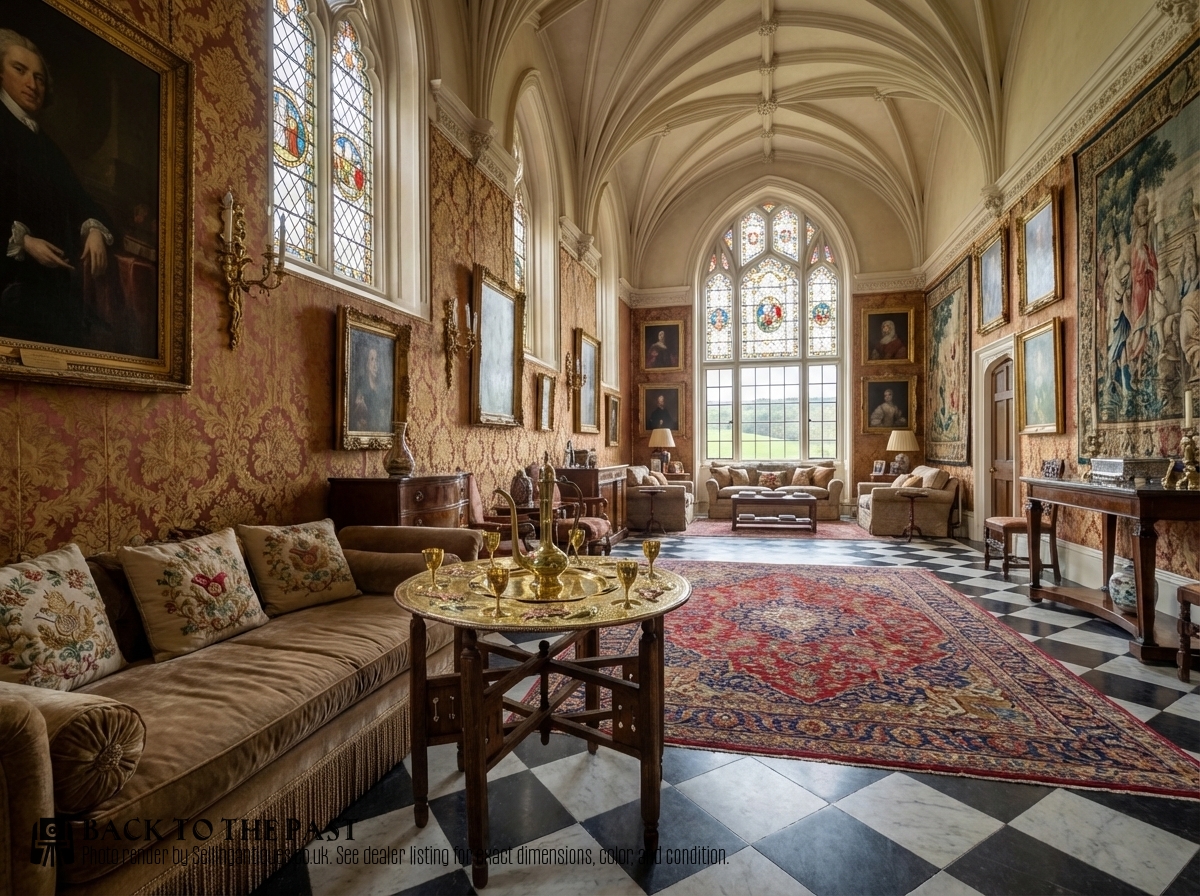
Makers produced these folding items for campaign use, home libraries, and drawing rooms where flexible arrangements mattered. Their collapsible nature allowed households to clear floor space quickly when entertaining visitors.
How they were made
Craftsmen utilised dense hardwoods such as teak, oak, walnut, and padauk to ensure the frames withstood repeated folding and unfolding. These timbers provided the structural strength needed for hinged joints and collapsible scissor actions.
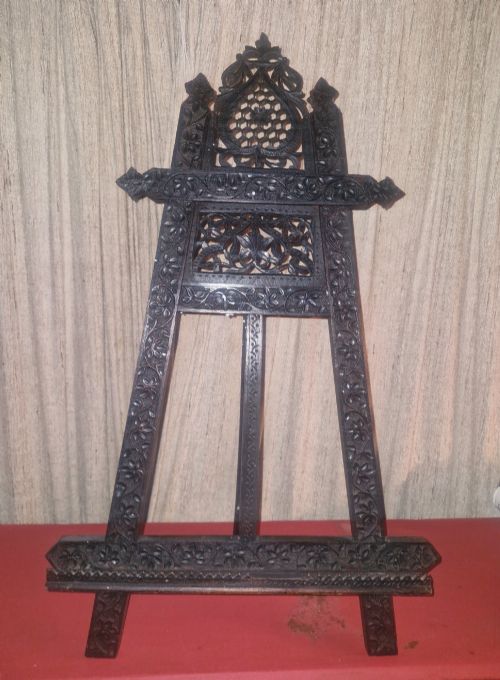
Many surfaces display deep hand-carving, often executed in regional styles like Anglo-Indian floral motifs or Gothic Revival tracery. Workshops also incorporated contrasting materials, embedding brass wire, bone, mother-of-pearl, and copper directly into the wood grain.
Listed objects range from side tables and book slides to display easels, screen panels, and four-tier cake stands.
What varies in quality
The precision of the joinery determines how smoothly the folding mechanism operates and whether the piece stands level when open. Superior examples maintain tight, functional hinges and stable legs that lock securely without wobble.
Carving depth and clarity distinguish standard production from exceptional artistry. Crisp, undercut relief work and cleanly inlaid metal or bone denote higher craftsmanship than shallow, hastily stamped patterns.
The Carved Wooden Folding Stand Glossary
- Butler's tray
- A removable wooden tray with raised sides, designed to fit securely onto a collapsible X-frame stand. It allowed domestic staff to serve drinks or meals before clearing the furniture away.
- Book slide
- An extending desktop or table accessory with ratchet or sliding mechanisms to hold volumes upright. They often feature decorative ends carved from walnut or teak.
- Hoshiarpur
- A town in Punjab known for intricate woodwork involving dense brass and bone inlay on teak grounds. Pieces originating here exhibit densely packed geometric and floral patterns.
- Campaign furniture
- Portable items built for travel, featuring folding frames and removable components to ease transport. Officers and officials utilised these sturdy pieces during nineteenth-century postings.
- Gothic Revival
- A nineteenth-century design movement drawing inspiration from medieval architecture. Objects in this style display pointed arches, trefoils, and heavy carved oak.
Carved Wooden Folding Stand: Frequently Asked Questions
How do I fold these stands safely?
Most folding stands rely on intersecting scissor legs or hinged pivot points that require a gentle lift before closing. Check the alignment of the wooden crossbars to prevent pinching the timber joints.
Ensure any removable tray top is lifted off before attempting to collapse the base underneath it. Forcing a stuck hinge can strain the original wooden pins and brass fixings.
Were these stands meant for travel?
Many examples, particularly the campaign tables and butler's trays, originated as portable equipment for officers or travellers. Their folding design made packing flat for long journeys straightforward.
Other domestic variants, such as book slides and tea tables, remained stationary in homes but utilised folding actions to save space in smaller Victorian and Edwardian rooms.
How do I clean carved wooden surfaces?
Dust intricate hand-carved details regularly using a soft, dry brush to prevent dirt accumulation in the recesses. Avoid heavy liquid cleaners that can damage aged polished timber.
Apply a traditional beeswax polish sparingly to maintain the moisture and lustre of hardwoods like teak, oak, and walnut. Buff gently with a soft cloth after application.
How can I tell the period?
Examine the timber selection, construction methods, and decorative motifs for clues to the era of manufacture. Nineteenth-century pieces frequently employ solid oak or padauk with hand-cut joints, while later twentieth-century items often show different joinery.
Stylistic markers like Gothic Revival arches point towards the mid-nineteenth century, whereas specific inlay patterns indicate later colonial workshops active around nineteen hundred.