





Carved Wooden Entryway Chairs
Carved wooden entryway chairs are sturdy timber seats designed for hallways and reception spaces, offering both rigid posture and bold architectural detail.
Carved Wooden Entryway Chairs
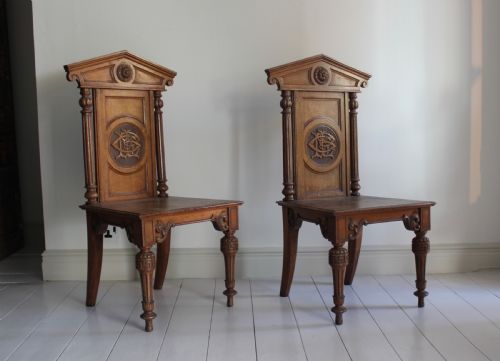
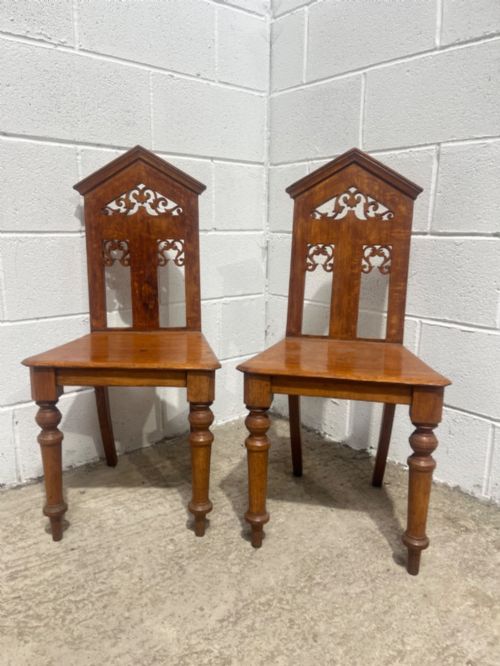
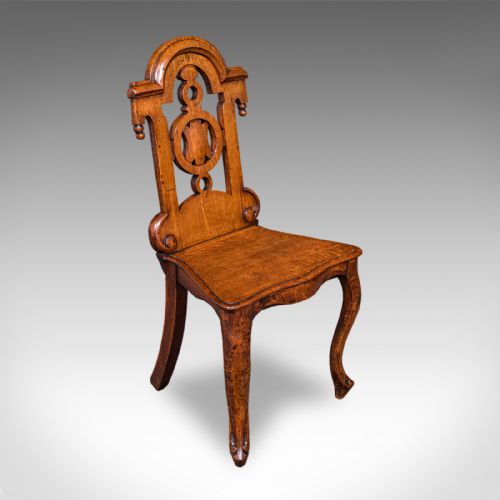
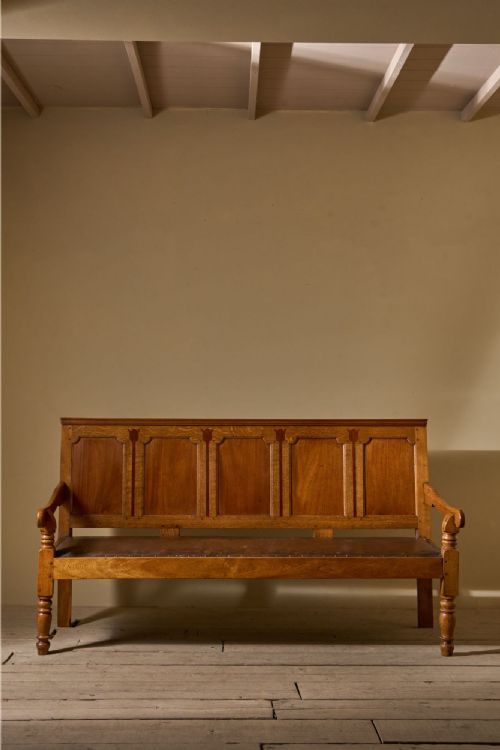
Carved wooden entryway chairs emerge primarily as sturdy hall chairs and benches originating from the Georgian, Regency, and Victorian periods. These timber seats were traditionally positioned in grand reception rooms and corridors to offer upright posture for visitors waiting briefly.
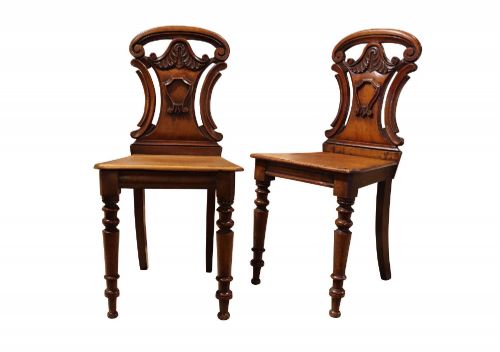
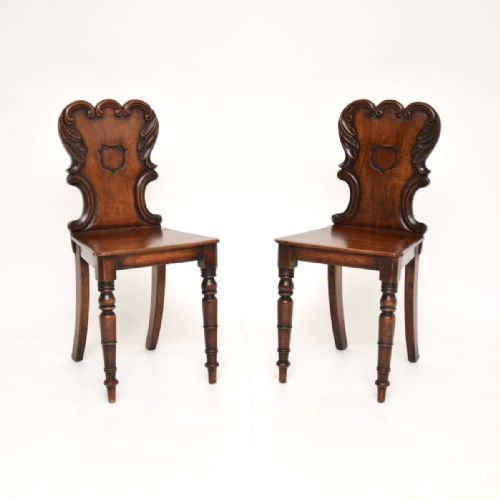
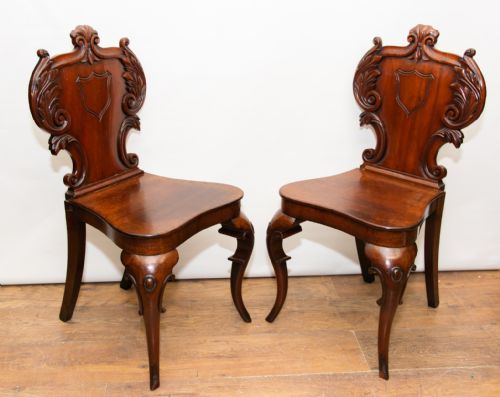
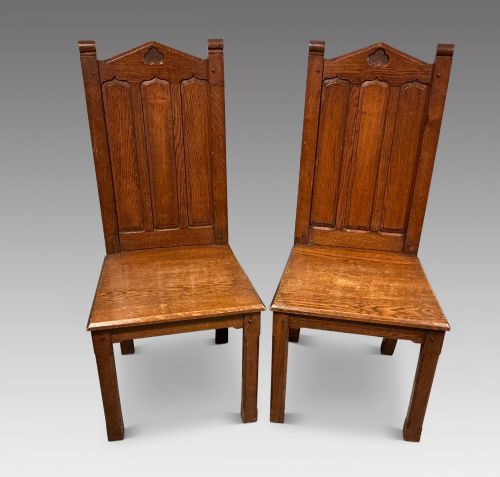
The selection centres heavily on mahogany and oak timber formations, often appearing as pairs or matched sets with solid carved timber seats rather than upholstery. Makers utilised stylistic revivals, particularly Gothic Revival and classical shield or pelta back designs, to impart civic gravity to domestic hallways.
Quality Indicators
Quality rests heavily on the depth and crispness of the hand-carving, where sharp relief work on shell or shield backs distinguishes finer cabinetmaking from simpler production. The choice of timber also sets pieces apart, with well-figured mahogany and heavy quarter-sawn oak representing the upper tier of construction.
Proportion and structural integrity dictate the overall standard, as balanced proportions in the turning and joinery ensure the seat remains stable despite its upright, purely decorative intent. Pieces bearing specific workshop associations or integrated storage compartments demonstrate higher ambition in design.
Listings feature extensive selections of mahogany and oak examples spanning the Georgian, Regency, and Victorian periods.
Gillows
The Carved Wooden Entryway Chairs Glossary
- Hall chair
- A rigid wooden seat placed in an entryway or hallway, typically featuring a solid carved seat and an ornamental back. These pieces were built for durability and display rather than lounging.
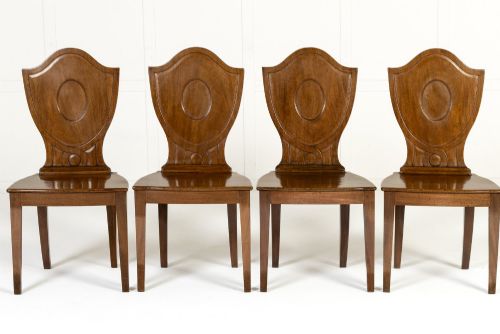
- Shield back
- A chair back shaped like a heraldic shield, frequently carved from mahogany during the eighteenth and nineteenth centuries. This outline provides a distinct focal point for classical revival seating.
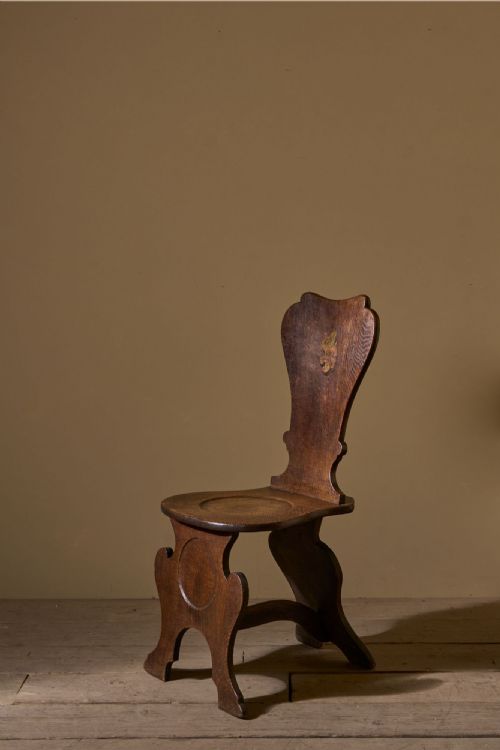
- Sgabello
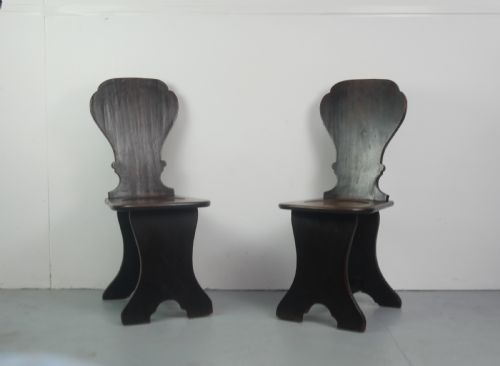
- An early form of Renaissance-style wooden chair featuring flat board supports instead of traditional legs. Surviving examples often incorporate heavy carving suited to formal halls.
- Armorial
- Bearing a family crest, coat of arms, or heraldic device carved directly into the timber. Such decoration signifies bespoke commissions for country houses and grand estates.
- Pelta back
- A chair back designed in the curved, crescent-like form of an ancient Greek shield. This classical motif appears on Regency seating.
Carved Wooden Entryway Chairs: Frequently Asked Questions
Where were hall chairs placed?
Hall chairs were traditionally arranged along the walls of grand entryways, corridors, and reception spaces in large houses. They served as formal seating for visitors waiting to be announced.
Because visitors rarely sat for long periods, these seats prioritized upright posture and visual impact over physical comfort.
Why do these chairs lack upholstery?
Makers deliberately left the wooden seats bare to prevent heavy wear from outer garments and to showcase the quality of the timber. Solid wood construction also suited the formal, transient nature of hallway seating.
Over time, this lack of fabric protection helped many of these structural frames survive in original condition.
How do I identify a Regency hall chair?
Regency examples often feature classical motifs such as shield backs, pelta shapes, or armorial crests carved into mahogany. The silhouettes reflect early nineteenth-century revivals of ancient Greek and Roman design.
Turned front legs and spare, architectural lines further distinguish this period from later Victorian ornamentation.
Can I use an antique hall chair daily?
These rigid wooden seats function well in modern entryways for putting on shoes or as sculptural accent pieces. Their sturdy timber construction remains resilient under normal daily use.
Care should be taken to protect the antique wood finish from moisture and heavy impacts.