


Carved Wooden Desk Ornament
A carved wooden desk ornament brings character and purpose to a workspace through animal figures, inkwells, and stands crafted across the nineteenth and twentieth centuries.
Carved Wooden Desk Ornament
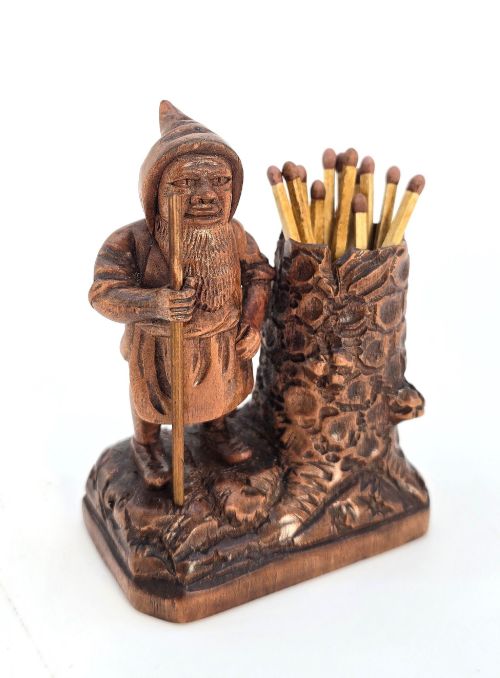
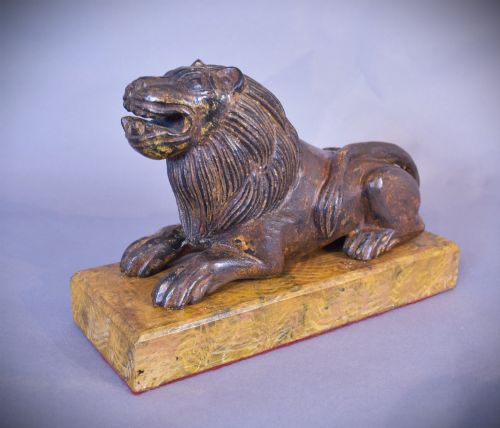
A carved wooden desk ornament encompasses functional accessories and standalone sculptures that populated writing spaces from the seventeenth century through the Art Deco era. Buyers encounter items designed for practical utility on a writing table, such as inkwells, match holders, bookends, and paperweights, alongside purely decorative animal carvings.
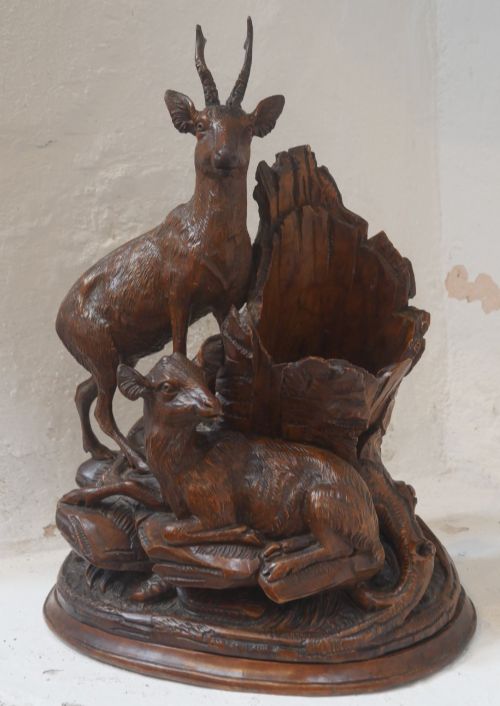
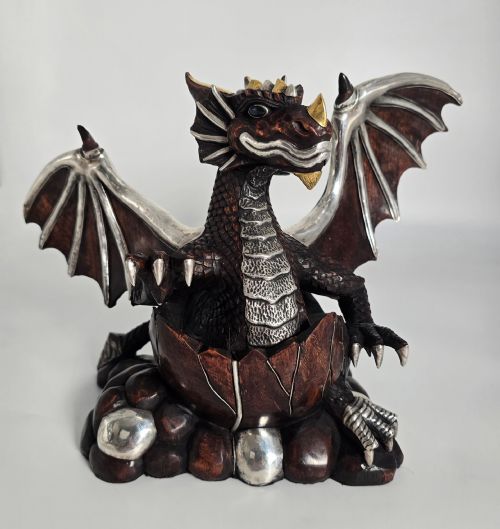
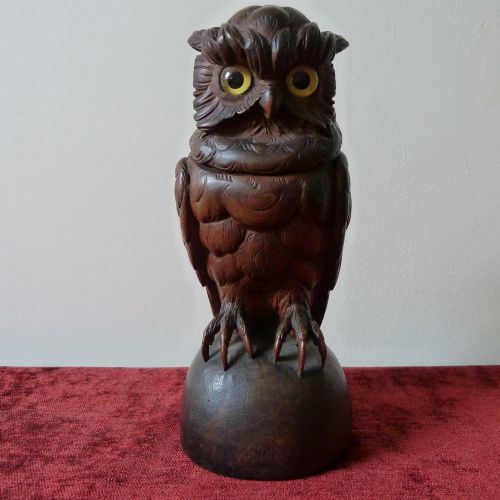
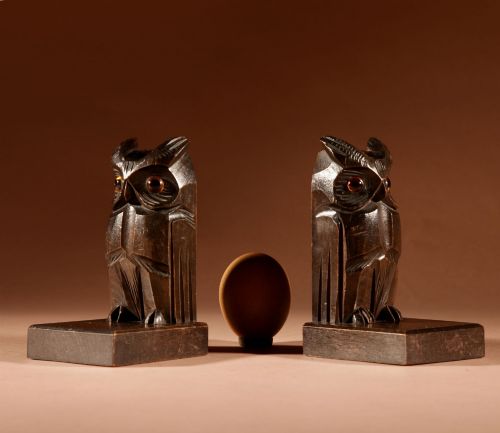
The selection on this page draws heavily from Black Forest workshops, Anglo-Indian colonial studios, and East Asian folk art traditions. Pieces take the form of domestic dogs, wild mountain goats, owls, elephants, and marine or reptilian subjects carved from linden wood, limewood, teak, ebony, and root wood.
How they were made
Functional pieces incorporate mixed media elements alongside the carved timber body, integrating brass mounts, glass inserts for inkwells, and metal strikers for matches. Surfaces receive finishes ranging from natural wax polish to dark staining, occasionally accented with gilt or mixed metal mountings.
Materials represented include limewood, boxwood, teak, ebony, root wood, brass, and glass.
What varies in quality
The distinction between ordinary and superior pieces rests on the anatomical accuracy and expressive vigour of the carving. Master carvers capture tension in the musculature of animals like leaping dogs or mountain goats, whereas lesser examples remain stiff and generalized in form.
Material selection and the integration of functional hardware dictate the standing of a desk accessory. Well-preserved original glass ink inserts, precise brass mountings, and the crisp preservation of fine details in softer woods elevate the stature of a piece within its period.
Laszlo Hoenig
The Carved Wooden Desk Ornament Glossary
- Black Forest
- A nineteenth and early twentieth century style of wood carving originating from the Brienz region of Switzerland, known for realistic depictions of animals, particularly bears, dogs, and owls. These items often double as inkwells, match holders, or bookends.
- Anglo-Indian
- A term describing furniture and decorative objects made in India during the British Raj, frequently utilising dense local hardwoods like ebony and teak. The workmanship combines traditional Indian carving techniques with European utility forms.
- Root wood
- Timber sourced from the root system of a tree, prized by carvers for its dense, gnarled grain and eccentric natural shapes. Artisans incorporate these organic contours directly into the composition of sculptures and stands.
- Limewood
- A pale, fine-grained timber favoured by European carvers for its lack of prominent grain pattern and ease of handling with fine tools. It allows for deep undercut details without splintering.
Carved Wooden Desk Ornament: Frequently Asked Questions
What were carved wooden desk ornaments used for?
These carved wooden desk ornaments served both practical and decorative purposes in period studies and offices. Many items doubled as functional accessories, holding ink for writing, matches for lighting, or keeping books upright.
Other pieces functioned purely as paperweights or decorative sculptures to enliven a working environment.
How do I identify a Black Forest carving?
Black Forest carvings are typically rendered in linden or limewood and depict animals such as dogs, bears, owls, and chamois with realistic textures. They often incorporate practical compartments like hinged lids for inkwells or slots for letters.
Originating largely from Swiss and German regional workshops, they display deep, animated relief work.
Are these desk ornaments made of solid wood?
The pieces shown here are fashioned from solid timbers, ranging from European limewood and boxwood to dense exotic hardwoods like ebony and teak. Some oriental items utilise natural root wood.
Makers selected solid blocks to allow for deep three-dimensional carving without structural failure.
How should I care for antique wood carvings?
Antique wood carvings require stable environmental conditions away from direct sunlight and excessive heat sources to prevent timber shrinkage or cracking. Occasional dusting with a soft, dry brush maintains the surface.
Avoid liquid polishes, applying a pure beeswax sparingly only if the wood appears dry.