
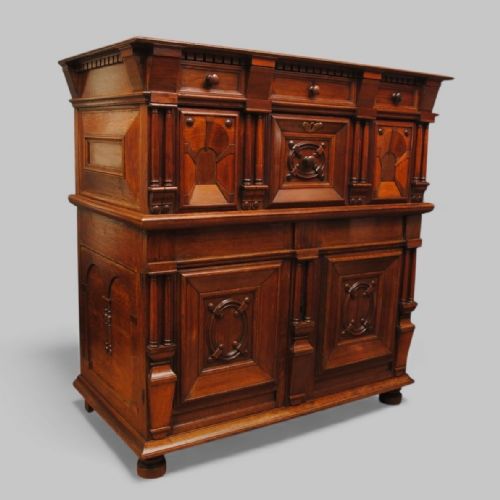


Carved Wooden Coffer Cabinet
These carved wooden coffer cabinet pieces bring rugged utility and rich texture into a room, offering deep storage within heavily carved timber frames.
Carved Wooden Coffer Cabinet
A carved wooden coffer cabinet brings together heavy storage chests, dough bins, court cupboards, and side cabinets drawn from various regional traditions. When searching for a carved wooden coffer cabinet, a buyer encounters forms ranging from 17th Century oak and walnut chests to 19th Century French dough bins and Indian teak dowry chests.
The pieces on this page span several centuries, including Victorian, Edwardian, and earlier eras like the 17th Century. Regional styles such as French Provincial, Jacobean, Qing Dynasty, and Arts and Crafts shape the appearance of these cabinets and storage chests.
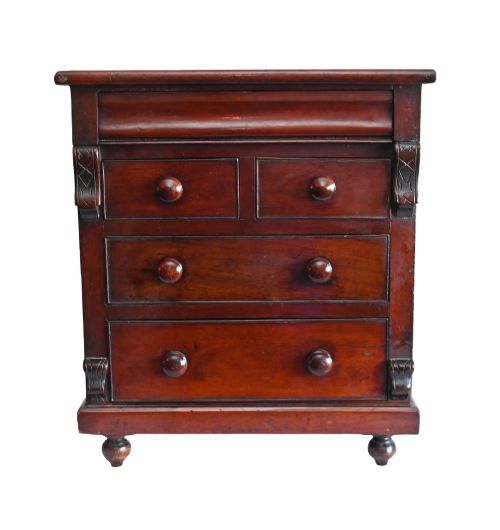
Origins stretch from European workshops to Chinese provinces and Indian villages, resulting in diverse object types like court cupboards, miniature linen presses, and cellarettes. Elm, oak, walnut, teak, and mahogany provide the primary structural timber for these varied forms.
How they were made
Craftsmen utilised durable hardwoods like oak, walnut, teak, elm, and mahogany to build these cabinets and storage chests. Iron and brass hardware such as hinges, handles, and lock plates frequently secure the heavy timber construction.
Surface decoration relies heavily on deep carving into the solid wood, alongside occasional red lacquer finishes or glass panels. Joined construction techniques define the earlier court cupboards and chests, while later pieces incorporate regional carving styles from Indian folk art to Chinese traditional motifs.
The listings here feature materials including brass, teak, hardwood, walnut, iron, glass, oak, and elm.
What varies in quality
Quality in these pieces rests upon the crispness of the hand carving and the structural integrity of the timber used. Heavy woods like oak, teak, and walnut demand precise joinery to maintain stability across centuries of use.
The distinctiveness of regional design, from Shanxi Province style cabinets to Anglo-Indian linen presses, dictates the character of each piece. Original metalwork in brass or iron further separates standard utilitarian items from finer examples.
The Carved Wooden Coffer Cabinet Glossary
- Coffer
- A sturdy wooden chest traditionally used for storing valuables or household goods. These often feature hinged lids and heavy timber framing.
- Court cupboard
- A formal type of sideboard or storage cabinet originating in the 17th Century. They typically incorporate tiers and enclosed upper sections.
- Dough bin
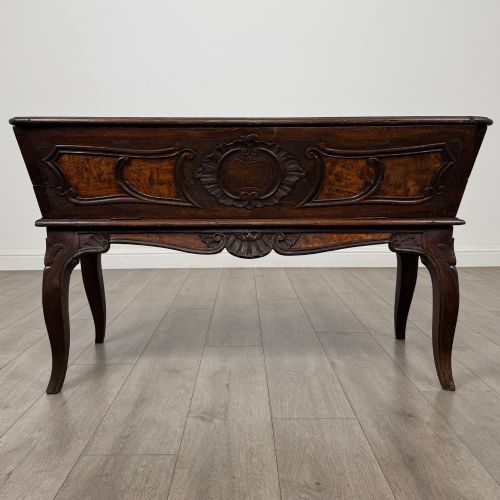
- A specialised wooden trough or cupboard utilised for kneading and rising bread dough. French Provincial examples often integrate storage cupboards beneath the bin.
- Damchiya
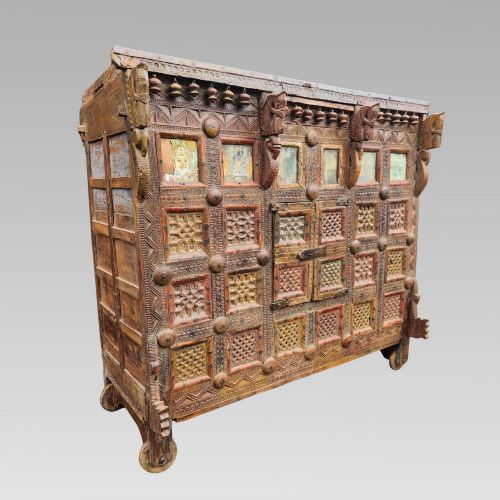
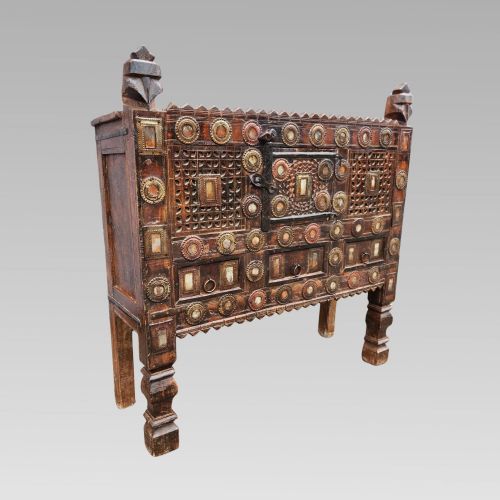
- An Indian dowry chest designed for domestic storage. These pieces frequently showcase elaborate carved teak woodwork.
- Cellarette
- A lockable container used for storing wine bottles near the dining table. Regency examples often employ burr elm and interior partitions.
Carved Wooden Coffer Cabinet: Frequently Asked Questions
What is a carved wooden coffer cabinet?
A carved wooden coffer cabinet is a heavy storage piece that combines the deep box form of a traditional chest with cabinet doors or drawers. These items draw from diverse global traditions, ranging from European oak chests to Indian teak dowry cabinets.
They serve primarily as statement furniture that conceals household clutter while displaying intricate hand-carved woodwork across the exterior surfaces.
How were these cabinets used originally?
Originally, these pieces held textiles, valuables, dry goods, or dining provisions depending on whether the form started as a dowry chest, dough bin, or court cupboard. Their robust construction ensured that contents remained secure and protected from pests.
Over time, many of these utilitarian containers transitioned into decorative reception room furniture designed to anchor a space.
How do I style a coffer cabinet at home?
Living with a carved wooden coffer cabinet involves placing it in hallways, living rooms, or dining spaces where its substantial timber presence acts as a focal point. Because these pieces provide significant interior volume, they easily swallow blankets, table linens, or bulky items.
Keep the surface relatively clear to let the carved details and natural grain of woods like elm, walnut, and teak stand out.
How do I tell the periods apart?
Telling periods apart relies on examining the joinery, wood selection, and decorative vocabulary of the piece. Seventeenth-century examples often feature heavy joined oak and court cupboard forms, whereas Victorian and Edwardian pieces might utilise mahogany, burr elm, or lighter Arts and Crafts styling.
Regional indicators, such as Qing Dynasty motifs or traditional Indian carving, also point directly to specific cultural eras and geographic workshops.