





Carved Wood Trolley
A carved wood trolley brings character and practical tiering to a room, offering a sturdy surface for drinks, books, or afternoon tea.
Carved Wood Trolley
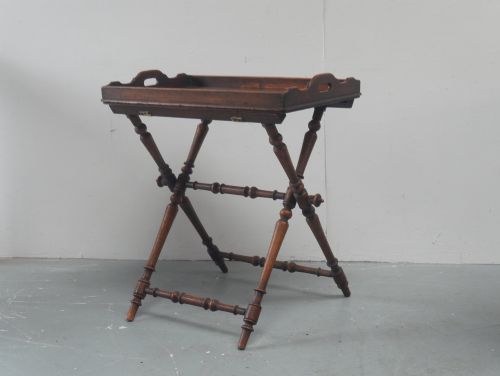
When you search for a carved wood trolley, you encounter functional serving furniture designed with multiple tiers and compartments, spanning Victorian, Edwardian, and early twentieth-century periods. The examples on this page encompass various forms including tiered stands, dumb waiters, tea trolleys, bar carts, and drinks cabinets.
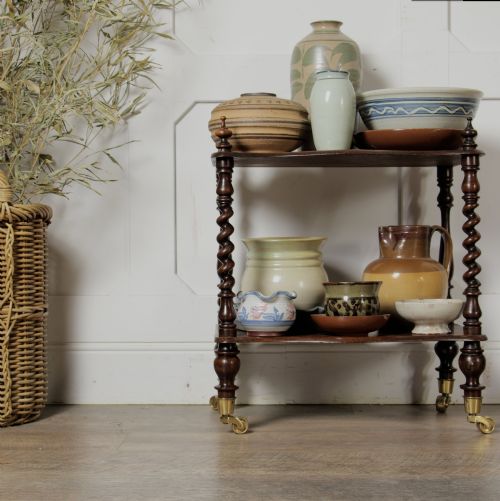
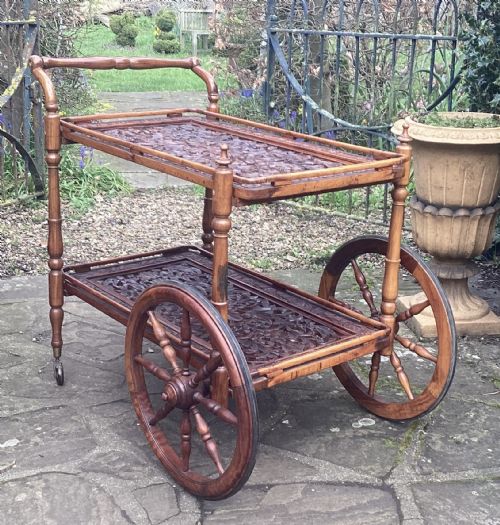
You are most likely to meet multi-tiered wooden structures, such as three-tier walnut or mahogany dumb waiters and tea trolleys. These pieces often feature carved details, barley twist supports, or regional stylistic influences like Chinese Export, Colonial, and Anglo-Indian designs.
The assortment includes traditional British nineteenth-century buffets alongside exotic hardwood items from the nineteen-twenties and thirties. Buyers will find that each piece balances decorative carving with the practical mobility or display capacity required for entertaining.
How they were made
Cabinet makers utilised dense timbers such as mahogany, walnut, burr walnut, oak, teak, and exotic hardwoods to construct these trolleys. These woods were chosen for both their structural integrity and their capacity to accept intricate hand carving on supports and edges.
Construction techniques combined traditional joinery with turned elements like barley twist columns, alongside functional additions such as brass fittings and inset glass panels. Surfaces were finished to highlight the natural grain and rich tone of the timber.
Carved Wood Trolley Retail Price Guide 2026
Typical asking prices for carved wood trolley among the pieces listed under this phrase on Sellingantiques today, from the lower quarter to the upper quarter. They describe what is for sale here now, not the wider market.
Some trolleys are so fiercely carved they look like they might slowly march across your parquet flooring when nobody is watching.
What varies in quality
The depth and crispness of the hand carving separate standard production pieces from finer examples, particularly on regional work such as Chinese or Indian hardwood items. Superior pieces exhibit well-defined motifs and harmonious proportions across every tier.
Choice of timber grain also dictates distinction, with burr walnut and figured mahogany elevating the visual appeal above plain domestic hardwoods. The integration of quality secondary materials like brass hardware and bevelled glass further refines the standing of a piece.
The Carved Wood Trolley Glossary
- Dumb waiter
- A multi-tiered piece of dining furniture designed to hold dishes, drinks, or tea service without the need for a servant. These stands typically feature two or three graduating circular or rectangular shelves.
- Barley twist
- A decorative turning technique resembling a spiralling rope or a screw thread, frequently utilised on the vertical supports of Victorian and Edwardian stands.
- Burr walnut
- Timber taken from a tree growth or burl, prized by cabinet makers for its swirling, highly figured grain pattern that creates dramatic decorative surfaces.
- Tiered stand
- A piece of furniture consisting of multiple open shelves arranged vertically one above the other, maximising display and storage space within a compact footprint.
- Colonial style
- Furniture manufactured in British colonies or for export, combining traditional European forms with indigenous tropical hardwoods and local carving motifs.
Carved Wood Trolley: Frequently Asked Questions
What is a dumb waiter?
A dumb waiter is a tiered wooden stand historically used in dining rooms to hold serving dishes, bottles, and glassware.
Today, these versatile pieces function well as side tables, plant stands, or display units in living spaces.
How do I use a tea trolley?
A tea trolley serves as a mobile or stationary platform for hosting afternoon tea, mixing drinks, or displaying decorative objects.
The multiple tiers provide practical separation for glassware, bottles, and accessories.
How do I date a wooden trolley?
Dating relies on observing the timber species, construction methods, and stylistic markers such as barley twist columns or regional carving styles.
Pieces range from mid-nineteenth-century Victorian designs to twentieth-century Colonial and Art Deco era productions.
Are these trolleys sturdy?
Constructed from dense hardwoods like mahogany, walnut, oak, and teak, these pieces were built to support heavy items like porcelain and glass.
Their multi-tiered design provides a low centre of gravity and reliable structural stability for daily use.