






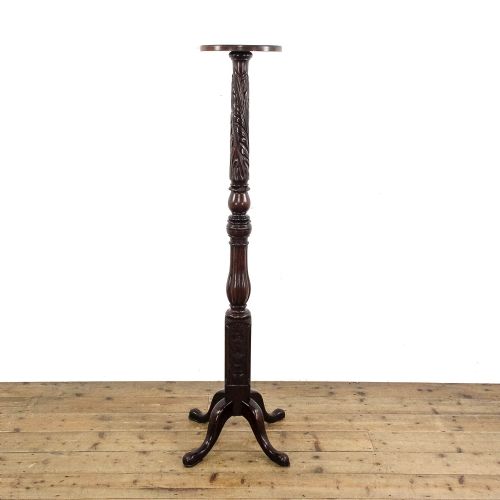

Carved Wood Torchiere
These carved wood torchiere pieces bring upright presence and candlelight support into a room, offering both function and sculptural drama.
Carved Wood Torchiere
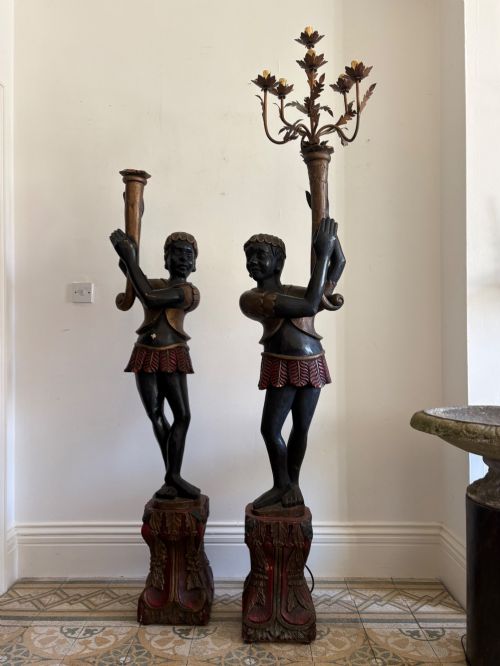
A carved wood torchiere takes the form of tall, slender stands originally designed to carry light, evolving across centuries from candleholders into floor lamps and plant stands. The examples found here span from the seventeenth century through to the Edwardian era, taking in English country house standards and continental revival pieces.
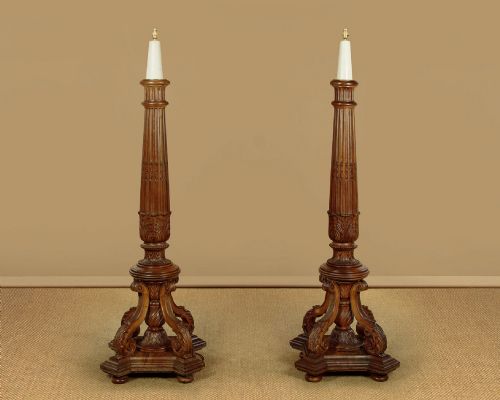
The most common formats on this page include mahogany candle stands and torchieres alongside walnut bases, often configured as columns or figural supports. Makers from various periods drew upon Italian Baroque, Venetian Renaissance, Chippendale, and Georgian styles to shape timber into elaborate pedestals and standard lamps.
How they were made
Cabinetmakers and carvers utilised dense hardwoods such as mahogany, walnut, and lime wood, allowing deep chisel work and intricate relief carving without splintering. Many pieces incorporate gold leaf or giltwood finishes to catch the ambient light of a room.
Structural integrity relied on turned columns and substantial pillar construction to support heavy lanterns or figures atop narrow footprints. Secondary materials such as brass and fabric appear selectively as fittings or shades on electrified standard lamp adaptations.
Carved Wood Torchiere Retail Price Guide 2026
Typical asking prices for carved wood torchiere among the pieces listed under this phrase on Sellingantiques today, from the lower quarter to the upper quarter. They describe what is for sale here now, not the wider market.
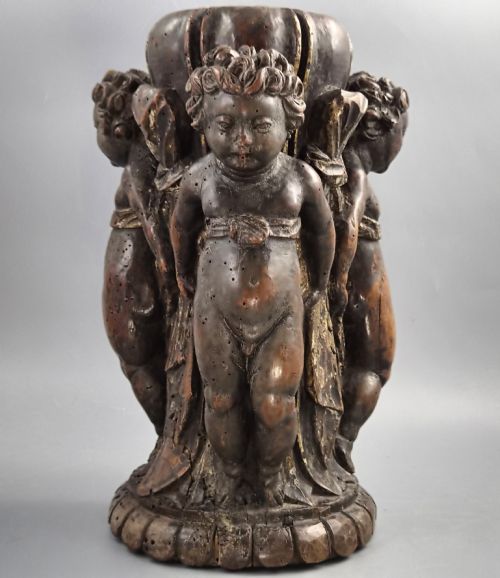
Several Italian stands enlist wooden putti to carry the weight, proving that even seventeenth-century lighting required a little supernatural assistance.
What varies in quality
The distinction between ordinary and exceptional work lies in the crispness and depth of the carving, particularly where figures, putti, or complex foliage are rendered in lime wood or walnut. Superior pieces display fluid, confident hand-chased detail rather than flat or mechanical profiling.
Proportion and stability separate finer antique stands from lesser ones, since a tall shaft requires precise balance and seasoned timber to prevent warping. Original surfaces and untouched patination carry far more weight than later refinishing or replacement sections.
The Carved Wood Torchiere Glossary
- Torchiere
- A tall stand or floor lamp designed to hold a light source high above the floor. The form originated from torch holders and later adapted to candles and electric bulbs.
- Putti
- Depictions of plump, winged infant figures, frequently carved in high relief on Italian baroque stands. They often appear supporting the central column or base.
- Giltwood
- Timber that has been coated with a thin layer of gold leaf. This finish reflects candlelight and adds visual weight to decorative furnishings.
- Standard lamp
- An upright floor-standing lamp base designed to illuminate a room from a standing position. They frequently share forms with historic candle stands.
- Jardiniere
- A decorative container or stand intended for holding plants or flowers. In antique listings, this term often pairs with torchiere when the top surface is fitted for greenery.
Carved Wood Torchiere: Frequently Asked Questions
What is a torchiere?
A torchiere is a tall, slender stand historically used to hold a candle, torch, or lamp to illuminate a room from an elevated position. Over time, the form expanded to include plant stands, bust columns, and standard lamps.
Today, collectors use them as decorative focal points in corners or alongside furniture to add vertical line and historic character to an interior.
How do I date a wooden torchiere?
Dating relies on examining the timber species, tool marks, joinery methods, and the prevailing style of the carving. Seventeenth and eighteenth-century examples often show hand-turned shafts and heavy walnut or oak, whereas Victorian and Edwardian pieces frequently utilise mahogany or lime wood with revival motifs.
Comparing the decorative vocabulary, such as Chippendale details or Italian Baroque putti, against known period aesthetics helps narrow the decade of manufacture.
Were these always electric lamps?
Most antique torchieres began life holding wax candles or oil lamps before being converted to electricity during the twentieth century. Some examples retain their original function as purely decorative pedestals, plant stands, or sculpture mounts without any wiring.
Conversions range from subtle cord routing through hollowed central columns to later surface-mounted brass fittings added to suit domestic lighting needs.
How do I place one in a room?
These tall stands suit empty corners, fireplace flanks, or narrow wall spaces where vertical emphasis is needed without occupying much floor area. Their slender profiles allow them to hold a reading lamp, a floral arrangement, or a small sculpture.
Ensure the base sits level on the floor, and keep electrified versions away from heavy foot traffic to protect the narrow stem and delicate carved details.