



Carved Wood Table Set
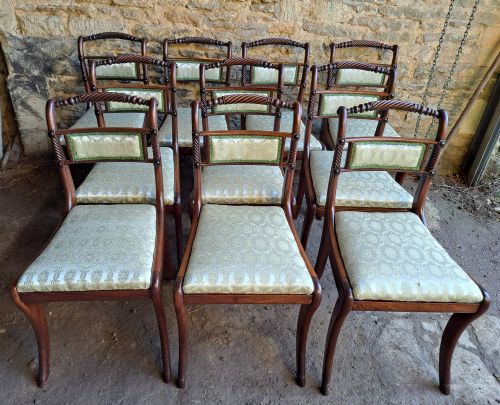
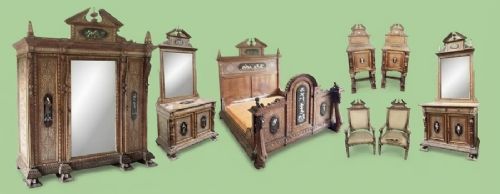
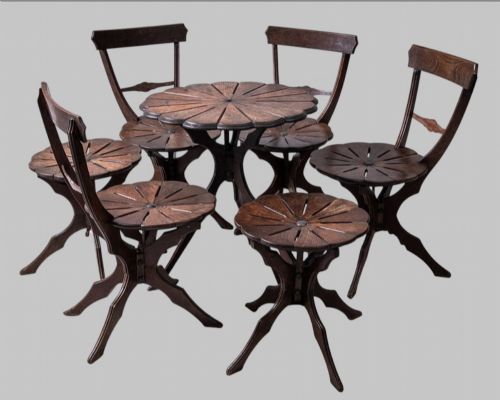
These pieces form a carved wood table set, bringing sculptural timberwork and surface utility together in matching or nesting formats.
Carved Wood Table Set
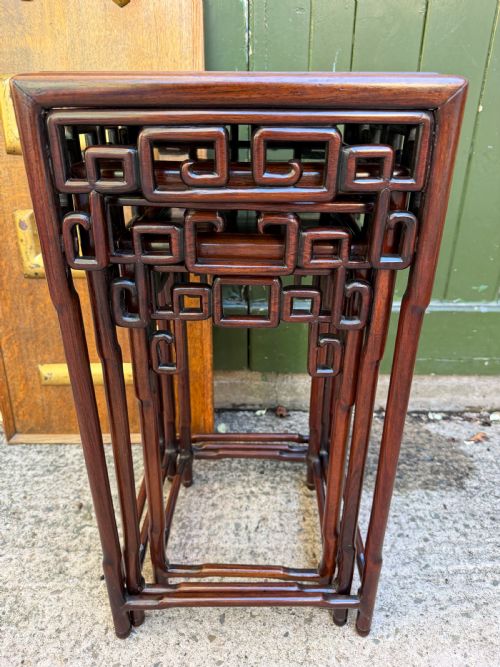
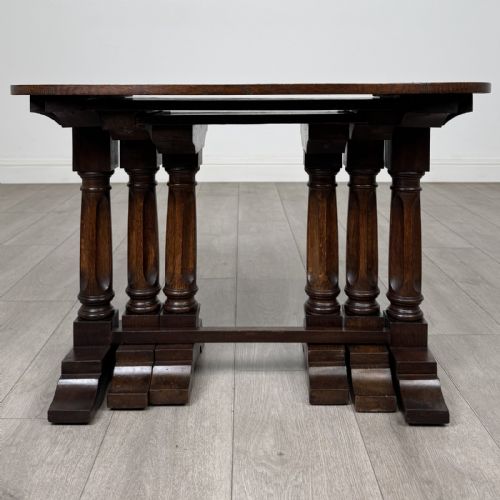
When searching for a carved wood table set, buyers encounter groups of interlocking tables and coordinated suites spanning the nineteenth century through the interwar decades. The most frequent forms include nests of Chinese hardwood tables and graduating sets originating from Edwardian and Victorian workshops.
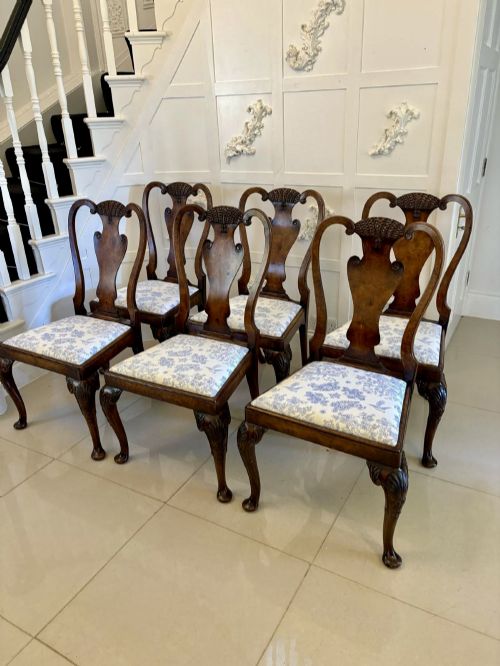
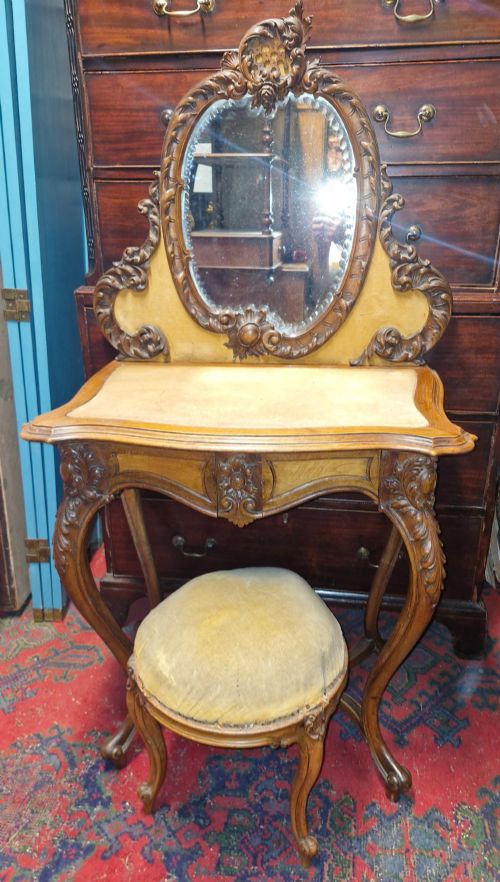
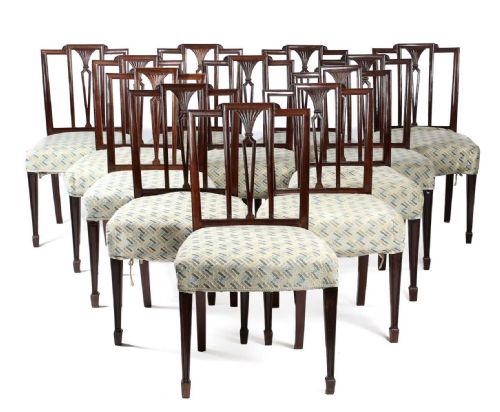
Beyond nesting tables, the category encompasses larger dining sets and console tables paired with mirrors. These originate from various global traditions, ranging from Black Forest alpine carvings to Chinese Export and French Rococo Revival designs.
Materials and construction
Cabinetmakers utilised robust timbers such as oak, walnut, rosewood, and hardwood for the structural frames of these sets. These woods were chosen for their durability and grain patterns, providing a stable canvas for deep relief carving.
Surfaces were frequently embellished with giltwood, glass, or marble inserts. Joinery techniques varied from interlocking Chinese nesting frames to the heavy pegged construction seen in nineteenth century Flemish oak benches and tables.
Carved Wood Table Set Retail Price Guide 2026
Typical asking prices for carved wood table set among the pieces listed under this phrase on Sellingantiques today, from the lower quarter to the upper quarter. They describe what is for sale here now, not the wider market.
Green Men peer out from nineteenth century Flemish oak, watching over dining tables and benches with leafy expressions.
Distinctions in quality
Quality rests in the depth and crispness of the hand-carving across each piece in the group. Sets showing sharp undercutting and deliberate tool work maintain greater visual cohesion than those with shallow, mechanical stamping.
Material selection and matching timber grains across multiple tables or chairs dictate the upper tiers of the range. Uniformity in colour and the integrity of applied gilt or marble tops separate standard production from masterwork output.
Waring and Gillows·James Shoolbred·Elkington and Co
The Carved Wood Table Set Glossary
- Nest of tables
- A graduated set of smaller tables designed to slide neatly beneath one another when not in use. They appear frequently in Chinese export and Edwardian designs.
- Console table
- A table fixed to a wall or supported by ornate front legs, often paired with a matching pier mirror. They are common in Rococo Revival and Italian gilded interiors.
- Giltwood
- Timber coated with gold leaf or gold paint to create a reflective, decorative surface. This finish defines many French and Victorian console tables.
- Quartetto
- A traditional term for a set of four nesting tables. The configuration allows the pieces to stack sequentially in decreasing size.
- Hardwood
- Dense timber derived from broad-leaved deciduous trees, frequently utilised in Chinese occasional tables. It provides the structural resistance necessary for intricate edge carvings.
Carved Wood Table Set: Frequently Asked Questions
What defines a nesting table set?
Nesting tables consist of multiple pieces graded in size so that each smaller table slides completely beneath the one above it. This design maximises floor space while offering multiple surfaces.
Such sets appear in Chinese export pieces and Edwardian oak versions, serving as versatile furniture for entertaining.
How were console tables displayed?
Console tables were traditionally placed against a wall, frequently anchored beneath a matching pier mirror to reflect light around a parlour. They served as decorative focal points in formal rooms.
Victorian and French Rococo examples utilise marble tops and heavily carved giltwood frames to enhance this architectural role.
How do I care for antique carved timber?
Antique carved wood requires stable humidity levels and protection from direct sunlight to prevent the timber from splitting. Regular dusting with a soft, dry cloth preserves the recessed details of the relief work.
Avoid liquid polishes that can build up within the carved crevices over time.
What distinguishes Chinese export tables?
Chinese export sets utilise dense hardwoods and feature deep, naturalistic carvings depicting foliage or geometric patterns. The nesting mechanism relies on precise sizing to allow smooth stacking.
These pieces often display distinct joinery methods that differentiate them from contemporaneous European furniture.