




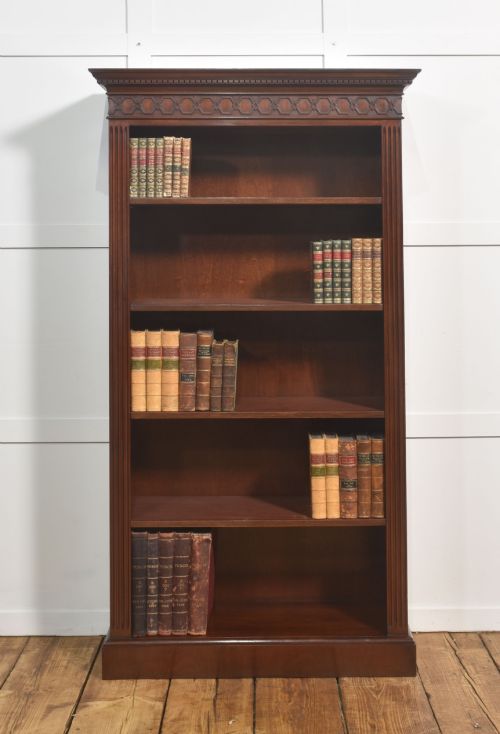
Carved Wood Shelving
Carved wood shelving brings architectural warmth to empty walls, offering sturdy ledges for books and display.
Carved Wood Shelving
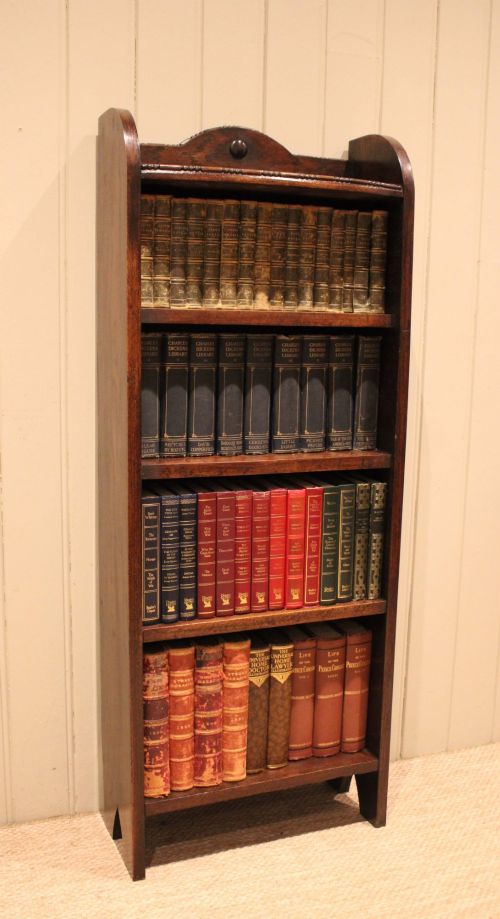
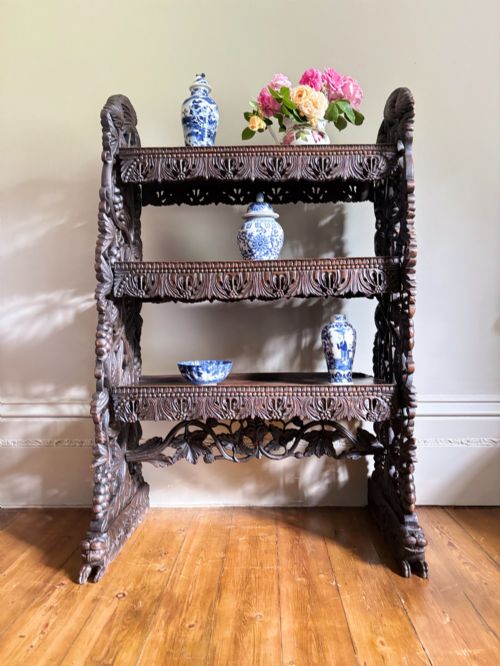
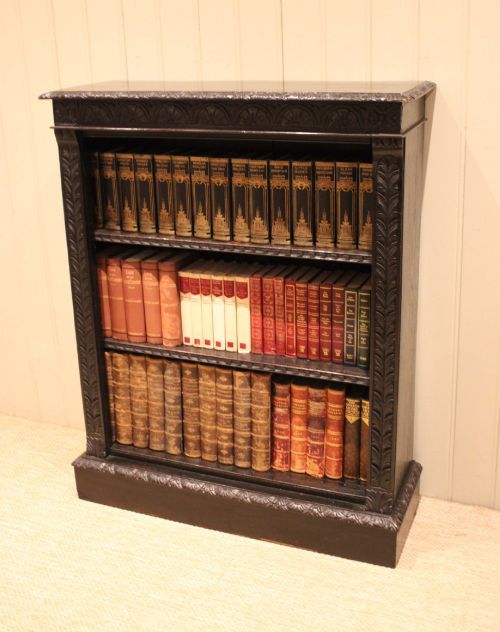
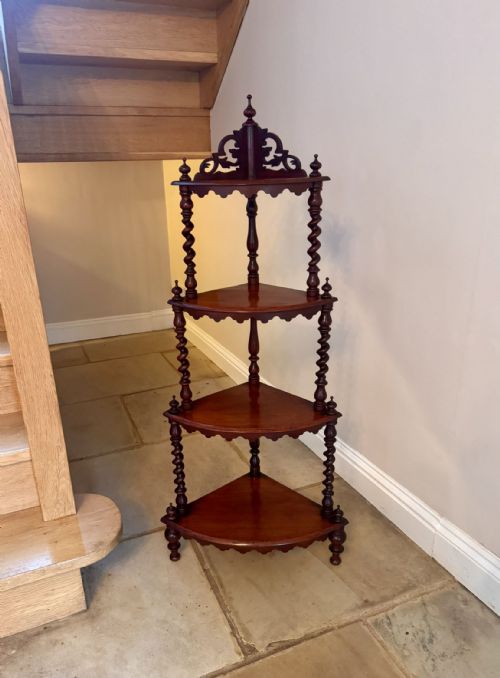
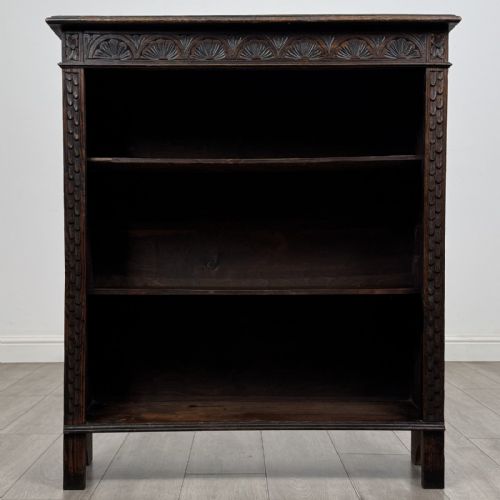
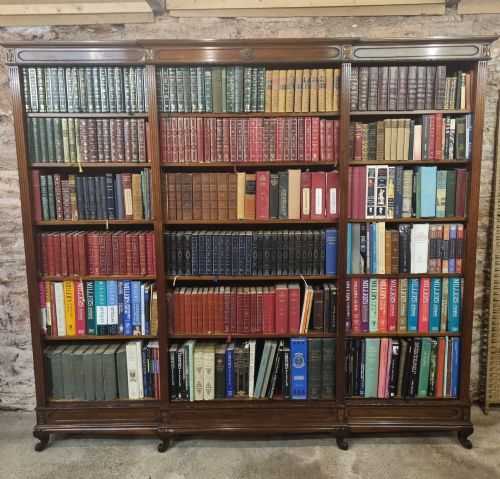
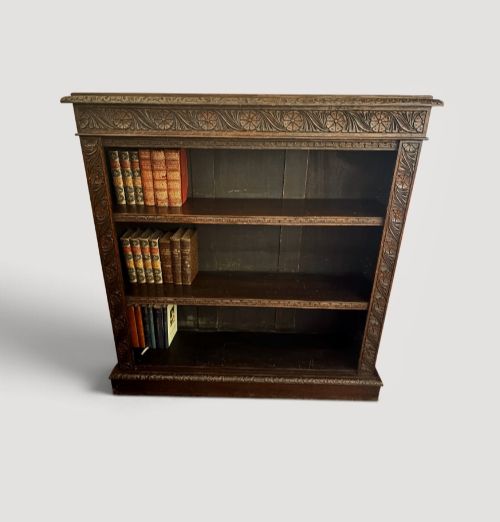
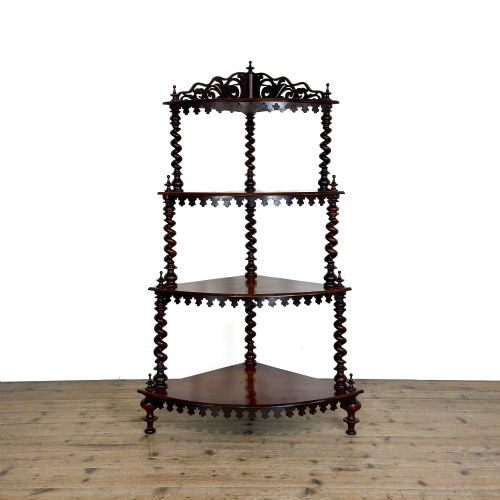
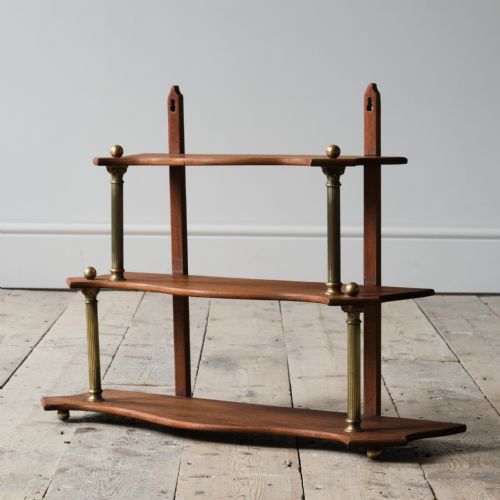
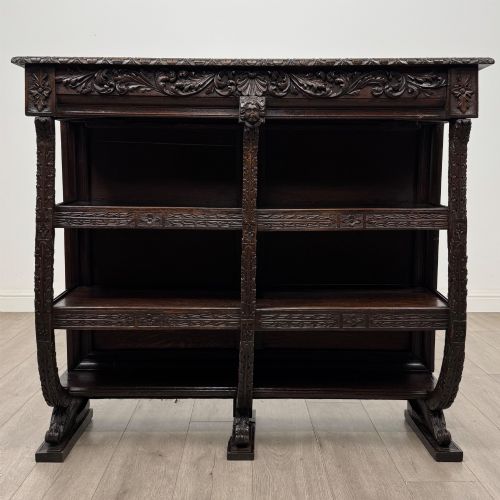
Carved wood shelving appears in several distinct forms across this page, ranging from wall brackets and hanging shelves to open bookcases, corner whatnots, and low library units. These pieces serve to organise books and display objects while adding decorative interest to domestic interiors.
The selection leans heavily towards nineteenth-century and Victorian examples, alongside Regency, Edwardian, and earlier Georgian items. Buyers frequently encounter open bookcases with adjustable shelves, tiered corner whatnots, and small wall-mounted brackets.
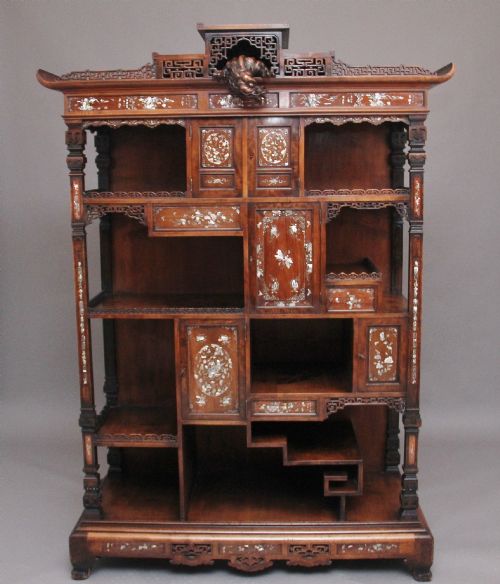
Origins stretch from British workshops to Continental and Japanese makers, incorporating diverse regional interpretations into standard household furniture. Solid timbers dominate the forms, providing durable structures designed for daily utility.
Materials and construction methods
Makers utilised a variety of dense hardwoods, predominantly mahogany, walnut, oak, and rosewood, supplemented by burr walnut veneers and exotic timbers such as padauk. These materials provided the necessary strength to support heavy volumes and decorative ornaments without sagging.
Carpenters employed traditional joinery techniques alongside detailed hand-carving, fretwork, and occasional brass, ormolu, or glass mounts. Many bookcases and cabinets feature adjustable shelf mechanisms, allowing owners to alter interior heights to suit different books.
Carved Wood Shelving Retail Price Guide 2026
Typical asking prices for carved wood shelving among the pieces listed under this phrase on Sellingantiques today, from the lower quarter to the upper quarter. They describe what is for sale here now, not the wider market.
Listings feature timbers including mahogany, walnut, oak, rosewood, and burr walnut across the nineteenth and early twentieth centuries.
Distinctions in craftsmanship and design
Superior examples display crisp, deeply articulated hand-carving and careful selection of figured timbers, such as burr walnut or rosewood with rich natural grain patterns. Lesser pieces rely on simpler machine-cut details or plain solid woods with minimal decorative embellishment.
The refinement of internal mechanics, such as smoothly operating adjustable shelf systems and precise corner joinery, separates standard utility furniture from high-status cabinet-making. Original surface patination and intact structural integrity further define the standing of each piece.
Ercol·Gillows
The Carved Wood Shelving Glossary
- Whatnot
- A multi-tiered piece of furniture with open shelves designed for displaying ornaments or books. These units often fit neatly into corners or stand freely against walls.
- Breakfront
- A piece of furniture where the central section projects forward from the flanking wings. This architectural layout creates visual depth in larger bookcases and cabinets.
- Pier cabinet
- A low cabinet designed specifically to fit the wall space between windows. They frequently feature glass doors or open shelving for small displays.
- Fretwork
- Ornamental design created by cutting patterns through thin boards of wood. Pierced fretwork adds delicate decoration to the sides and brackets of shelving units.
- Étagère
- A French term for a set of open shelves used for small decorative objects. These light pieces often feature multiple tiers supported by slender uprights.
Carved Wood Shelving: Frequently Asked Questions
Where should I place wall brackets?
Wall brackets mount directly onto studwork or masonry using appropriate fixings to support their weight safely. Position them at eye level in hallways, living rooms, or studies to display small ornaments.
Ensure the surrounding wall space balances the bracket's dimensions and any objects placed upon it. Avoid areas prone to heavy damp or direct intense heat sources.
How do adjustable shelves work?
Adjustable shelves rest on removable wooden pegs, metal pins, or within vertical ratchets set into the interior sides of the bookcase. This mechanism allows owners to slide the shelf up or down to accommodate books of varying heights.
When repositioning, support the shelf evenly and remove the contents to prevent strain on the housing grooves. Check that all four supports sit securely before reloading the timber ledge.
How do I clean mahogany shelving?
Dust mahogany shelving regularly with a dry, soft lint-free cloth to prevent particle accumulation. Apply a quality beeswax periodically to nourish the timber and maintain a soft sheen.
Avoid silicone-based sprays and excessive moisture, which can degrade the polished surface over time. Wipe up spills immediately to prevent water marks from settling into the wood grain.
Are corner whatnots stable?
Corner whatnots utilise three or four legs arranged to wedge securely into ninety-degree room angles. Their triangular footprint naturally distributes weight back towards the supporting walls.
Heavier volumes and larger decorative objects should find placement on the lower tiers to maintain a low centre of gravity. Uneven floors may require discreet shims beneath the feet to prevent wobbling.