

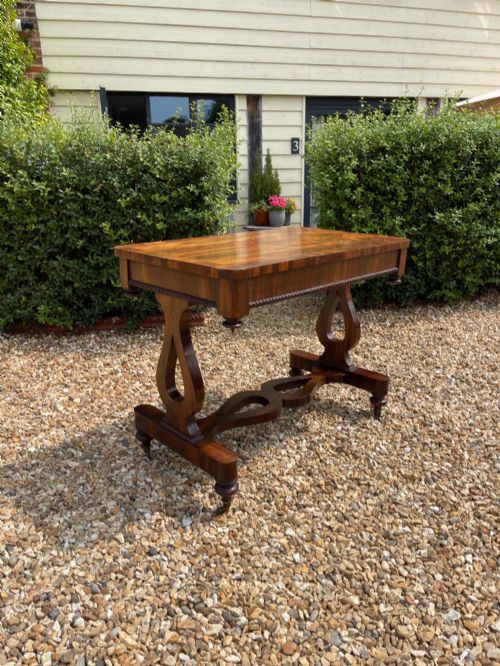
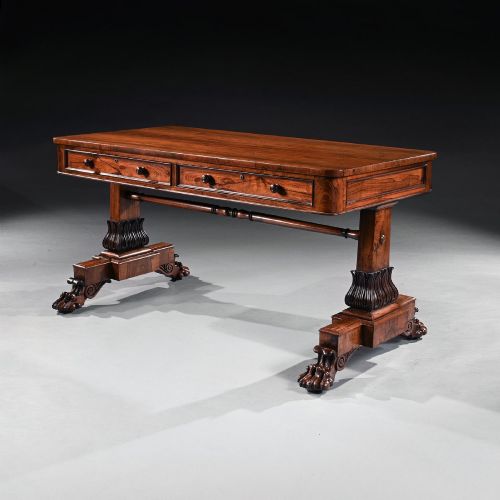
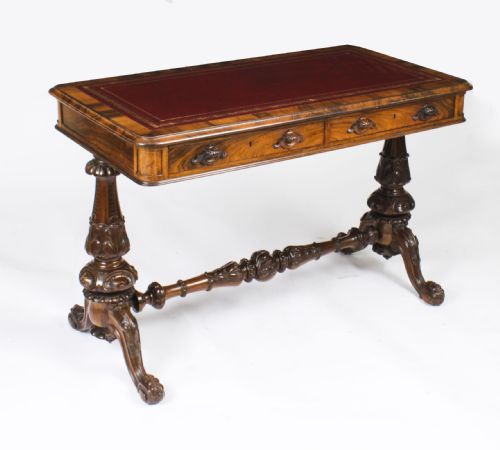
Carved Wood Library Desk
A carved wood library desk grounds a study with dense mahogany, warm walnut or rich rosewood, offering a sturdy surface for daily correspondence.
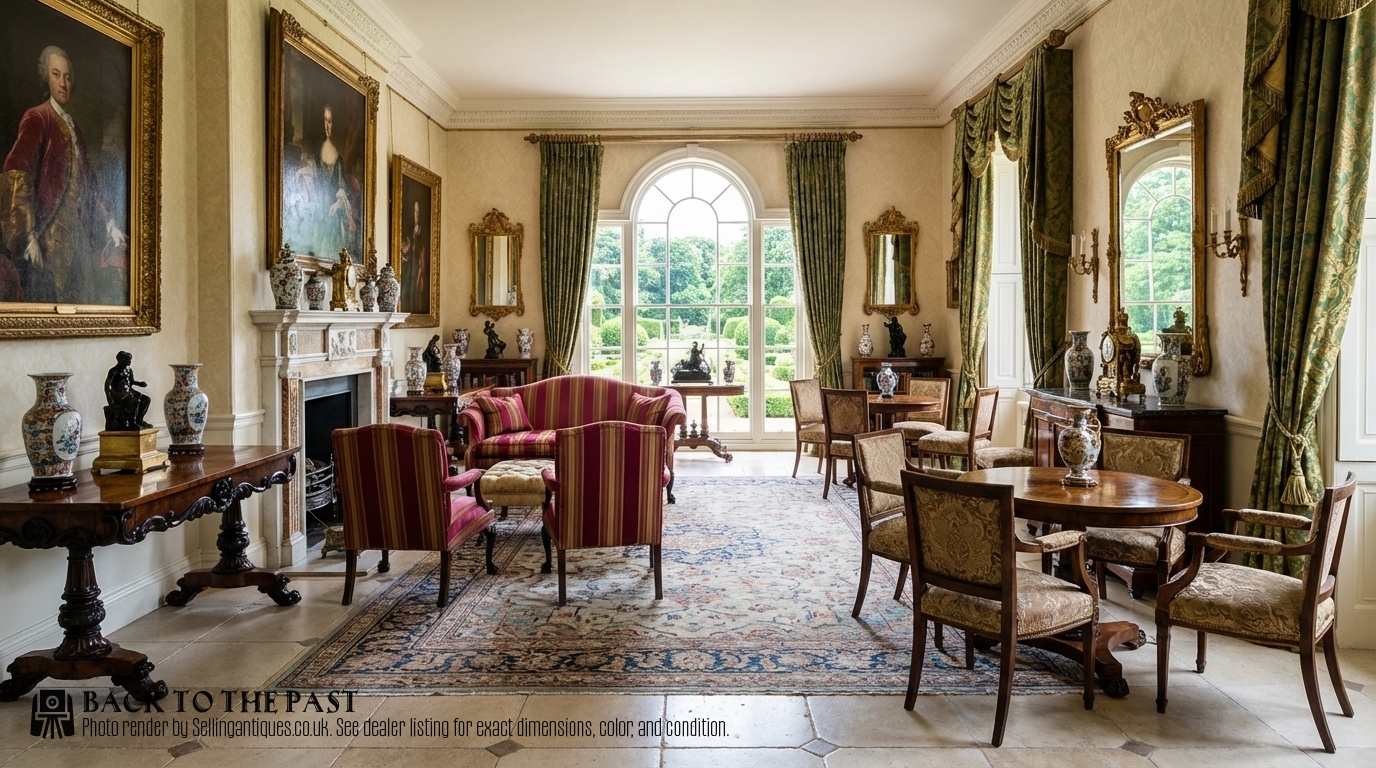
Carved Wood Library Desk
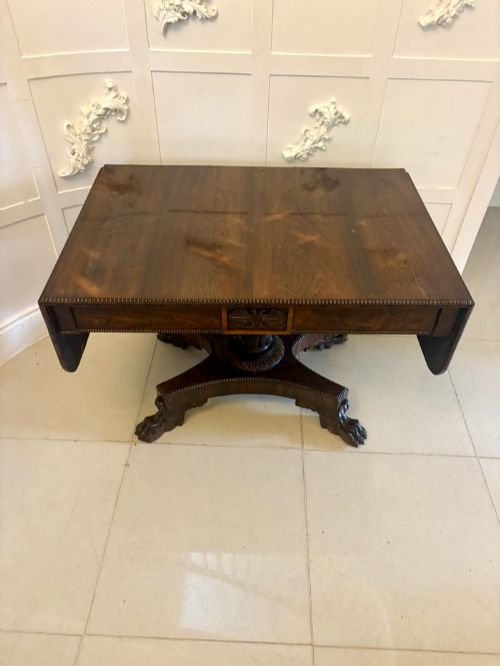
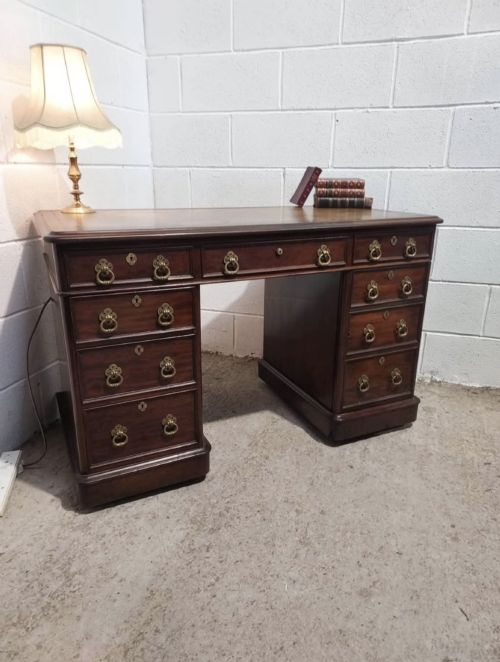
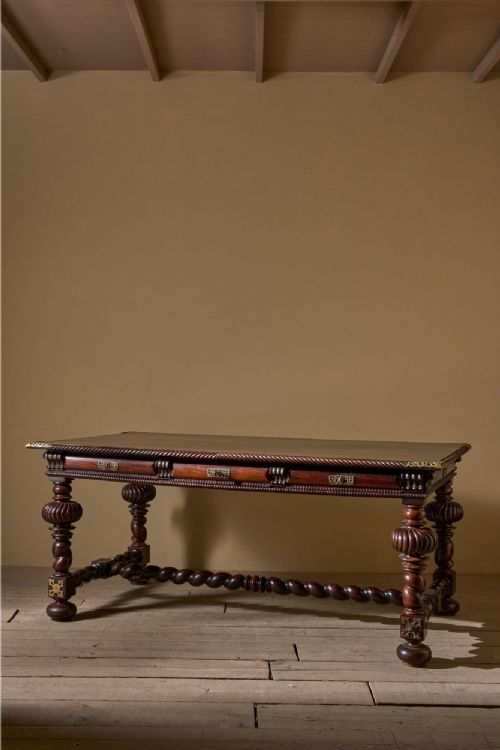
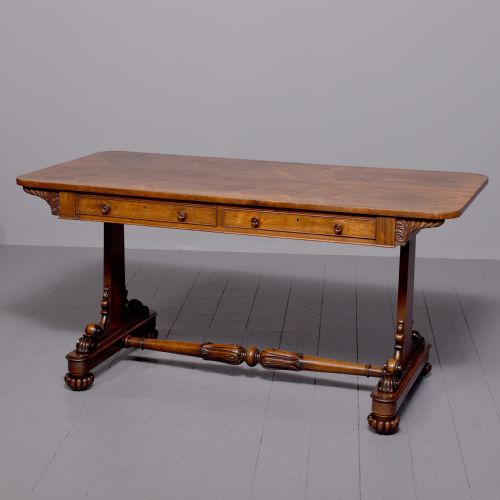
A carved wood library desk spans writing tables, pedestal desks, and partners' desks designed for serious study and administrative work. You will frequently encounter Victorian and nineteenth-century pieces alongside earlier Regency and William IV examples.
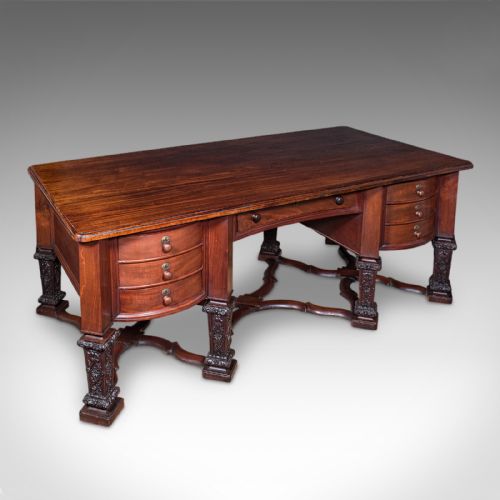
These tables and desks often feature freestanding designs intended to sit proudly in the centre of a room rather than pushed against a wall. The timber selection typically involves dense hardwoods suited to deep relief carving and structural support.
Makers utilised mahogany, rosewood, walnut, and burr walnut, sometimes incorporating brass fittings or leather inserts into the writing surface. The forms range from twin pedestal writing tables to larger library tables with carved details.
Materials and construction methods
Cabinet makers selected solid mahogany, rosewood, and walnut for their grain and weight, building sturdy carcases that withstand heavy use. Timber selection governed the style of carving, with softer woods allowing deep relief work.
Surfaces frequently integrate inset leather writing pads surrounded by blind tooling, paired with turned or carved wooden legs. Drawers employ traditional dovetail joints, reflecting the standard of workshop assembly during the nineteenth century.
The furniture spans multiple stylistic revivals including Gothic, Queen Anne, Louis XIV, and Edwardian Empire.
Distinctions in craftsmanship
The precision of the wood carving marks the division between standard workshop production and exceptional cabinet work. Crisp relief work on legs and friezes indicates skilled hand tool execution.
Timber choice and figure dictate visual depth, with burr walnut and figured mahogany commanding attention through rich grain patterns. Original brass hardware and patinated leather inserts elevate the integrity of the piece.
Gillows·Edwards & Roberts·Gill & Reigate·Sir John Bennett
The Carved Wood Library Desk Glossary
- Partners desk
- A large double-sided desk built with drawers and cupboards on both faces to accommodate two people working opposite each other.
- Pedestal desk
- A freestanding writing table featuring two banks of drawers supporting the top surface.
- Rosewood
- A dense, heavily figured exotic timber prized for its dark grain and polished finish.
- Partners writing table
- A large library table fitted with working drawers intended for placement in the centre of a room.
- Burr walnut
- Wood taken from the growth growths of a walnut tree, showing swirling patterns utilised for decorative veneer.
Carved Wood Library Desk: Frequently Asked Questions
Where should a partners desk be placed?
These large desks suit the middle of a study or library because drawers are accessible from both sides.
Positioning the piece away from walls allows the carved timber and leather top to be appreciated from every angle.
How do I care for a mahogany desk?
Apply natural beeswax periodically to nourish the timber and maintain the soft sheen on the carved surfaces.
Keep the wood away from direct heat sources and sunlight to prevent the polish from drying out.
What is the difference between a writing table and a pedestal desk?
A writing table typically stands on four legs with drawers built into the frieze beneath the top.
A pedestal desk rests on two columns of drawers, offering greater storage capacity and a more substantial footprint.
How are Victorian desks dated?
Examinations of construction techniques, such as hand-cut dovetails and secondary woods, help determine the period.
Stylistic cues like Gothic revival carving or burr walnut veneers also point toward specific decades within the nineteenth century.