
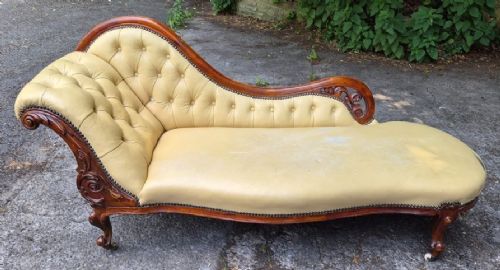
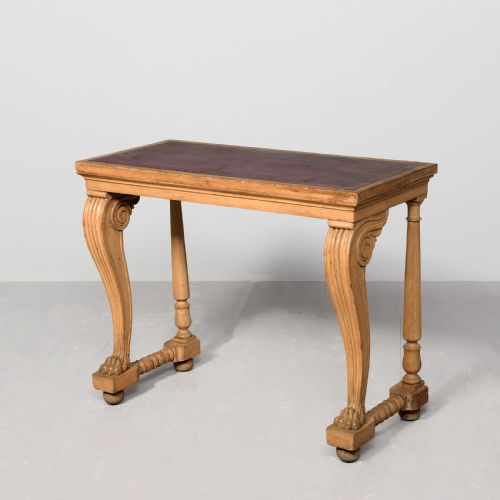


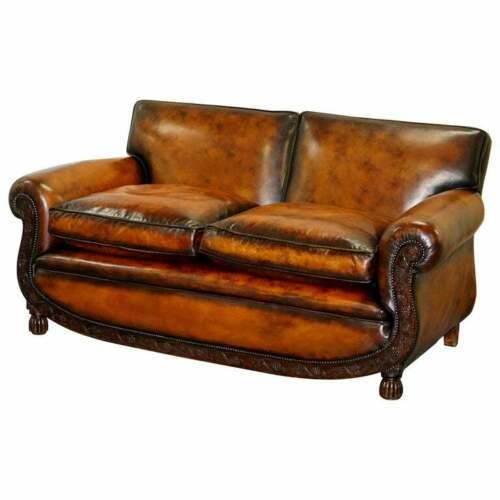

Carved Wood Leather Sofa
A carved wood leather sofa combines substantial timber frames with tactile hides, offering a robust centrepiece for a traditional study or library.
Carved Wood Leather Sofa
A carved wood leather sofa represents a union of sturdy timber framing and durable animal hide upholstery, appearing across periods from the Georgian era through to the Victorian age and into nineteen hundred. These pieces range from substantial Chesterfield suites with hand carved herms statue frames to French Belle Époque banquette sofas and Italian hall seat settees.
How they were made
Makers utilised dense timbers such as mahogany, walnut, and rosewood for the structural frames, allowing artisans to execute deep relief carvings including floral motifs, lion hands, and classical herms. These wooden elements were joined with traditional cabinetry methods to support heavy use before being polished to a deep sheen.
Upholsterers fitted the frames with supportive foundations before applying leather hides, sometimes accented with velvet trim as seen in French Belle Époque pieces. The integration of the wooden carved structure with hand dyed brown leather required precise fitting around armrests and back rails.
Listings feature mahogany, walnut, rosewood, and general hardwoods paired with leather, brass, and velvet across Regency, Victorian, and Georgian periods.
What varies in quality
The distinction between tiers rests upon the depth and intricacy of the timber carving, moving from simple linear mouldings to fully sculpted figures like herms and lions. Dense woods like rosewood and walnut hold crisp sculptural details far sharper than softer hardwoods.
Surface execution also dictates standing, particularly the treatment of the timber grain and the suppleness of the leather hide. Finishes that respect the original patination of the wood sit above flat modern replacements, while carefully aged brown leather holds greater visual depth than uniform commercial dyes.
James Mein of Kelso
The Carved Wood Leather Sofa Glossary
- Chesterfield
- A deep buttoned sofa style traditionally upholstered in leather with arms and back of the same height. This form provides a formal upright seating posture.
- Herm
- A carved bust or figure tapering from the waist down, frequently utilised as a structural support on the arms or legs of Regency frames. These classical elements denote high status cabinet work.
- Chippendale Revival
- A late nineteenth century stylistic movement reviving the mid eighteenth century designs of Thomas Chippendale. Pieces in this style exhibit ornate carved mahogany woodwork.
- Patina
- The surface sheen and softening of colour developed by wood and leather through age and handling. A rich patina signals genuine historical progression.
Carved Wood Leather Sofa: Frequently Asked Questions
What is a carved wood leather sofa?
A carved wood leather sofa is a seating piece featuring a solid timber frame with intricate sculptural details and a leather upholstered seat and back. These items emerged across the Georgian, Regency, and Victorian periods.
They serve as both functional furniture and focal points in grand rooms, combining the rigidity of carved mahogany or walnut with the tactile quality of brown leather.
How do I identify a Regency period piece?
Regency pieces often display classical architectural motifs, such as carved herms statues, bold rosewood grains, and restrained yet confident proportions. Makers of this era drew heavily on Greek and Roman design.
Examining the underside and the joinery helps confirm the period, alongside the specific character of the timber finish and the method of leather attachment.
Where should I place a settee?
These settees suit studies, libraries, and principal reception rooms where their substantial timber frames and dark leather can anchor the space. Freestanding writing tables or library tables often pair well with them.
Keep them away from direct heat sources and strong sunlight to protect both the carved wooden elements and the natural leather hide from drying out.
How are different wood types used?
Mahogany, walnut, and rosewood provide the structural backbone for the decorative carvings found on the arms, legs, and frames. Hardwoods offer the density needed for sharp chisel work.
The choice of timber usually reflects the prevailing fashion of the piece's era, with darker tropical hardwoods dominating nineteenth century high end cabinet making.