



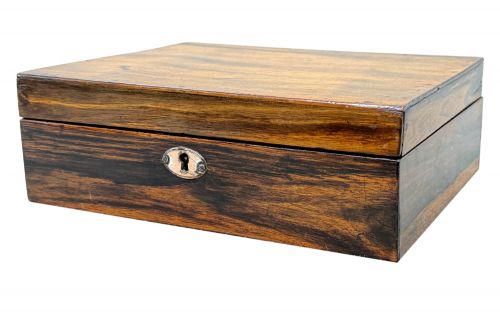


Carved Wood Jewellery Casket
A carved wood jewellery casket holds personal treasures with the weight of centuries, offering both intricate craftsmanship and tactile warmth on a dressing table.
Carved Wood Jewellery Casket
When you search for a carved wood jewellery casket, you encounter a variety of forms designed to house keepsakes, rings, and trinkets. These boxes range from sturdy domestic oak and walnut chests to elaborate imported specimens created across distant continents.
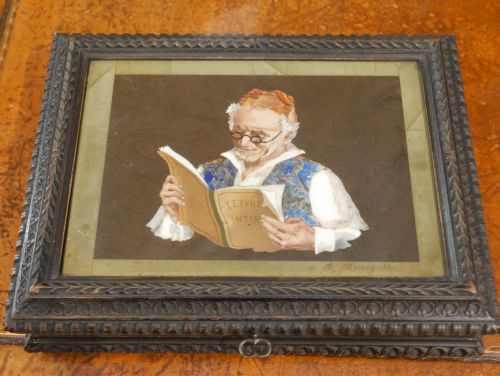
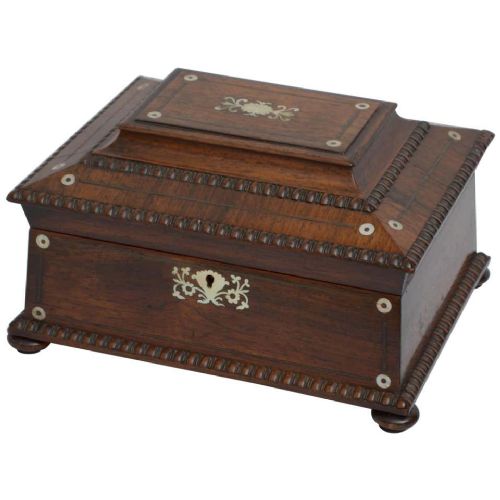
The pieces on this page span several centuries, with the nineteenth century heavily represented alongside examples from the seventeenth and early twentieth centuries. You find standard jewellery boxes alongside sarcophagus-shaped caskets, work boxes, and dome-topped storage containers.
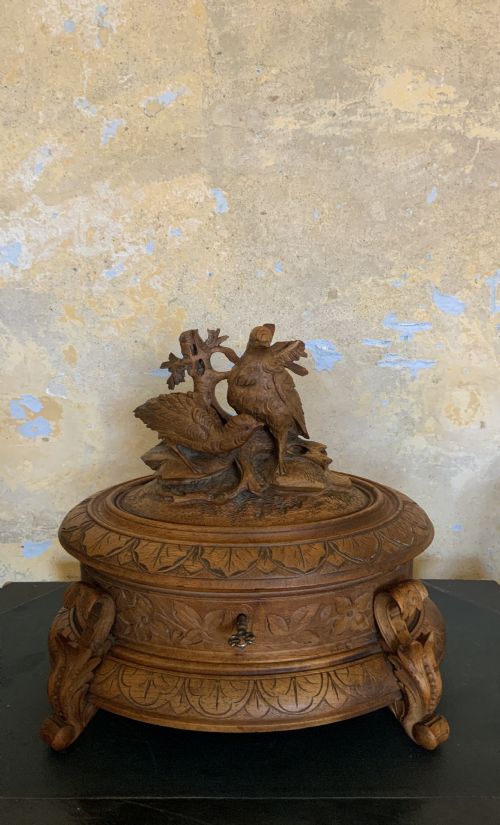
Geographic origins vary widely, encompassing British pieces alongside Anglo-Indian, Black Forest, Chinese, and European designs. Each region brings distinct timber choices and carving traditions to the domestic container.
Materials and Construction
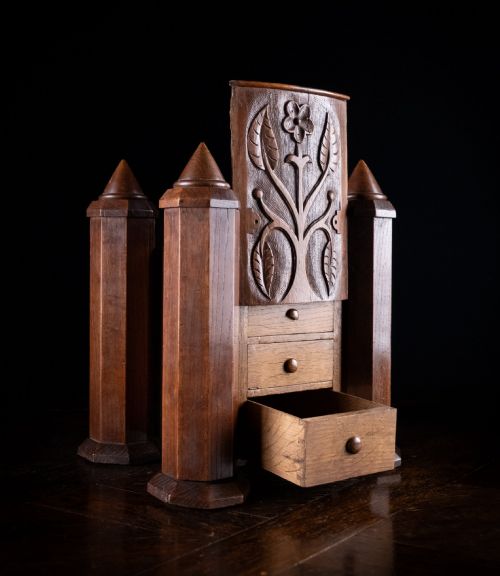
Cabinet makers utilised a rich palette of dense timbers including walnut, rosewood, coromandel, oak, and sandalwood. These woods provided the structural integrity needed for deep relief carving and secure lidded compartments.
Decoration relied on skilled hand work, combining chip carving, floral marquetry, and piercing with contrasting inlays of mother of pearl, brass, and porcupine quill. Local techniques from Black Forest animal motifs to Anglo-Indian Sadeli mosaic work defined the surface textures.
Carved Wood Jewellery Casket Retail Price Guide 2026
Typical asking prices for carved wood jewellery casket among the pieces listed under this phrase on Sellingantiques today, from the lower quarter to the upper quarter. They describe what is for sale here now, not the wider market.
An Indian star tortoise box awaits discovery among the caskets, proving that nineteenth-century carvers found inspiration in the most unexpected shell patterns.
Evaluating the Pieces
The distinction between ordinary utility boxes and exceptional caskets lies in the depth and precision of the hand carving. Crispness in botanical motifs, animal figures, or geometric patterns signals a master carver rather than a hurried workshop production.
Material selection and interior fitting also dictate standing. Solid exotic timbers, intact silk linings, original brass hardware, and complex internal compartments elevate a box from a simple container to a work of art.
The Carved Wood Jewellery Casket Glossary
- Sarcophagus
- A box shape featuring a domed or stepped lid tapering down to a rectangular base, popular during the nineteenth century. This form mimics ancient stone tombs on a domestic scale.
- Marquetry
- The art of applying small pieces of wood veneer to a structure to form decorative patterns. Craftsmen used contrasting natural timbers to create floral or geometric pictures.
- Tunbridge Ware
- A form of British mosaic woodwork produced in Kent using thousands of tiny coloured wood blocks. These blocks form intricate geometric or pictorial mosaics on the box lid.
- Sadeli Work
- A specialised mosaic technique from India using micro-geometric patterns composed of tin, horn, ivory, and various woods. It creates striking banded borders on boxes.
- Black Forest
- A style of deeply carved wooden decorative items originating from Switzerland and Germany, usually featuring naturalistic animals and foliage. Bears and ivy leaves dominate the ornamentation.
Carved Wood Jewellery Casket: Frequently Asked Questions
What were these caskets originally used for?
These boxes served as secure repositories for valuable personal possessions, including rings, necklaces, lace, and letters. Wealthy households kept them on dressing tables or writing desks to organise daily accessories.
Over time, they evolved from functional storage into decorative objects displayed prominently in Victorian and Edwardian parlours. Their internal compartments were tailored specifically for vanity items, sewing tools, or keepsakes.
How do I care for antique wooden boxes?
Keep wooden caskets away from direct sunlight and sources of extreme heat to prevent the timber from warping or splitting. Maintaining a stable indoor humidity protects both the outer polish and internal linings.
Apply a minimal amount of quality beeswax polish occasionally to nourish the grain. Avoid modern chemical sprays that can strip the historic finish or damage delicate inlays.
How can I tell the age of a carved box?
Dating relies on examining the timber species, construction joints, and style of decoration. Earlier seventeenth-century pieces often display robust chip carving in oak or olive wood, while nineteenth-century items frequently utilise exotic veneers like coromandel and rosewood.
Internal hardware such as brass hinges and lock plates also provide clues. Hand-cut screws and traditional dovetailing point toward earlier craftsmanship, whereas machine-produced components suggest later periods.