


Carved Wood Elephant Stand
These carved wood elephant stand pieces bring distinctive colonial and Asian craftsmanship into the home.
Carved Wood Elephant Stand
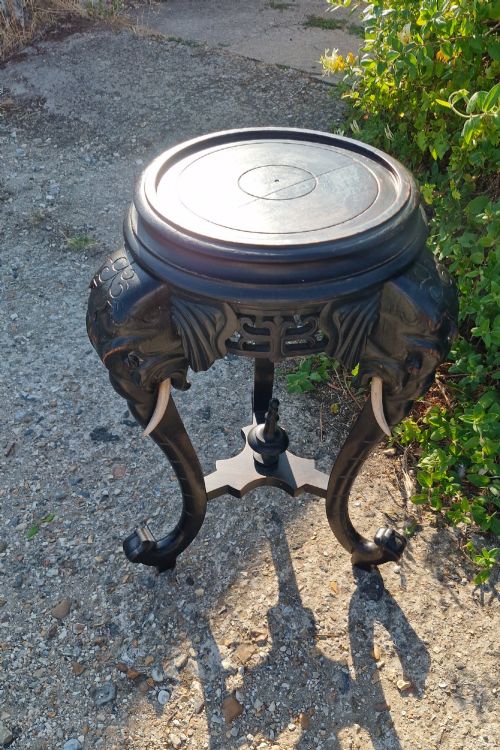
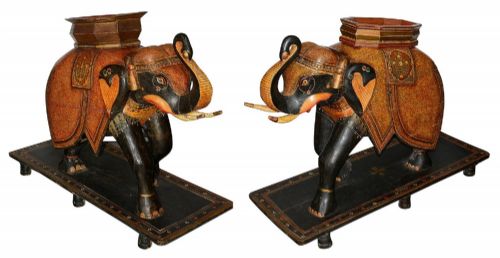
A carved wood elephant stand serves as an occasional table, side table, plant stand or decorative sculpture, often featuring detailed animal forms supporting a tabletop. These pieces frequently emerge from the Victorian era, 19th century, and the early decades of the twentieth century, reflecting Anglo-Indian, Anglo-Burmese, and Ceylonese traditions.
The assortment includes round occasional tables, tripod tables, and sculptural seats where the carved bodies and tusks form the structural support. Makers from regions such as Bombay, Hoshiarpur, and Burma utilised local design vocabularies to create functional furniture infused with figurative carving.
Materials and methods of construction
Surface ornamentation frequently incorporates bone inlay, painted wooden tusks, lacquer, and gesso to accentuate specific details of the design. Certain examples utilise contrasting specimen woods or incorporate removable tray tops resting upon the sculptural animal supports.
Current listings feature pieces spanning the late Victorian era through to the 1920s, constructed from teak, rosewood, and inlaid hardwood.
Distinctions in craftsmanship and finish
The standard of carving dictates the refinement of the piece, with superior examples exhibiting crisp anatomical definition, balanced proportions, and deeply undercut relief work. Simpler items rely on repetitive surface stamping or heavier proportions that lack the nuanced articulation found in finer workshops.
The integration of secondary materials such as bone inlay or painted components affects the overall visual harmony, where precise fitting and intact embellishments elevate the work. Condition of the timber grain, stability of the tripod or pedestal base, and authenticity of original painted tusks or lacquer further define the standing of individual specimens.
The Carved Wood Elephant Stand Glossary
- Anglo-Indian
- Pertains to furniture and decorative objects made in India during the British period, often combining British furniture forms with local carving traditions.
- Hoshiarpur
- A North Indian centre known for intricate inlaid woodwork, typically featuring dense geometric or floral patterns in bone or wire upon teak.
- Pedestal
- A structural support or column holding a tabletop, sculpture, or lamp, which in these pieces takes the figurative form of an elephant.
- Specimen wood
- Furniture constructed from a variety of different timber species arranged to display contrasting natural colours and grains.
- Tripod table
- A small freestanding table supported by three legs, commonly utilised in these designs where the elephant legs or figures form the three-point base.
Carved Wood Elephant Stand: Frequently Asked Questions
What is an elephant table used for?
These pieces function primarily as small side tables, occasional tables, or plant stands within a room.
Their decorative sculptural presence also allows them to stand alone as ornamental figures or folio stands.
How do I date a carved wooden stand?
Dating relies upon examining the timber species, construction joints, and stylistic markers recorded across the Victorian period and early twentieth century.
Regional attributes, such as Hoshiarpur inlay work or Ceylonese specimen woods, help narrow the specific origin and timeframe.
Where were these stands made?
Production centred largely in regions under British colonial influence, including various districts of India, Burma, and Ceylon.
Local workshops adapted traditional motifs and animal forms to suit European domestic tastes for exotic occasional furniture.
Are the tusks always made of bone?
Materials for the tusks vary across the pieces, with some examples utilising carved bone, others employing painted wood, and several showing carved wooden construction.
This variation reflects the specific workshop traditions and the availability of materials during the nineteenth and early twentieth centuries.