







Carved Wood Dial
A carved wood dial brings immediate architectural presence to a room, combining practical timekeeping with deeply textured woodwork.
Carved Wood Dial
A carved wood dial search encompasses timepieces, wall clocks, and barometers featuring wooden surrounds and faces. These instruments span periods from the eighteenth century through the Victorian era and into the twentieth century, reflecting shifting domestic interiors.
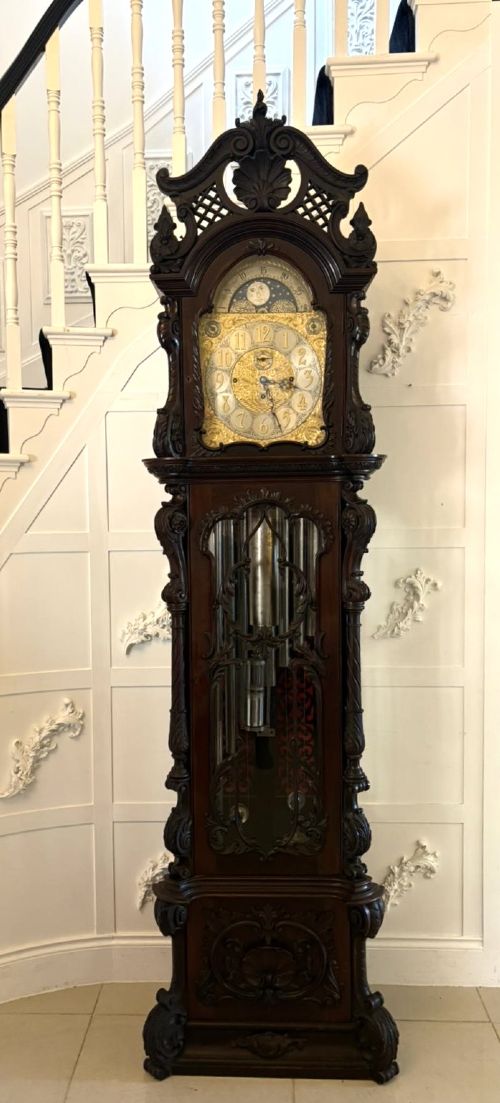
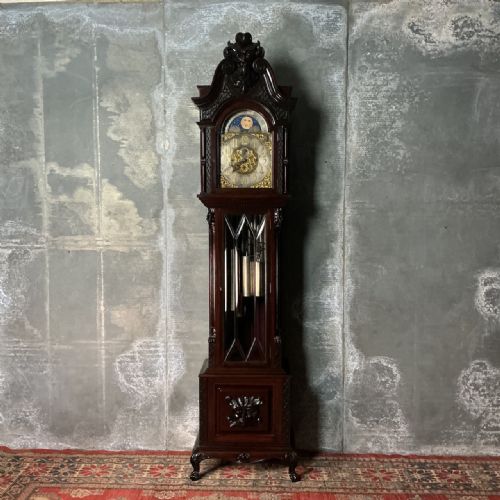
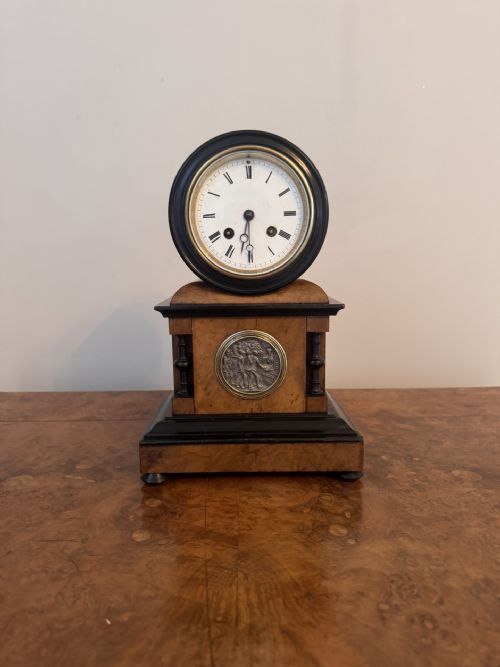
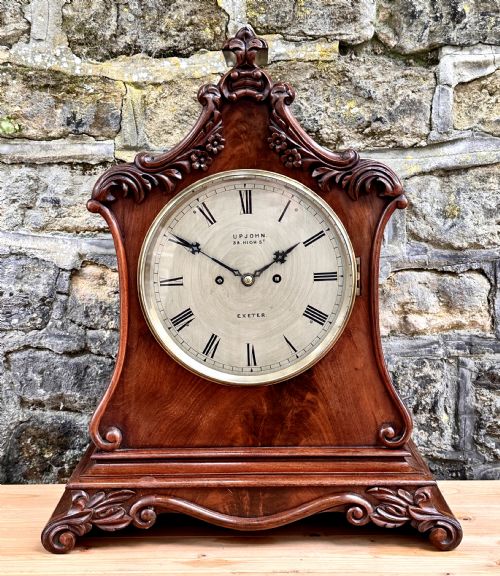
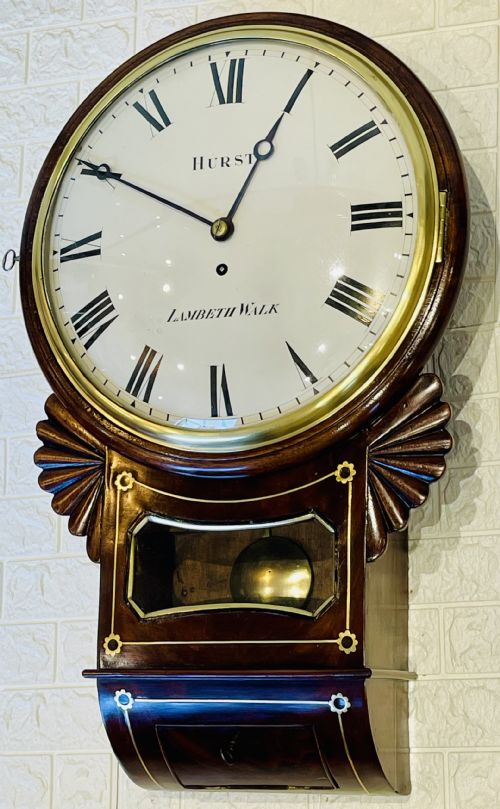
The most prevalent items meeting this description are drop-dial wall clocks and tavern clocks housed in mahogany, oak, and walnut cases. Alongside these wall-mounted pieces, buyers regularly encounter longcase clocks and mantel clocks featuring carved wooden elements.
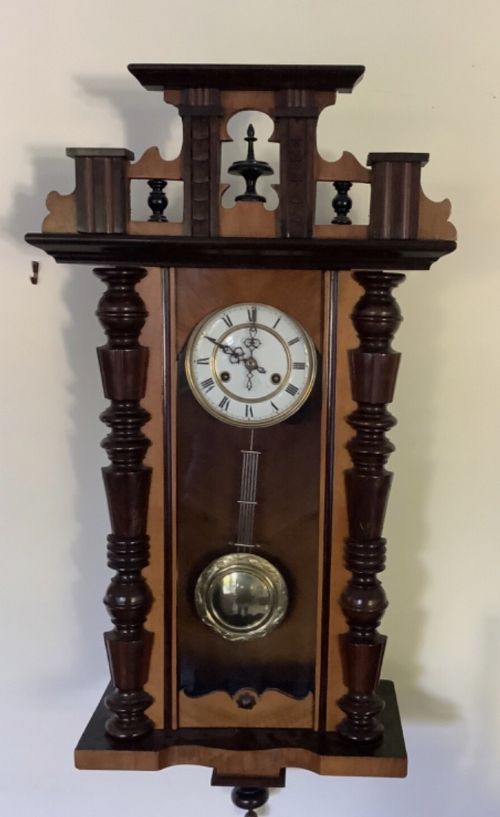
Origins stretch across English, French, German, Austrian, and Dutch workshops, with regional traits defining the carvings and case proportions. Georgian and Regency pieces sit alongside Victorian and Edwardian examples, each carrying distinct period characteristics.
Materials and Construction Methods
Cabinetmakers utilised dense hardwoods such as mahogany, rosewood, walnut, and oak to construct the durable surrounds and cases. These timbers were selected for stability and grain figure, allowing intricate hand-carving along the bezels and brackets without splitting.
Movements were mechanically driven by fusee or weight-driven systems, occasionally incorporating striking mechanisms or chiming tubes. Dials themselves combined painted timber, brass bezels, and sometimes porcelain or ceramic subsidiary rings, protected by curved glass.
Carving techniques ranged from deep relief floral motifs to geometric moulding, executed by hand to frame the dial face. Marquetry, inlay, and gilt accents frequently complemented the carved wooden surrounds on higher-status pieces.
Carved Wood Dial Retail Price Guide 2026
Typical asking prices for carved wood dial among the pieces listed under this phrase on Sellingantiques today, from the lower quarter to the upper quarter. They describe what is for sale here now, not the wider market.
Listings feature eighteenth-century pieces alongside Victorian and Edwardian examples, constructed in mahogany, oak, walnut, and rosewood.
Distinctions in Execution and Age
Quality rests primarily in the crispness of the hand-carving and the integrity of the timber housing. Sharply chiselled wooden surrounds with deep relief indicate superior craftsmanship compared to shallow, machine-milled alternatives.
The sophistication of the internal movement distinguishes standard utilitarian timepieces from exhibition-quality pieces. Twin fusee systems, bell striking, and skeletonised movements demonstrate superior horological ambition.
Originality of components, including the matching of the wooden dial to its case and the preservation of authentic brass hardware, dictates the standing of a piece.
Mappin & Webb·Maple & Co
The Carved Wood Dial Glossary
- Fusee
- A conical pulley used in spring-driven clocks to maintain equal force on the gear train as the mainspring unwinds. This mechanism ensures more accurate timekeeping throughout the running cycle.
- Drop Dial
- A wall clock featuring an extended lower case beneath the circular dial, often housing a pendulum window. This form became popular in public houses and domestic halls during the nineteenth century.
- Cartel Clock
- An ornamental wall clock enclosed in a carved, scrollwork frame made of wood or metal. Originating in France, these pieces prioritize decorative symmetry and sculptural form.
- Tavern Clock
- A large wall-mounted timepiece with a prominent round dial and a long trunk below, historically placed in public spaces. They are sometimes referred to as Act of Parliament clocks due to eighteenth-century taxation.
- Banjo Barometer
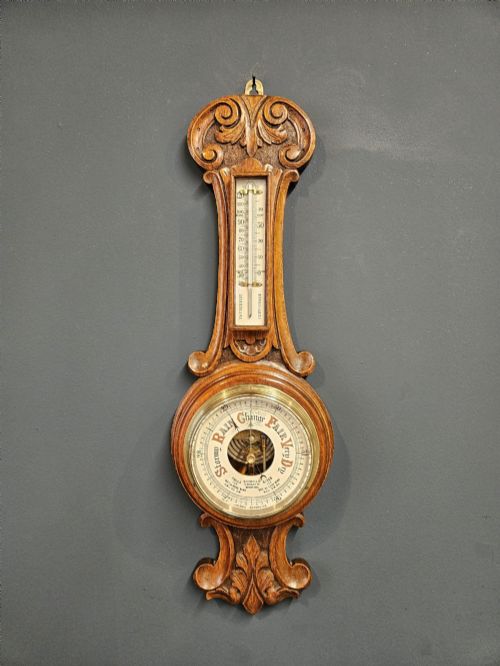
- A mercury weather glass housed in a distinctive, curved wooden case resembling a banjo. These instruments combine a hygrometer, thermometer, and dial barometer within a carved frame.
Carved Wood Dial: Frequently Asked Questions
How do I date a carved wood dial?
Dating relies on assessing the timber species, the style of the carving, and the mechanical movement inside. Earlier Georgian and Regency pieces typically show finer joinery and fusee movements, while Victorian examples often feature bolder oak or walnut carvings.
Examining the backboards, hinge types, and dial construction also helps pinpoint the manufacturing era. Comparing the decorative motifs against known period styles provides further confirmation.
Where should I hang a drop dial wall clock?
These clocks require a sturdy interior wall capable of supporting the weight of hardwood cases and mechanical movements. Placement should avoid direct sunlight and damp areas to protect the wooden dial and internal brass components.
Ensure the wall allows the pendulum to swing freely without striking the back of the case. Height should be chosen for easy winding and clear visibility of the dial.
What is the difference between a longcase and a bracket clock?
Longcase clocks stand independently on the floor, utilising suspended weights housed in a tall wooden trunk to power the movement. They represent substantial architectural furniture designed as room centrepieces.
Bracket clocks are smaller, portable timepieces historically placed on furniture brackets or tabletops. They rely on spring-driven fusee movements rather than hanging weights.
How do barometers differ from clocks?
Barometers measure atmospheric pressure to forecast weather changes rather than telling time. Their wooden dials typically display meteorological terms like "Stormy" or "Fair" alongside a pointer.
While sharing similar carved wooden housings and glass bezels with wall clocks, their internal mechanisms contain aneroid cells or mercury tubes instead of gear trains and escapements.