
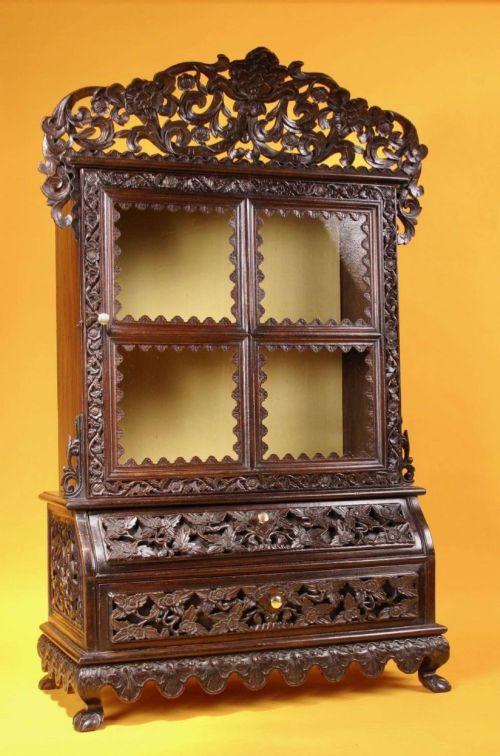
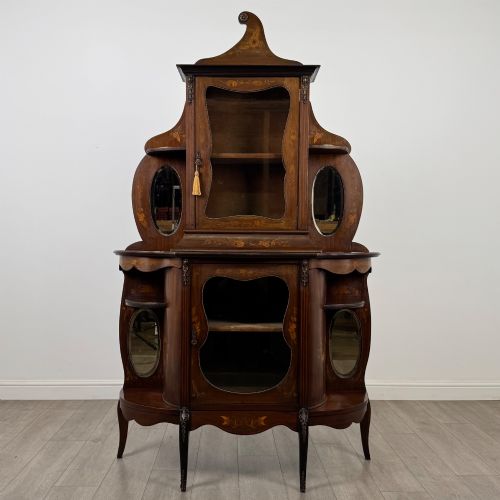
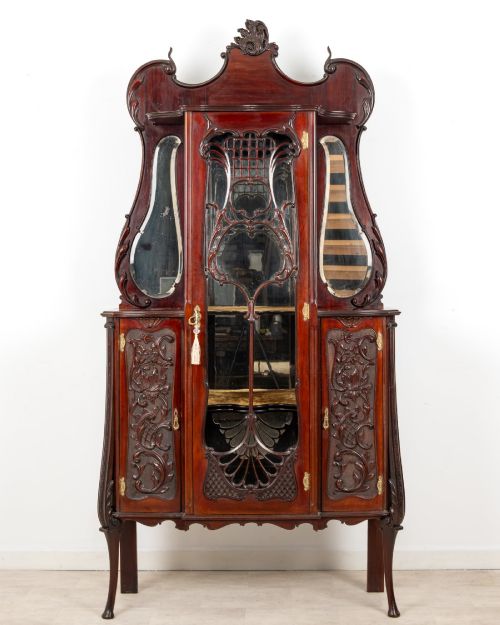
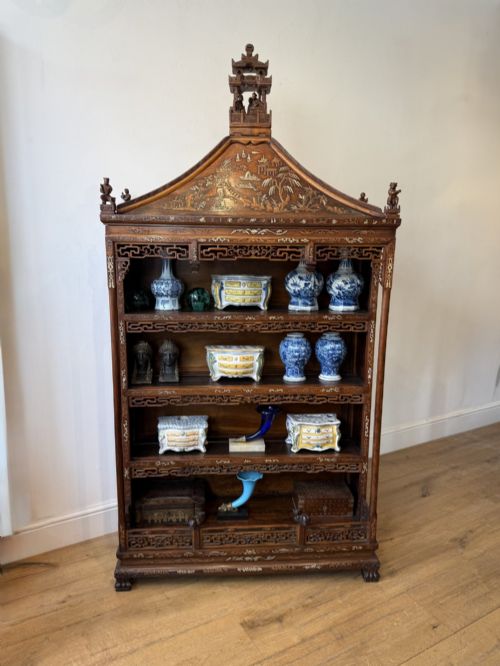




Carved Wood Curio Cabinet
A carved wood curio cabinet holds small treasures behind glass, bringing order and focus to a room of disparate objects.
Carved Wood Curio Cabinet
When you search for a carved wood curio cabinet, you look for glazed display furniture designed to showcase small possessions. The pieces seen here span the nineteenth and early twentieth centuries, drawing on Victorian, Edwardian, and continental traditions.
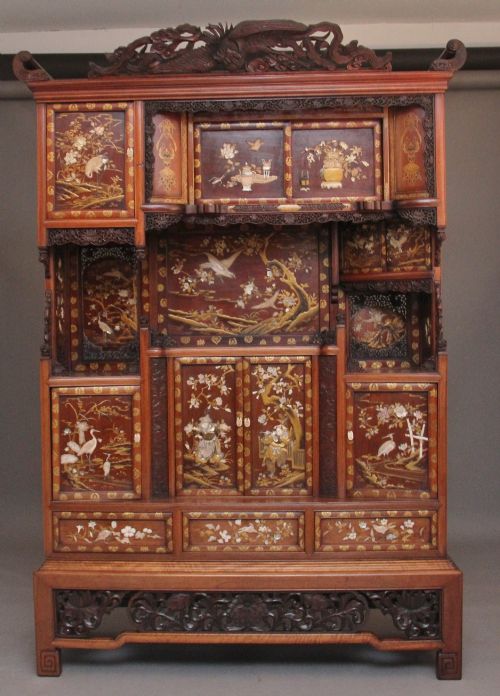
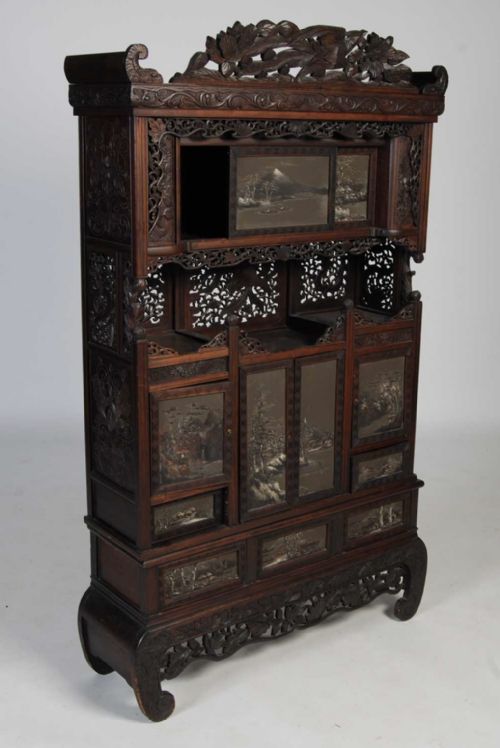
Most examples you meet on this page take the form of upright display cabinets, wall-hanging vitrines, or Asian shodonas and stands. Mahogany and hardwood form the structural core of these items, often paired with glass panels and mirrored backs.
The styles range from Chippendale Revival and French Chateau to Japanese Meiji and Chinese Qing aesthetics. Buyers choose these cabinets to create focal points that protect delicate collections from dust while keeping them fully visible.
How they were made
Makers constructed these cabinets using dense timbers such as mahogany, hardwood, and ebonised wood to support heavy glass doors and shelving. Carving and giltwood details were applied by hand to frames, pediments, and stands, following the prevailing decorative tastes of the period.
Glazing techniques required secure rebates and framing to hold glass panes safely in doors and sides. Interior mirrors and fabric linings were added to reflect light through the display space and cushion delicate objects placed inside.
Pagoda display cabinets let miniature treasures live inside tiny wooden temples.
What varies in quality
The distinction between standard production and superior work lies in the depth and crispness of the wood carving. Cabinets with integrated joinery, substantial timber thickness, and refined surface finishes stand apart from simpler utility pieces.
Proportion and decorative restraint also determine the standing of a piece. Elaborate French or neoclassical giltwood mounts and carefully matched mahogany grain indicate higher workshop ambition.
Waring & Gillow
The Carved Wood Curio Cabinet Glossary
- Vitrine
- A glass-fronted cabinet or display case designed specifically for showing porcelain, curios, and objets d'art. The term derives from the French word for glass.
- Shodona
- A traditional Japanese display cabinet featuring asymmetrical shelving and compartments. These pieces often incorporate carved hardwood and were produced during the Meiji and Taisho periods.
- Bijouterie cabinet
- A specialised display table or cabinet with a glazed top and sides, created to exhibit jewellery and small decorative items. They frequently feature hinged lids or doors lined with fabric.
- Chinoiserie
- European decorative style reflecting Chinese artistic motifs and techniques. It appears on cabinets through painted decoration, lacquering, and carved pagoda-style pediments.
- Giltwood
- Timber that has been coated with gold leaf or gold paint to create a rich metallic finish. It is commonly found on continental display cabinets from the turn of the twentieth century.
Carved Wood Curio Cabinet: Frequently Asked Questions
What goes inside a curio cabinet?
These cabinets house small collections, including porcelain figurines, glass trinkets, and natural curiosities. The enclosed shelving keeps fragile items safe from accidental damage.
Items are arranged to catch the light through glazed doors and side panels, often enhanced by mirrored interiors.
Are these cabinets wall mounted or freestanding?
The selection includes both tall floor-standing display cabinets and smaller wall-hanging vitrines. Freestanding versions often sit on dedicated stands or bracket feet.
Wall cabinets suit smaller rooms where floor space is limited, while larger shodonas provide substantial display capacity.
How do I date a wooden display cabinet?
Dating relies on timber selection, construction methods, and stylistic markers such as Edwardian inlay or Victorian carving. Mahogany and heavy hardwoods dominate nineteenth-century pieces.
Asian imports from the Meiji or Taisho eras carry specific decorative conventions that distinguish them from European revival styles.
Can these cabinets support heavy items?
Most curio cabinets are built for light decorative objects rather than heavy books or dense ceramics. The internal glass or wooden shelves are designed for porcelain, glass, and small curiosities.
Wall-mounted versions require secure fixings suited to the weight of the timber frame and glass panels.