





Carved Wood Coat Stand
A carved wood coat stand organises the hallway with solid function and striking figurative detail, spanning Victorian mahogany pieces to elaborate Black Forest bear carvings.
Carved Wood Coat Stand
A carved wood coat stand is a functional piece of entrance furniture designed to hold hats, coats, and umbrellas. The pieces found here range from substantial Victorian hall stands to wall-hanging racks and freestanding coat stands.
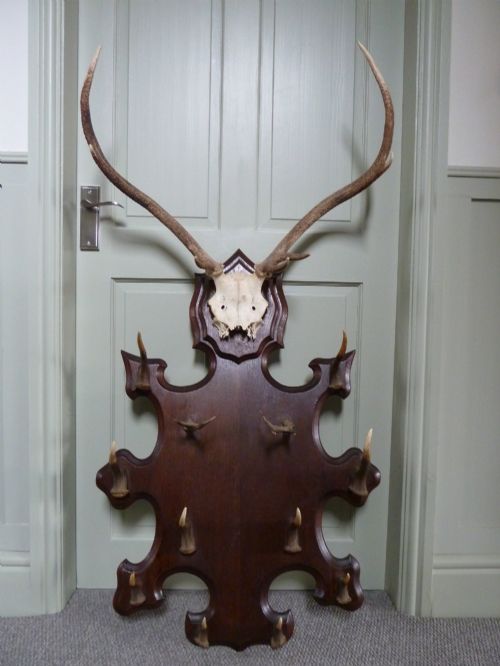
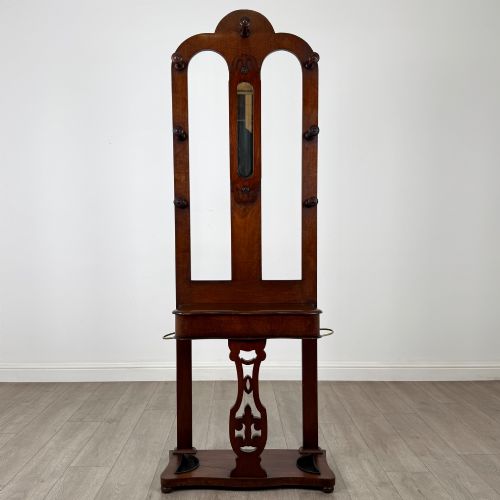
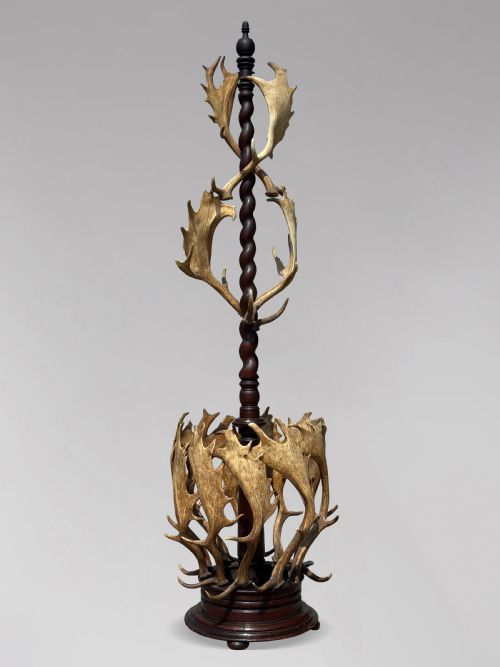
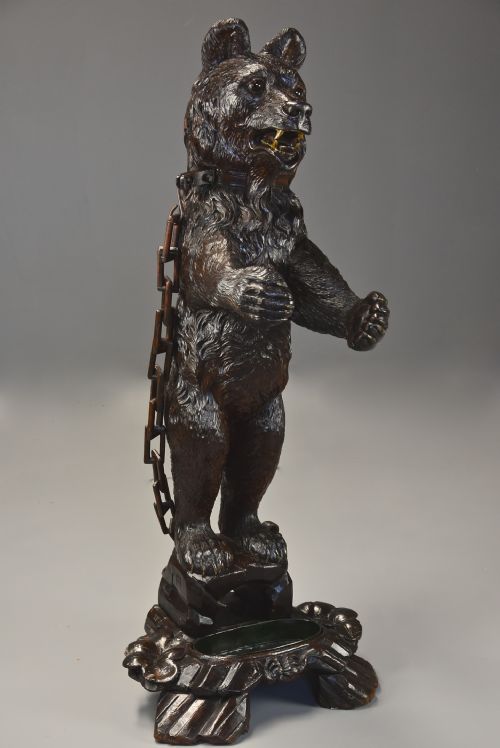
Victorian examples in mahogany and oak dominate the selection, often incorporating bevelled mirrors, marble shelves, and brass hooks for daily use. Alongside these traditional forms appear Black Forest carvings featuring bears, foxes, and deer antlers.
The inventory also extends to Regency oak designs, Chinese lacquered robe stands, and Dutch or Flemish carved hallstands. These diverse forms reflect the utilitarian needs of historical hallways combined with intricate regional carving styles.
How they were made
Makers utilised dense timbers such as mahogany, oak, walnut, and linden wood to construct these stands, ensuring they could bear the weight of heavy winter garments. Carving was executed by hand, producing detailed animal figures, foliage, and architectural motifs like the Greenman.
Functional elements such as brass hooks, glass mirrors, and marble insert shelves were integrated directly into the wooden framework. Antler and horn were also employed in specific regional styles, particularly within Swiss and South German Black Forest workshops.
Carved Wood Coat Stand Retail Price Guide 2026
Typical asking prices for carved wood coat stand among the pieces listed under this phrase on Sellingantiques today, from the lower quarter to the upper quarter. They describe what is for sale here now, not the wider market.
Current listings feature pieces spanning the 1850s to the early 20th century, encompassing Victorian, Regency, and Chinese Qing Dynasty styles.
What varies in quality
The standard of a carved wood coat stand depends heavily on the depth and precision of the hand carving, particularly in figurative Black Forest and oak pieces. Exhibition quality works display intricate anatomical detail in animals and crisp relief in foliage, whereas simpler items show more generalised shaping.
Construction complexity also dictates the tier of the piece, distinguishing basic wall-hanging hat racks from large freestanding hall stands equipped with drip pans, marble shelves, and deep bevelled mirror plates.
J. Parker of Woodstock
The Carved Wood Coat Stand Glossary
- Hall stand
- A large freestanding piece of entrance furniture incorporating coat hooks, a mirror, umbrella compartments, and frequently a small shelf or drawer. These items served as central organizational hubs in nineteenth-century hallways.
- Black Forest
- A regional style of wood carving originating from Switzerland and South Germany, known for realistic depictions of bears, foxes, chamois, and forest foliage. Linden wood was frequently utilised for these detailed sculptures.
- Greenman
- A sculptural motif representing a human face entwined with or emerging from leaves and vines. This decorative feature appears carved into oak framework on select Victorian pieces.
- Bevelled plate
- A mirror glass with edges cut and polished at an angle to create a framed, reflective depth. This feature is commonly found set into the wooden backboards of Victorian hall stands.
- Robe stand
- A freestanding wooden frame used for hanging garments, represented in this selection by Chinese lacquered examples of large scale. They provide open hanging space distinct from traditional enclosed hall stands.
Carved Wood Coat Stand: Frequently Asked Questions
How do I use a hall stand today?
These stands serve the same practical function in modern homes, providing designated hanging space for coats and bags in hallways or boot rooms. The integrated shelves and umbrella sections offer convenient drop zones for daily accessories.
Placing one in an entranceway introduces period character while utilising vertical space efficiently. Care should be taken not to overload antique brass hooks with excessive weight.
What materials were used?
Maker materials typically include solid hardwoods such as mahogany, oak, and walnut, chosen for their structural strength. Linden wood was frequently selected for intricate figurative carvings in Black Forest pieces.
Additional elements include brass hanging hooks, mirrored glass plates, marble shelves, and occasionally natural horn or antlers. Each material contributes to both the utility and decorative impact of the stand.
How do I identify Victorian pieces?
Victorian examples often feature dark woods like mahogany or carved oak, frequently incorporating deep bevelled mirrors and marble inserts. Stylistic indicators include Gothic revival motifs, Greenman carvings, and substantial architectural proportions.
Construction methods from this era involve traditional joinery and hand-carved detailing rather than modern fasteners. Examining the backboards and framing can help confirm the nineteenth-century origin.