



Carved Wood Casket
A carved wood casket brings tactile history into a room, offering a functional vessel shaped by regional carving traditions and domestic storage needs.
Carved Wood Casket
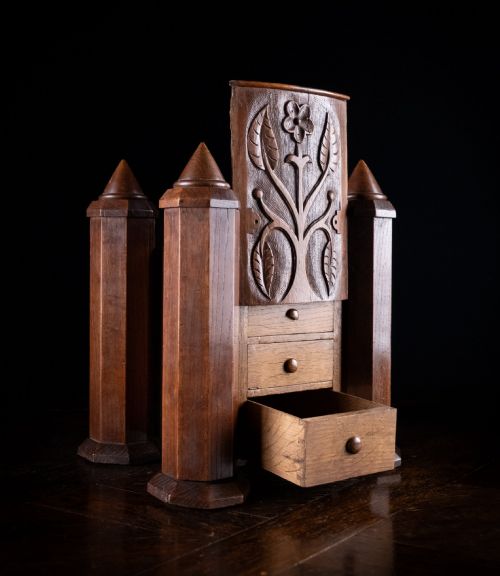
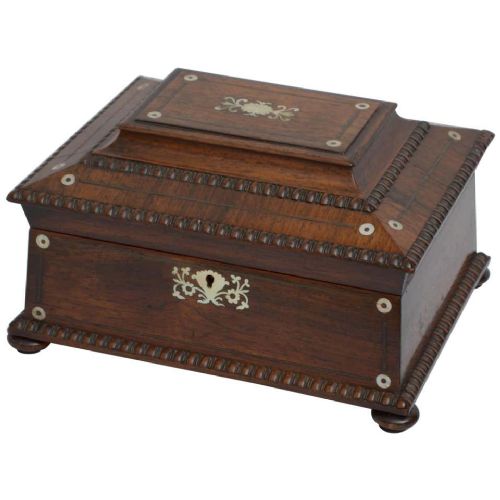
A carved wood casket serves as a container for keepsakes, documents, and personal valuables, appearing across domestic interiors from the seventeenth century onward. Buyers exploring this category encounter a range of forms, including sarcophagus-shaped jewellery chests, rectangular workboxes, and domed game boxes. Regional variations dominate the selection, linking British, European, and colonial workshops to distinct ornamental vocabularies.
The material record on this page spans walnut, teak, sandalwood, ebony, and olive wood, alongside regional styles such as Black Forest, Anglo-Indian, and Sorrento. European examples often utilise domestic hardwoods with deep relief carving, whereas colonial productions incorporate exotic timbers and bone inlays. These pieces functioned as table-top accessories for the elite, housing letters, gloves, and jewellery.
Nineteenth-century Victorian and Edwardian examples represent the largest share of available items, though seventeenth-century panels and eighteenth-century spice boxes also surface. Buyers frequently meet boxes associated with specific functional roles, such as stationery storage, humidors, and vanity cases. Each object reflects the prevailing decorative taste of its period, from Gothic revival panels to intricate floral marquetry.
Materials and Construction Techniques
Cabinetmakers constructed these caskets using dense native and imported timbers, selecting walnut, rosewood, and coromandel for their grain and stability. Carvers applied relief and incised techniques directly to the solid wood or veneer, creating deep floral motifs, animal figures, and geometric patterns. Joints typically involved dovetailing at the corners to withstand the structural stresses of seasonal humidity changes.
Surface enrichment frequently combined carving with contrasting inlays of bone, mother-of-pearl, and lighter woods. Lining materials such as silk, velvet, or marbled paper completed the interior, secured with small brass pins or animal glue. Metal hardware, including brass hinges, escutcheons, and locks, provided both structural reinforcement and functional security for the contents.
Carved Wood Casket Retail Price Guide 2026
Typical asking prices for carved wood casket among the pieces listed under this phrase on Sellingantiques today, from the lower quarter to the upper quarter. They describe what is for sale here now, not the wider market.
Listings feature woods spanning walnut, teak, sandalwood, ebony, rosewood, and olive wood across European and colonial origins.
Assessing Craftsmanship and Condition
Quality in a carved wood casket rests upon the depth and precision of the chisel work, where crisp undercut details distinguish superior carving from mechanical or shallow execution. The selection of the timber grain and the symmetry of any applied inlays reveal the maker's intent and skill. Uniformity in the joints and the preservation of original internal linings further separate standard utility boxes from exhibition-grade pieces.
Originality of hardware and fittings substantially influences the standing of a piece within its type. Caskets retaining their period locks, keys, and interior compartments command greater attention from collectors than those with replaced elements. The integrity of the timber surface, free from major shrinkage splits or heavy restoration, underpins the physical survival of the carving.
The Carved Wood Casket Glossary
- Sarcophagus
- A box form featuring a sloping lid and flared base, reminiscent of ancient stone coffins. This shape gained popularity in Regency and Victorian sewing and jewellery boxes.
- Marquetry
- The art of applying small pieces of veneer to a structural panel to form decorative patterns. Craftsmen utilised various coloured woods to create pictorial or floral designs.
- Black Forest
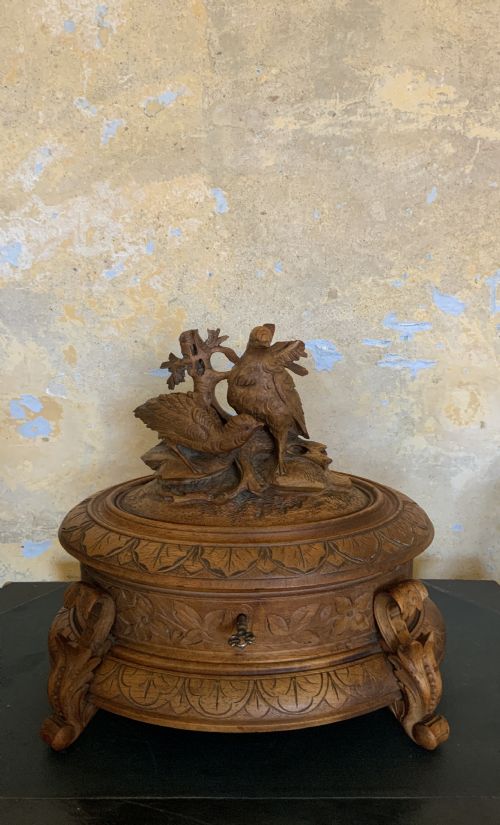
- A regional style of wood carving originating in the mountainous borderlands of central Europe. Pieces from this tradition typically feature naturalistic animal subjects, particularly bears, carved in high relief.
- Tunbridge Ware
- A specialised form of woodworking utilising thousands of tiny tinted wood blocks arranged to form mosaic pictures. This technique flourished in nineteenth-century England.
- Cellarette
- A small cabinet or box originally designed to hold bottles of wine or spirits. In antique contexts, the term also describes heavily carved colonial storage chests.
Carved Wood Casket: Frequently Asked Questions
What did people store in a carved wood casket?
These boxes held valuable personal possessions, including jewellery, letters, gloves, and sewing implements. Their internal compartments kept delicate items organised and protected from dust.
Larger versions functioned as desk accessories for stationery or as humidors for cigars. In earlier centuries, specific forms stored spices, lace, or religious items like etrog boxes.
How do I identify a Black Forest carved box?
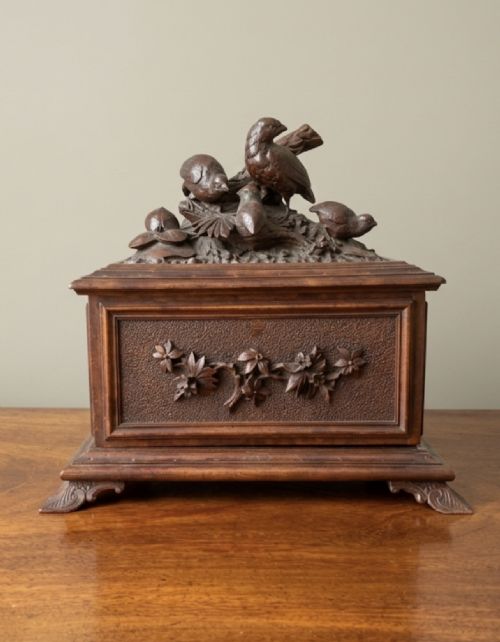
Black Forest pieces are characterised by deep, naturalistic relief carving, most commonly featuring foliage, oak leaves, and wildlife. Bears and stags appear frequently as structural supports or lid decorations.
The timber used is typically walnut or Swiss linden, finished with a warm wax polish rather than heavy varnish. The style reflects nineteenth-century romanticism and European alpine tourism.
What distinguishes Anglo-Indian boxes?
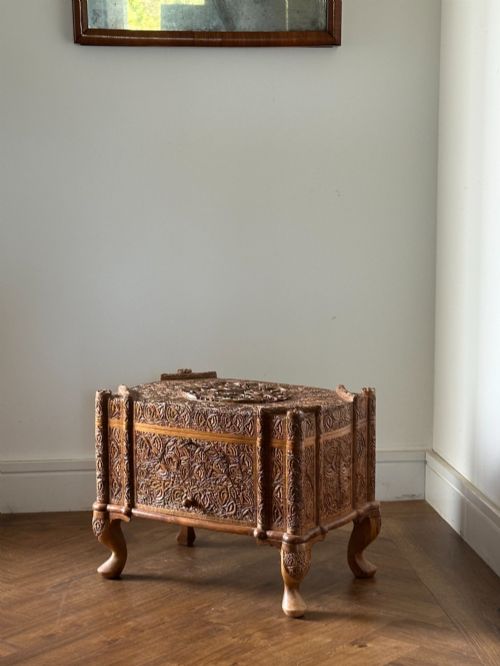
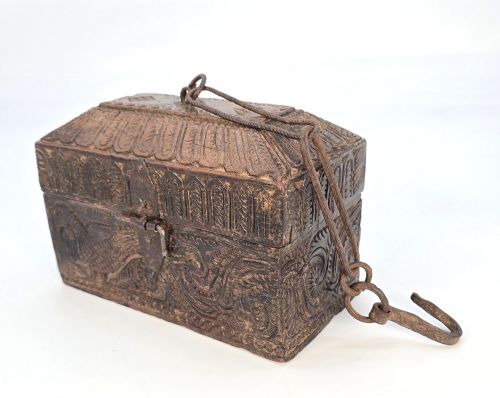
Anglo-Indian caskets combine traditional British furniture forms with intricate indigenous carving traditions from the Indian subcontinent. Makers utilised dense tropical hardwoods such as sandalwood, teak, and ebony.
Decoration often incorporates dense floral scrollwork, geometric pierced panels, and contrasting inlays of bone or ivory. These items were produced for the export market during the colonial period.
Are original locks and keys common?
Many surviving caskets retain their original brass or iron locks, though working keys are less frequently preserved due to centuries of displacement. Locks often bear the stamp of contemporary hardware makers.
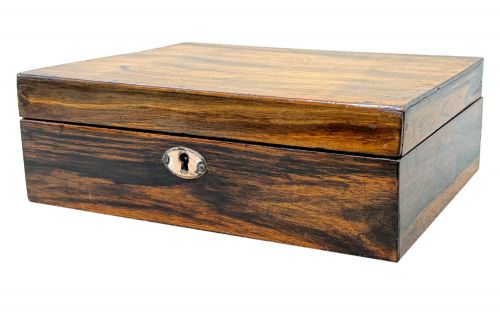
The presence of an intact escutcheon plate around the keyhole indicates the original placement of the locking mechanism.