
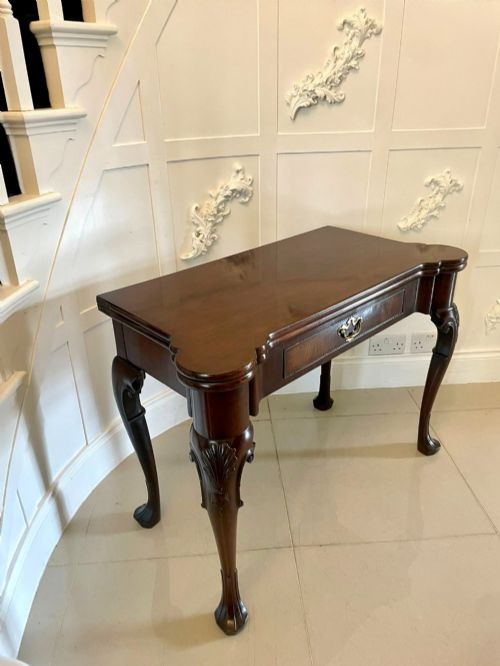
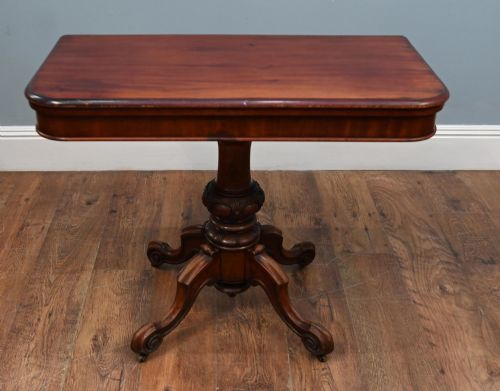
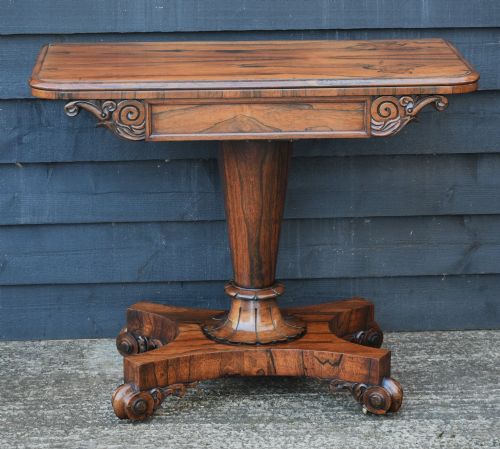
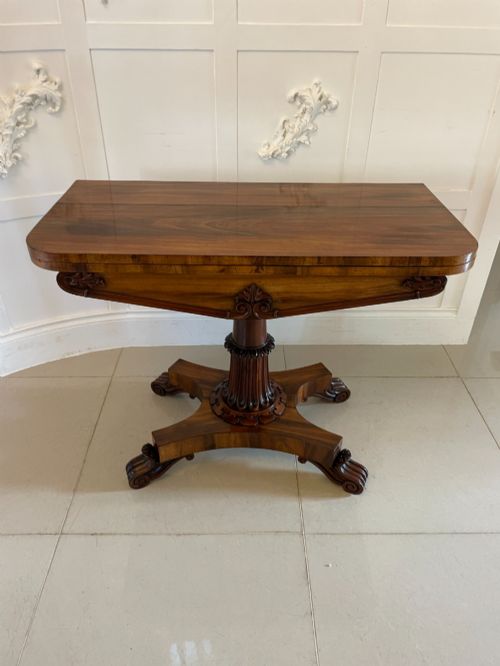
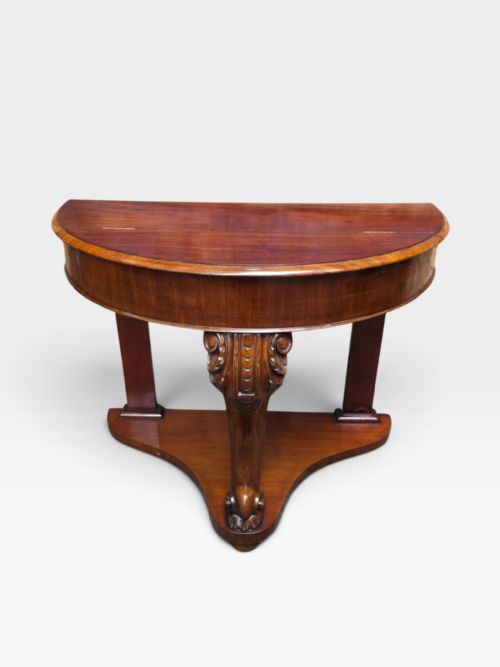
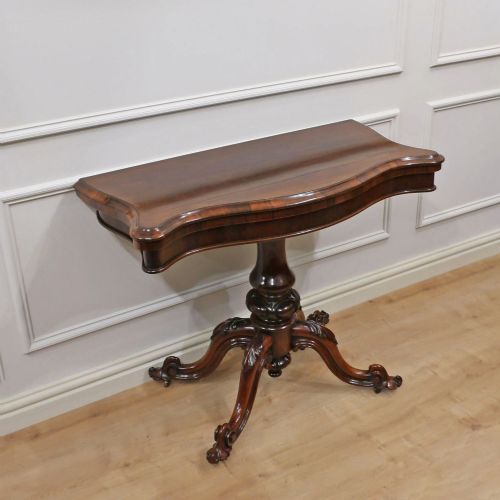
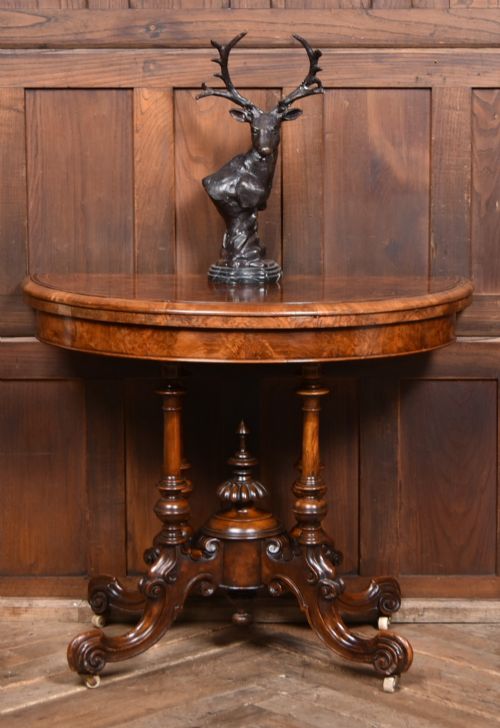
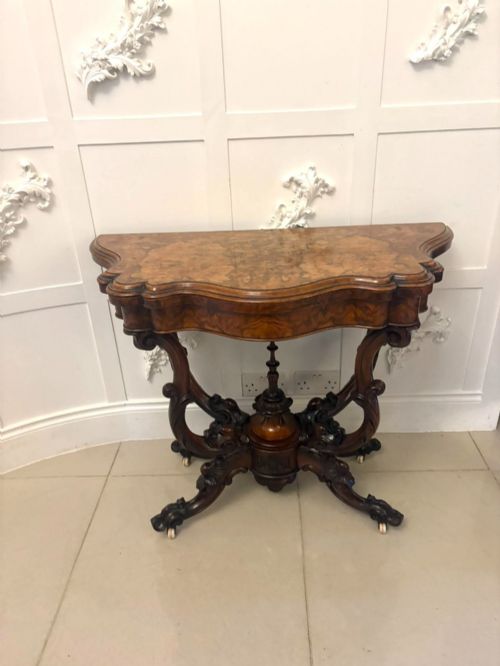
Carved Wood Card Table
A carved wood card table serves a dual purpose as a functional games surface and a decorative console when folded.
Carved Wood Card Table
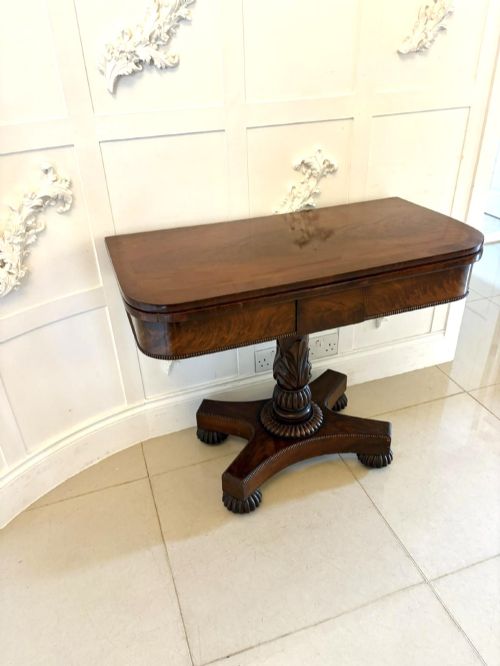
A carved wood card table functions as a folding surface designed primarily for parlour games and card playing during the eighteenth and nineteenth centuries. When closed, these tables sit neatly against a wall as console or side furniture.
The versions most commonly met on this page date from the Victorian, Regency, and Georgian periods. They frequently appear in forms featuring fold-over tops, swivel mechanisms, and occasional built-in compartments for chess or backgammon.
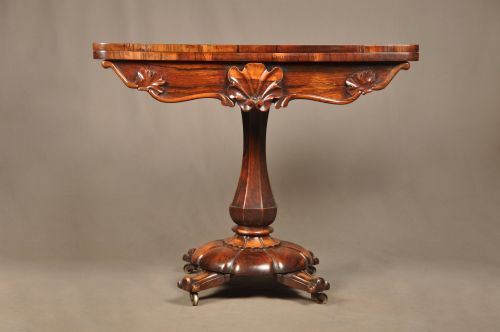
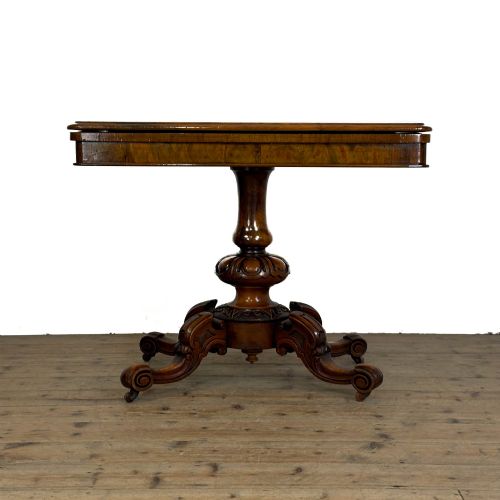
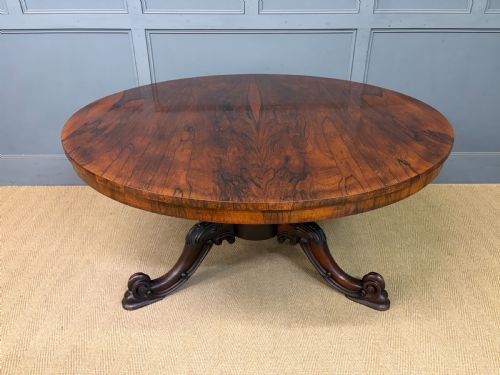
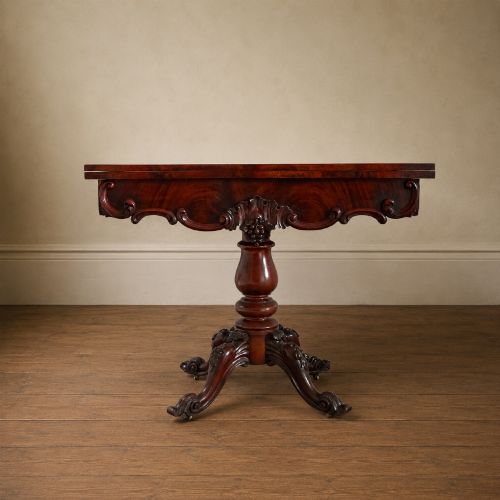
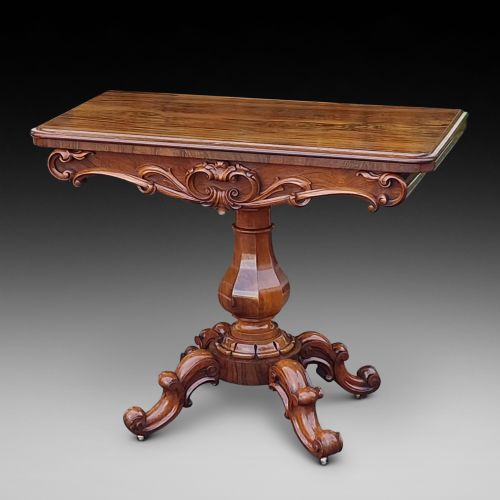
Makers utilised various native and exotic timbers to construct these versatile pieces, often incorporating intricate carving on the pedestal bases and legs. They range from simple mahogany designs to elaborate burr walnut and rosewood iterations.
How they were made
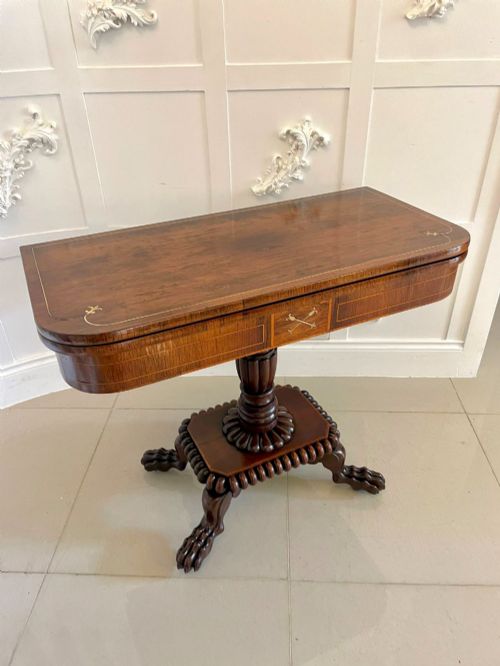
Cabinet makers constructed these tables using dense hardwoods such as mahogany, walnut, and rosewood, often applying veneers of burr walnut or satinwood inlay to the primary surfaces. Solid timbers formed the structural frames, legs, and carved pedestal bases.
Joinery techniques included mortise and tenon frames alongside clever pivoting or folding hinges that allowed the top leaf to rotate and open flat. Secondary woods were selected for internal drawer linings and hidden structural bracing.
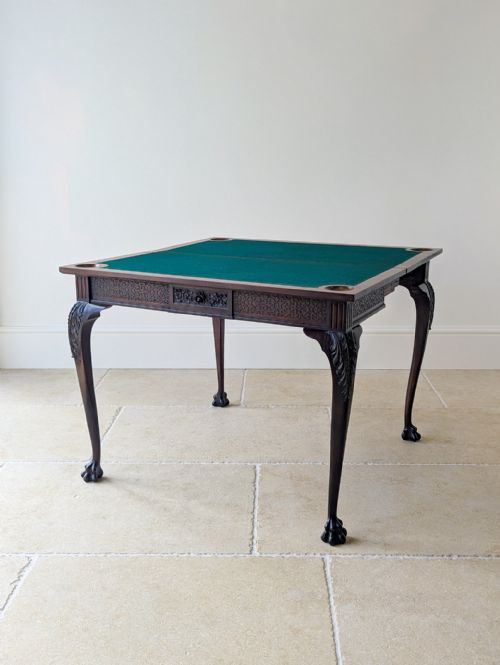
Surface decoration relied on hand-carved details like paw feet, acanthus leaves, and carved baskets, supplemented occasionally by brass inlays and ormolu mounts.
Listings feature card tables spanning the Georgian, Regency, William IV, and Victorian periods, constructed primarily in mahogany, rosewood, and walnut.
What varies in quality
The choice of primary timber and veneer figure dictates much of the visual hierarchy, with richly grained burr walnut and figured mahogany sitting at a higher standard than plain domestic woods. The depth, crispness, and hand-carving detail of elements like pedestal bases and paw feet separate standard workshop output from finer cabinet work.
Construction integrity is visible in the smoothness of the folding or swivelling mechanism and the tightness of the original joinery. Tables bearing attributed or stamped maker details from notable firms generally represent higher standards of design execution.
James Shoolbred & Co·Gillows·François Linke·Edwards & Roberts
The Carved Wood Card Table Glossary
- Fold-Over
- A table top design featuring a hinged upper leaf that opens out to double the surface area for playing cards or games. This allows the piece to function as a compact console when closed against a wall.
- Baize
- A coarse woollen felt material traditionally used to line the playing surface of card and games tables. It provides a soft, non-slip texture for handling cards.
- Demi-Lune
- A half-moon shape used to describe tables with a semicircular flat back edge designed to sit flush against a wall. They frequently appear in mahogany and rosewood.
- Ormolu
- Gilt bronze ornamentation applied to furniture for decorative effect, often seen on revival styles. It provides a contrasting metallic finish against dark hardwoods.
- Parquetry
- Geometric wood mosaic work formed by small veneer pieces laid down in repeating patterns on table tops. It requires high precision from the cabinet maker.
Carved Wood Card Table: Frequently Asked Questions
What is a carved wood card table used for?
These tables were built to accommodate evening entertainment, specifically card games, chess, and backgammon, during periods when domestic socialising centred around parlour games.
When not in use for gaming, the hinged top folded shut and the piece functioned as a side or console table against a drawing room wall.
How do I identify the period of a table?
Dating relies on observing stylistic markers, such as the heavy pillar and claw bases typical of the Regency period or the shaped serpentine fronts seen in Georgian examples.
Timber choice also offers clues, as rosewood and burr walnut gained immense popularity during the Victorian era, while earlier pieces frequently relied on solid mahogany.
How do fold-over card tables work?
The upper surface consists of two matched leaves hinged together along the back edge, allowing the top half to rotate and unfold flat.
A pivoting wooden gateleg or a swinging rear leg typically swivels out from the frame to support the extended leaf during play.
Can I use these tables for dining?
Most card and games tables are too narrow and shallow when opened to serve comfortably as dining furniture. The internal framing and swivel mechanisms are engineered for lightweight gaming rather than heavy daily dining use.