




Carved Wood Bear
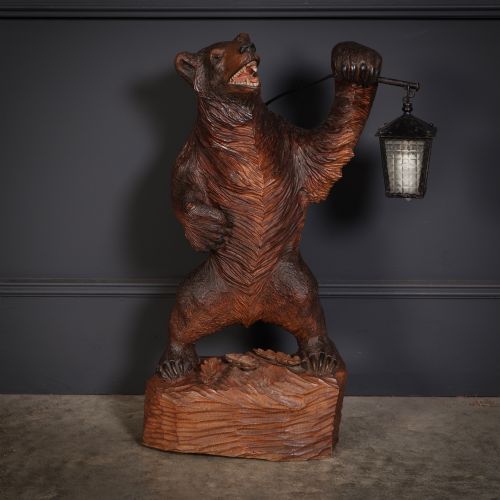
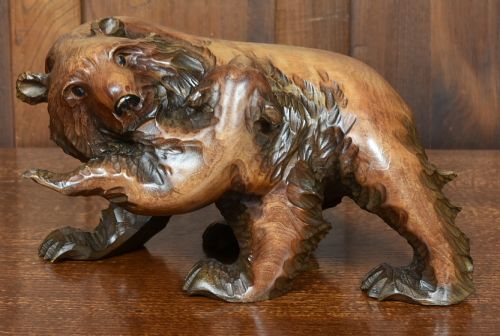
These carved wood bear items bring character to a room through expressive animal forms spanning regional traditions like Black Forest and Japanese folk art.
Carved Wood Bear
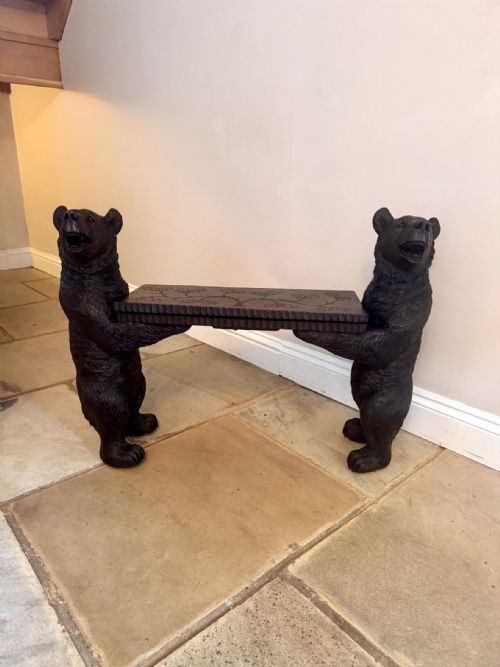
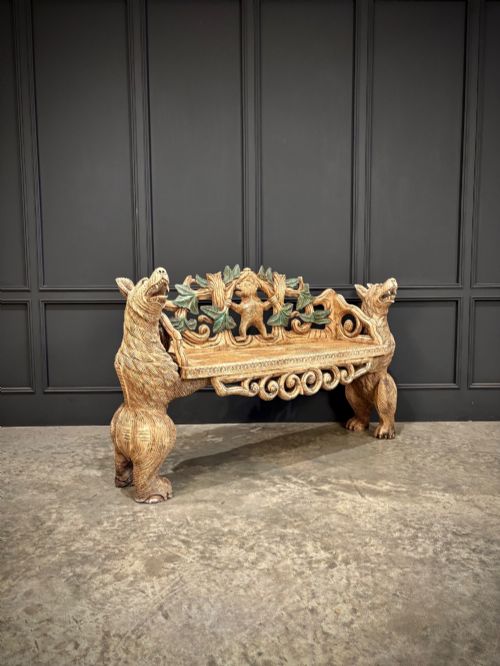
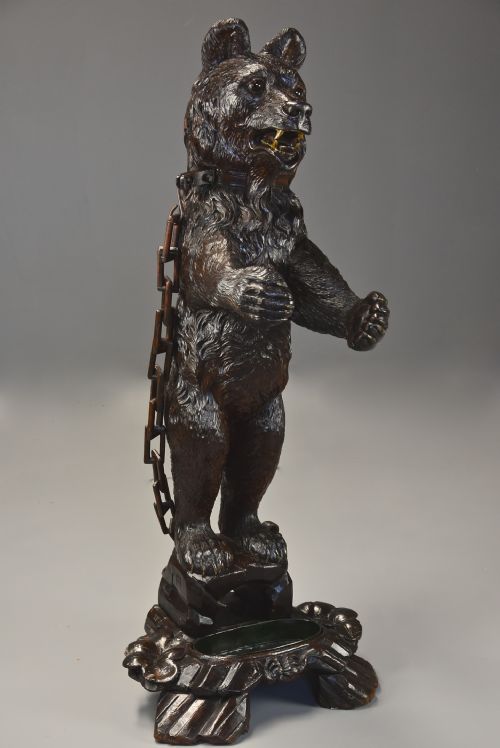
The most common formats you will meet on this page are sculptural figures, tobacco holders, and substantial umbrella stands that integrate the animal's form directly into household furnishings. Many items combine whimsical character with practical utility, such as inkstands, bookends, and musical seats. Dating typically spans from the Victorian and Edwardian eras back through the nineteenth century, with occasional Georgian pieces appearing.
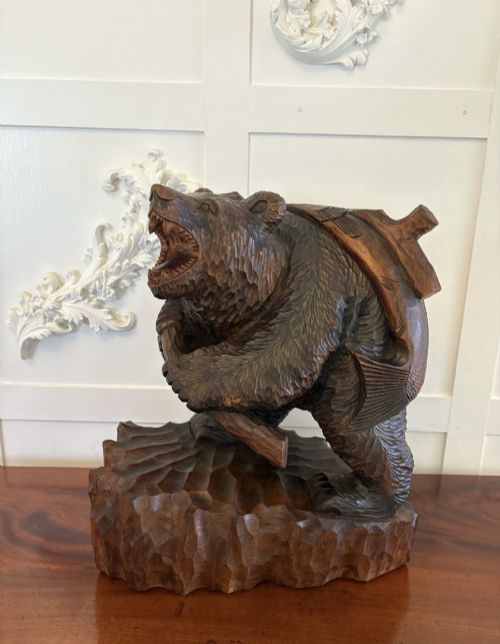
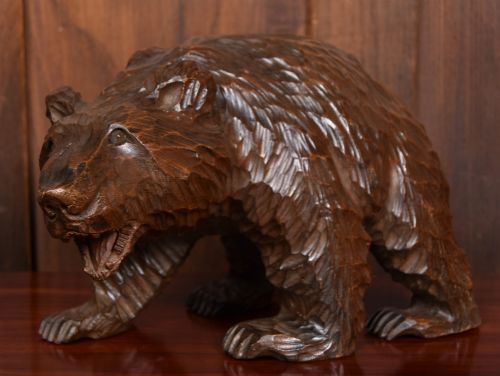
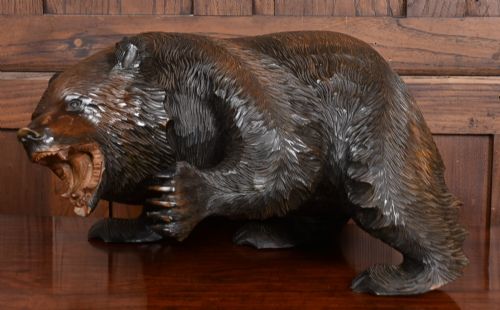
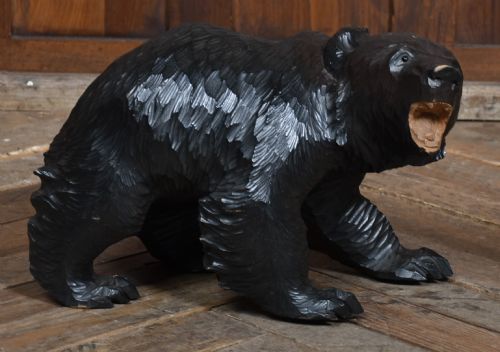
Origin plays a defining role in the styling of a carved wood bear, easily separating European alpine workshops from Asian carving traditions. Japanese works frequently employ cedar and emphasise naturalistic posture, whereas Black Forest carvers utilise linden wood and walnut to create dramatic, highly detailed interior fixtures. Both traditions share a dedication to capturing the lifelike musculature and personality of the animal.
Materials and carving techniques
Execution relied entirely on hand-carving methods, utilising specialised gouges and chisels to build up layered textures that simulate dense animal fur. Artisans frequently incorporated glass eyes or small metal studs to bring vitality and realism to the finished sculpture. Surface finishes ranged from natural wax polishes to darker stains that accentuate the deep relief work.
Carved Wood Bear Retail Price Guide 2026
Typical asking prices for carved wood bear among the pieces listed under this phrase on Sellingantiques today, from the lower quarter to the upper quarter. They describe what is for sale here now, not the wider market.
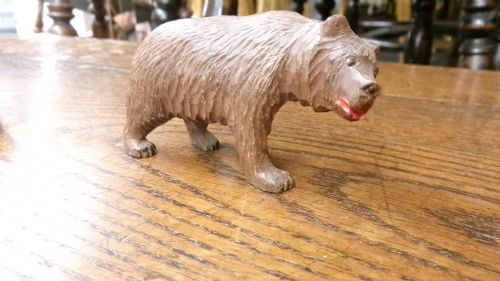
A tiny group of fifteen miniature carved bears proves that fierce forest animals can occasionally be pocket-sized.
Factors determining quality
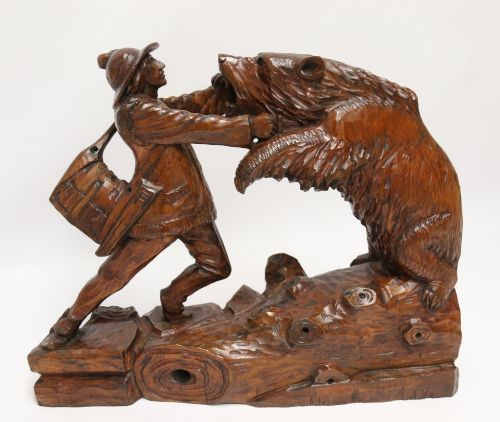
The fidelity and depth of the carving separate ordinary decorative objects from exceptional exhibition pieces. Master carvers achieved anatomical conviction in the bear's limbs and expression, avoiding stiff or disproportionate rendering. The complexity of the overall form, such as multi-figure groups or integrated furniture elements, also elevates the standing of a piece.
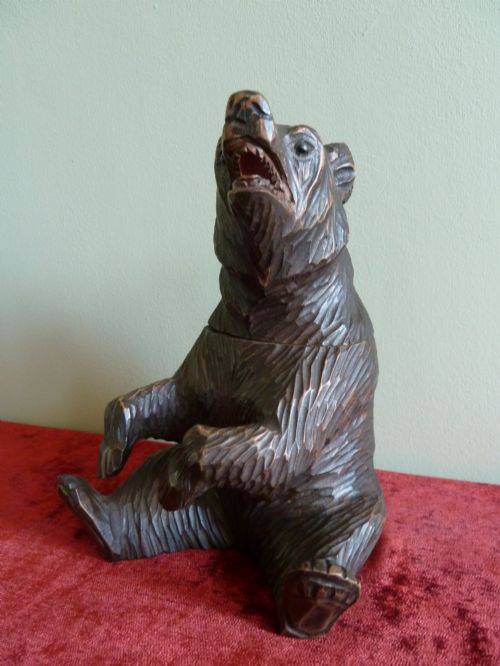
Condition and completeness heavily influence the standing of antique wooden sculptures, particularly regarding delicate extremities like ears, claws, and carved foliage. Original surfaces unmarred by aggressive cleaning retain the crispness intended by the original workshop. Integration of functional mechanisms, such as musical movements or hinged lids on humidors, further distinguishes superior examples.
McKeon s of Liverpool
The Carved Wood Bear Glossary
- Black Forest
- A style of wood carving originating from the mountainous region of central Europe, famous for naturalistic animal sculptures and furniture. These works often depict bears engaged in human activities or acting as structural supports.
- Kibori Kuma
- A traditional style of Japanese wood-carved bear originating from Hokkaido, typically depicting the animal carrying a salmon or carved in a bold folk art manner. This style represents a distinct regional aesthetic separate from European workshops.
- Linden wood
- A pale, fine-grained timber commonly used by carvers for its cooperative texture and lack of prominent grain pattern. It allows artisans to execute deep, detailed undercut carving without splitting.
- Humidor
- A specialised box or container designed to keep tobacco moist, frequently interpreted by carvers as a seated or crouching bear holding a vessel. These novelty items combine practical storage with whimsical animal sculpture.
- Hall stand
- A large piece of hallway furniture incorporating hooks, a mirror, and often a tray base for umbrellas or walking sticks. In this category, the framework is integrated with carved wooden bears.
Carved Wood Bear: Frequently Asked Questions
What are Black Forest bears?
Black Forest bears are wooden sculptures and furniture items carved in Switzerland and Germany during the nineteenth and early twentieth centuries. They depict bears acting as furniture or decorative objects.
These pieces range from small inkstands to large hall stands and display impressive anatomical detail carved from linden wood or walnut.
How were carved bear hall stands used?
Carved bear hall stands served as functional entryway furniture designed for hanging coats, hats, and storing walking sticks or umbrellas. The bear figures often provided structural support or held card trays.
They welcomed visitors into Victorian and Edwardian homes while showcasing the homeowner's appreciation for novelty woodwork.
How do I care for antique wood carvings?
Antique wood carvings require stable environmental conditions away from direct sunlight and rapid temperature fluctuations to prevent timber splitting. Gentle dusting with a dry cloth keeps the surface clean without stripping the aged patina.
Occasional application of appropriate furniture wax helps nourish the wood depending on the original finish applied by the maker.