



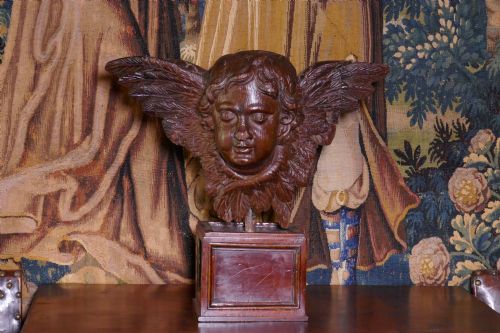


Carved Wood Angel Figures
These carved wood angel figures bring centuries of devotional art into modern rooms through expressive Baroque forms and Gothic fragments.
Carved Wood Angel Figures
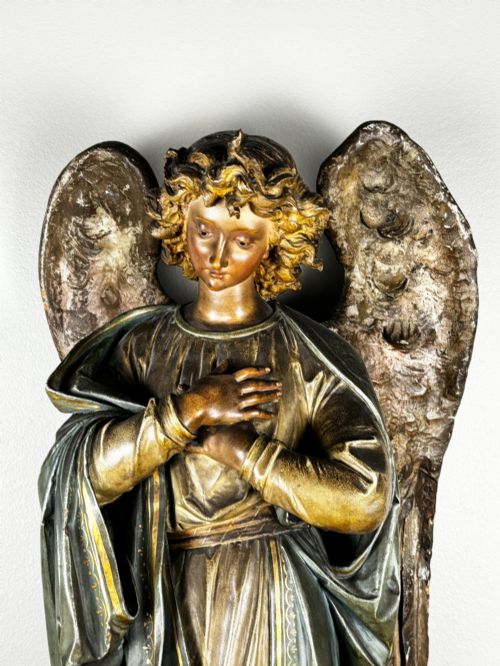
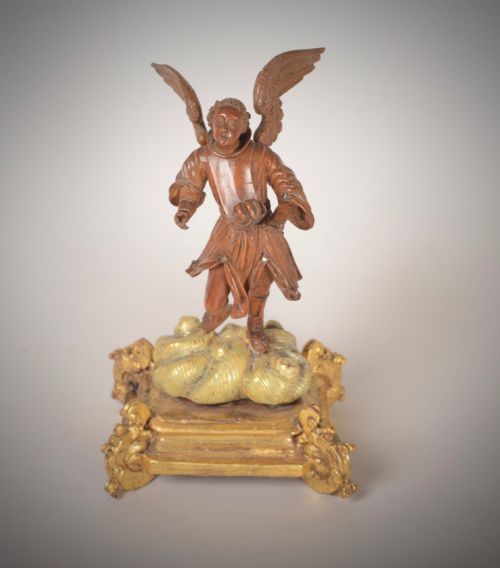
Carved wood angel figures encompass religious sculptures, wall sculptures, and decorative carvings spanning from the sixteenth century through the nineteenth century. Buyers searching for carved wood angel figures encounter Italian Baroque altarpiece components, French Renaissance fragments, and Victorian Gothic revival pieces.
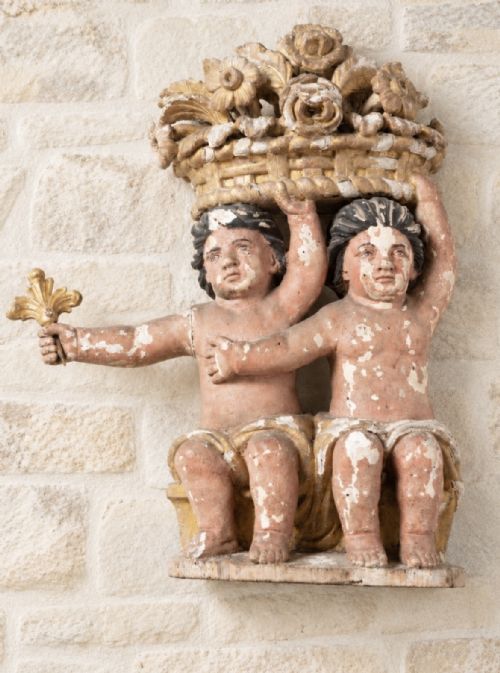
The selections on this page concentrate heavily on nineteenth-century and eighteenth-century examples, alongside earlier seventeenth-century and sixteenth-century fragments. Forms range from large Italian polychrome angels and pairs of putti on clouds to single cherub heads and architectural carvings in oak and pine.
How they were made
Maker-carvers shaped these figures primarily from solid timbers like oak, pine, and general wood, working by hand to create architectural fragments and freestanding sculptures. Many surfaces received applications of gesso, gold leaf, and polychrome paint or silvered finishes to enhance the devotional presence.
The physical evidence shows deep chisel work on structural oak elements and delicate polychrome detailing on soft-wood putti and cherubs. Artisans combined traditional carpentry with surface gilding and painting techniques suited to ecclesiastical settings.
Carved Wood Angel Figures Retail Price Guide 2026
Typical asking prices for carved wood angel figures among the pieces listed under this phrase on Sellingantiques today, from the lower quarter to the upper quarter. They describe what is for sale here now, not the wider market.
Several eighteenth-century putti are depicted resting entirely on carved wooden clouds, proving that even heavenly infants require upholstered seating.
What varies in quality
Quality rests in the anatomical confidence of the carving, particularly in the rendering of wings, drapery, and facial expressions across different centuries. An accomplished eighteenth-century Italian putto displays fluid movement and careful proportion, whereas lesser work lacks depth in the undercut folds.
The preservation of original surface treatments, such as genuine gold leaf and early polychrome paint layers, distinguishes superior examples from later repainted surfaces. The integration of the sculpture within its original architectural context also elevates the piece.
The Carved Wood Angel Figures Glossary
- Polychrome
- Painted in several colours. This finish is frequently found on continental church figures from the eighteenth and nineteenth centuries.
- Putto
- A figure of a small chubby male child, often winged, common in Baroque and Renaissance art. These figures frequently appear in pairs on carved cloud bases.
- Gilt
- Covered thinly with gold leaf or gold paint. Many wooden cherubs and angels from the nineteenth century utilise this decorative technique.
- Ecclesiastical
- Relating to the Christian Church or its clergy. Pieces described thus originate from altarpieces, church furnishings, or chapel architecture.
- Renaissance
- The cultural movement originating in Italy in the fourteenth century and spreading across Europe. French examples from this period appear as wood sculpture fragments.
Carved Wood Angel Figures: Frequently Asked Questions
How do I date an antique wooden angel?
Dating relies on tool marks, wood species such as oak or pine, and stylistic indicators like Baroque drapery or Gothic rigidity. Comparing the piece to documented examples from the sixteenth through nineteenth centuries confirms its era.
Surface finishes like gesso and early polychrome paint further help establish the age of the carving.
Where were these figures originally displayed?
Most of these carvings originated inside European churches, cathedrals, and private chapels as part of elaborate altarpieces or architectural screens. Pairs of angels often flanked tabernacles or altars.
Smaller cherub heads and figures functioned as architectural brackets or standalone devotional sculptures.
How should I clean a polychrome wood angel?
Dusting gently with a soft, dry brush is the safest method for preserving fragile paint, gesso, and gold leaf layers. Avoid using water, damp cloths, or chemical cleaners on antique wood.
Professional conservators should handle any deeper cleaning or structural stabilization of sixteenth to nineteenth-century surfaces.
What is the difference between an angel and a putto?
Angels are heavenly messengers depicted with wings and human form, whereas putti derive from classical mythology as wingless or winged infant spirits. In ecclesiastical art, putti often serve a decorative, cherubic role similar to angels.
Both motifs appear frequently in Italian Baroque and Victorian Gothic wood carvings.