

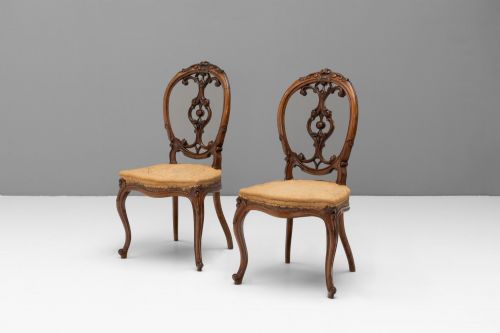


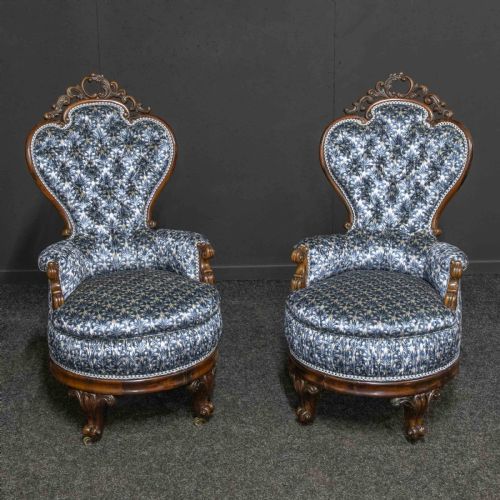
Carved Walnut Salon Pair
A carved walnut salon pair brings decorative presence to a room, offering matched seating with period character.
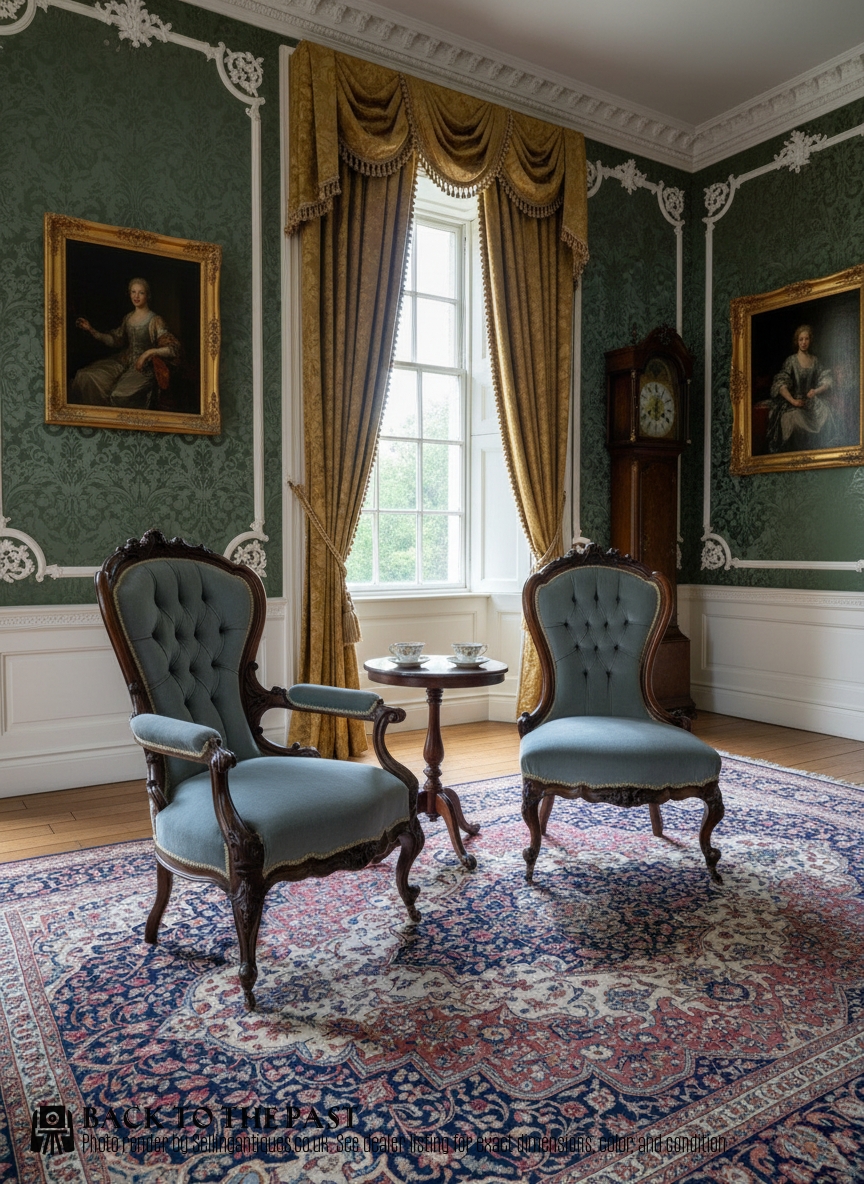
Carved Walnut Salon Pair
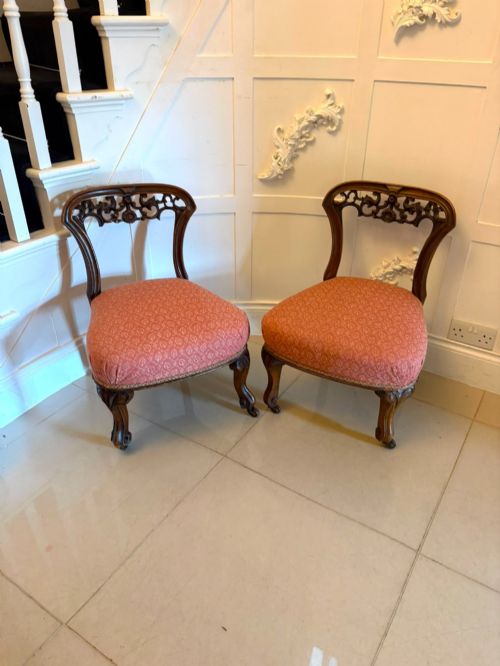
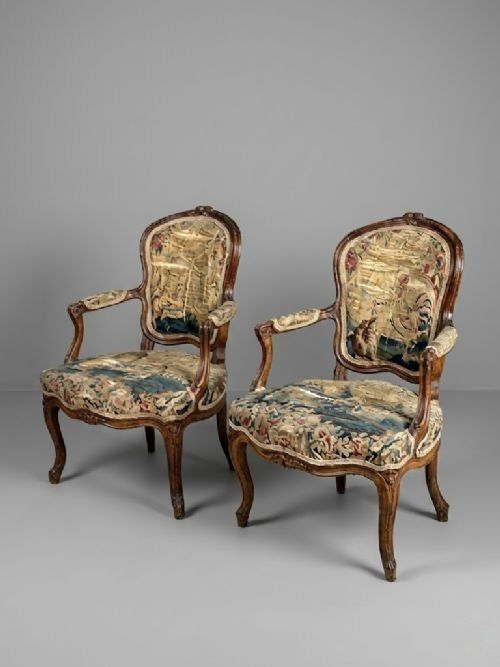
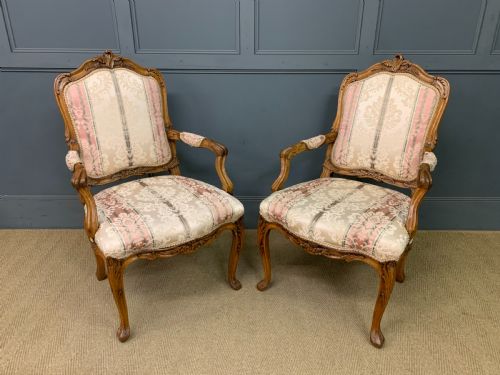
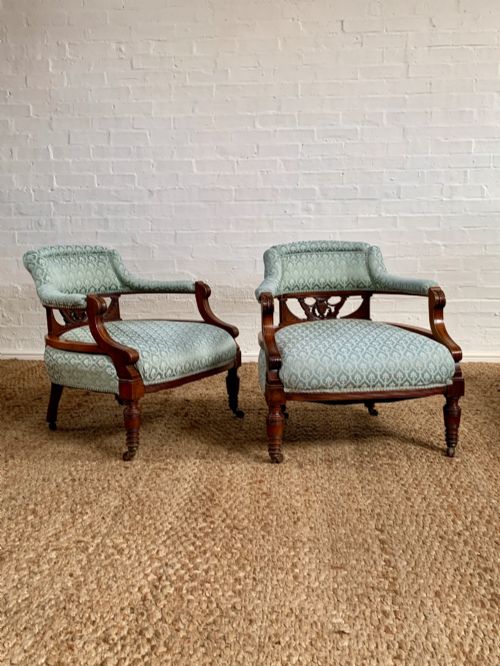
A carved walnut salon pair consists of matched seating designed for formal reception rooms, encompassing armchairs, side chairs, and open armchairs. These pieces emerge predominantly from Victorian and Edwardian periods, alongside French interpretations in Louis XV and Rococo revival styles.
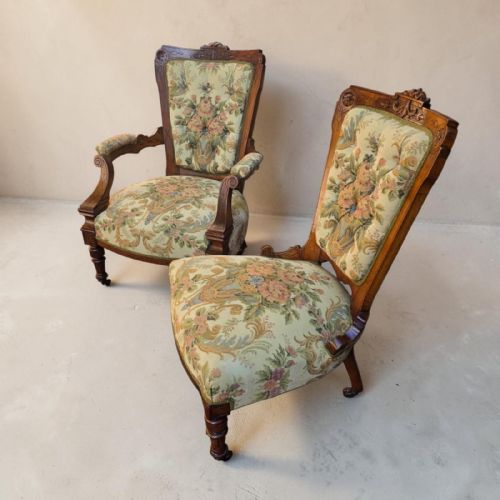
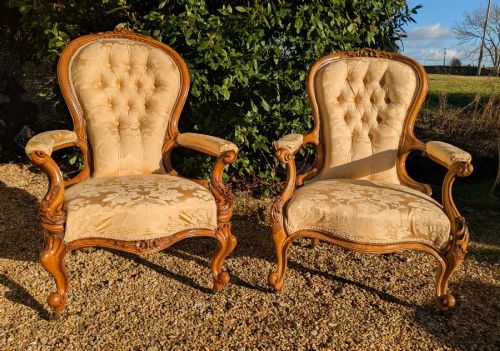
Buyers encounter distinct configurations, including his and hers matching sets, spoonback designs, and compact salon chairs intended for occasional use. The forms span English Victorian craftsmanship and continental French fauteuils, reflecting the social habits of nineteenth and early twentieth century households.
What varies in quality
Quality rests upon the crispness and depth of the hand carving on the walnut frame, where sharper relief denotes superior workshop execution. The weight of the timber and the integrity of the structural joints also distinguish finer examples from standard production.
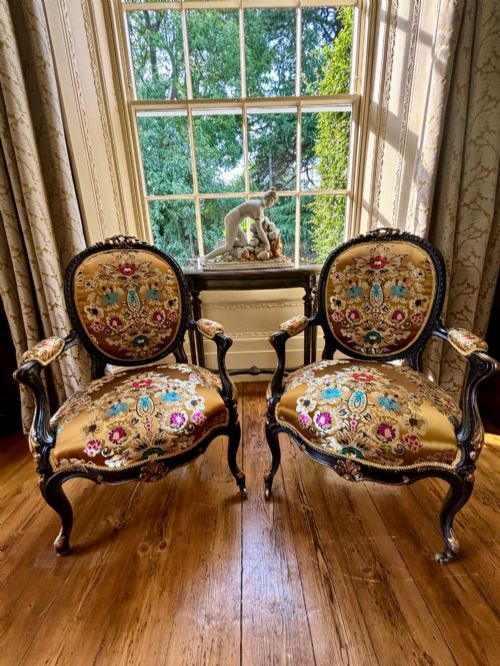
The selection and preservation of the upholstery materials, from antique needlepoint to damask, influence the overall integrity. Harmony between the paired chairs and the original proportions of the frames dictate the standing of a suite.
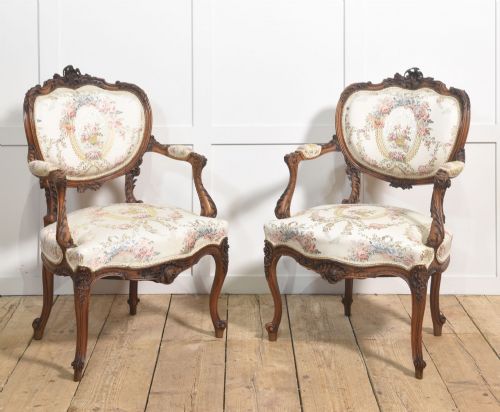
French design influences appear frequently through Louis XV and Rococo revival styles applied to nineteenth century armchairs and fauteuils.
The Carved Walnut Salon Pair Glossary
- Fauteuil
- An open-armed French armchair with upholstered back and seat, typically featuring exposed carved wood framing. These pieces originated in seventeenth century France and remain common in revival styles.
- Cabriole leg
- A furniture leg that curves outward and then tapers inward, finishing in a pad or foot. This form derives from animal legs and appears frequently on period seating.
- Spoonback
- An upholstered chair back shaped in a concave curve resembling the bowl of a spoon. This design supports the human spine and characterises Victorian seating.
- Aubusson
- A type of tapestry woven in France, often utilised for covering the seats and backs of formal armchairs. These textiles depict floral or pictorial scenes.
- Balloon back
- A rounded, oval-shaped chair back resembling a floating balloon, popular during the nineteenth century. The wooden frame surrounds an upholstered centre panel.
Carved Walnut Salon Pair: Frequently Asked Questions
How do I place a salon pair?
A salon pair suits drawing rooms, large bedrooms, or hallways where matched seating creates symmetry. Position them opposite a fireplace or flanking a low table to maintain a traditional arrangement.
Ensure adequate clearance around the chairs so the carved walnut frames and upholstered arms remain visible without obstructing pathways.
Are these chairs comfortable for daily use?
Nineteenth and early twentieth century salon seating prioritised upright posture for formal social gatherings rather than deep lounging. The supportive upholstered backs and padded seats offer firm support for conversation.
Heavier armchair variants with open arms provide a relaxed sit compared to upright side chairs intended for occasional use.
How do I distinguish Victorian from Edwardian pieces?
Victorian examples often feature heavier proportions, deep spoonbacks, and elaborate Rococo or balloon back carvings in dark walnut. Upholstery tends to utilise rich velvet, damask, or needlepoint.
Edwardian pieces generally present lighter framing, simpler lines, and more restrained ornamentation while maintaining traditional walnut construction.
How do I care for walnut and upholstery?
Protect walnut frames from direct sunlight and rapid temperature changes to prevent timber splitting or fading. Dust the carved sections regularly with a dry cloth and avoid harsh chemical polishes.
Vacuum upholstered fabrics gently with a soft brush attachment and consult a specialist conservator for historic textiles like tapestry or needlepoint.