

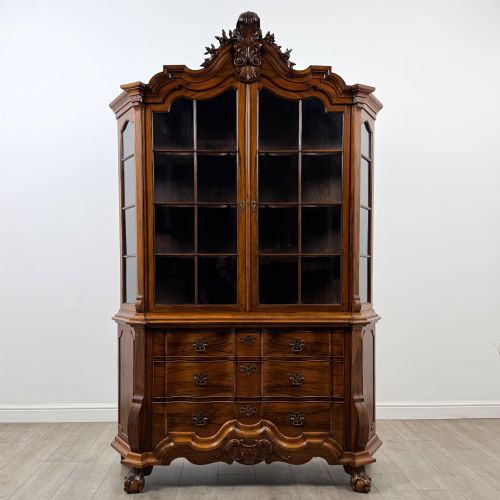
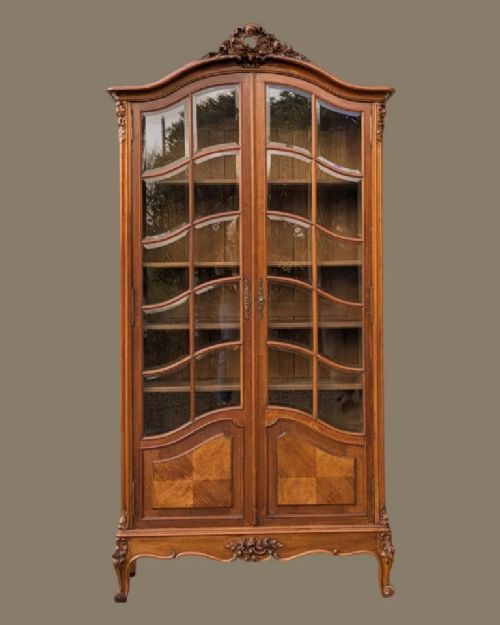


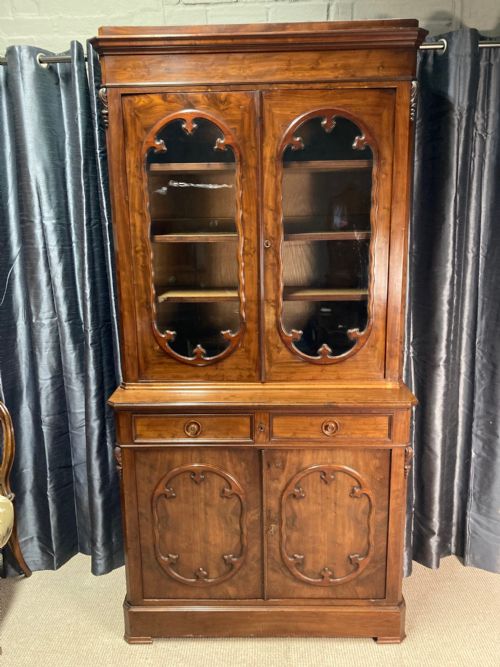


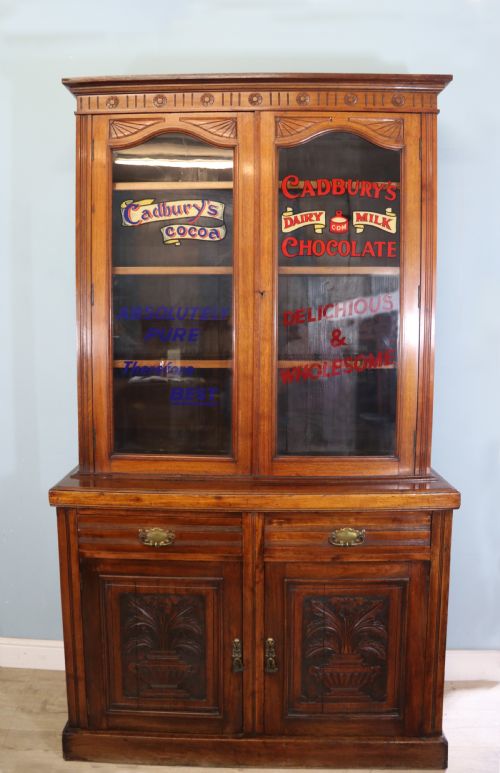


Carved Walnut Display Case
A carved walnut display case brings rich timber grain and period presence into a room, offering the ideal stage for treasured collections.
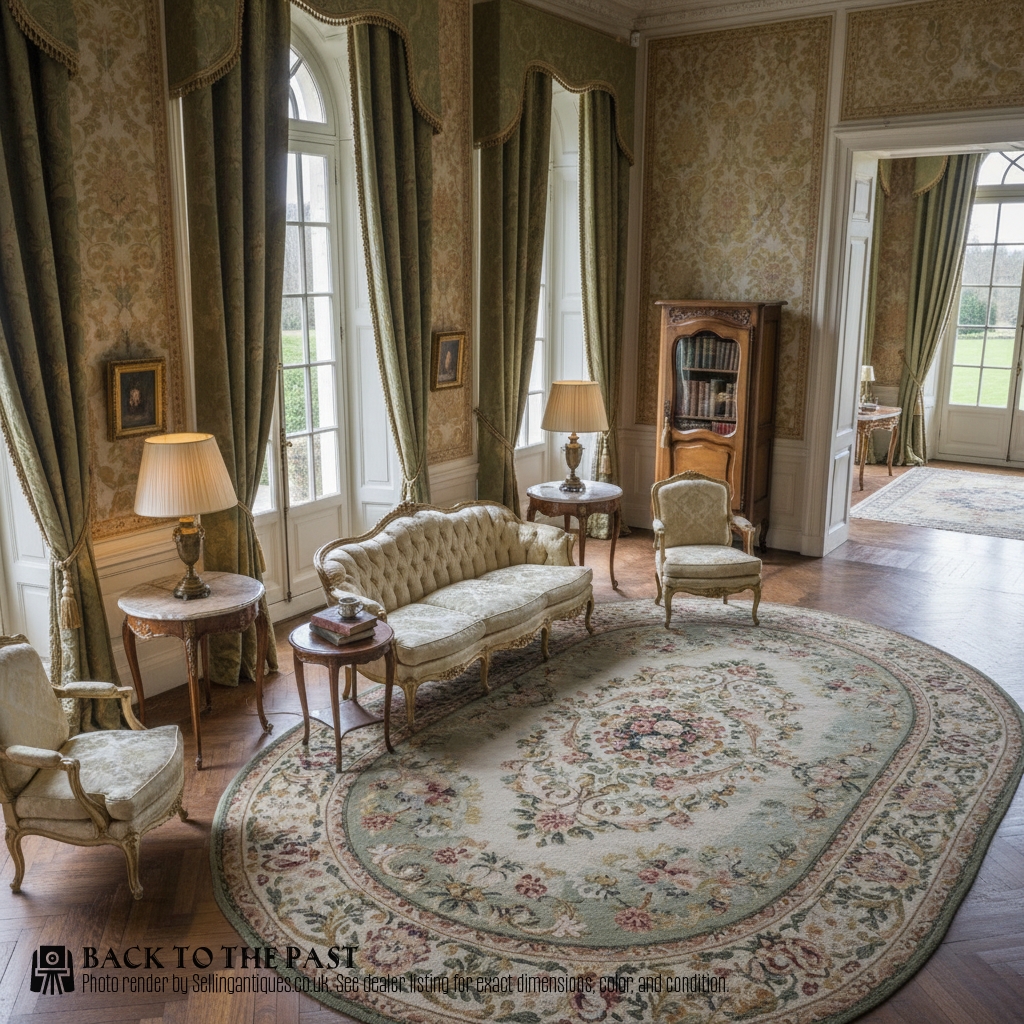
Carved Walnut Display Case
A carved walnut display case combines rich timber frames with glazed panels designed to show off treasured objects while keeping them protected from dust. These cabinets span several distinct eras, drawing on historical design vocabularies ranging from Queen Anne revival to Art Deco.
The pieces on this page are most frequently encountered in nineteenth-century and early twentieth-century iterations, including Edwardian and Victorian forms. Cabinets appear in various formats such as narrow bookcases, wall-hanging vitrines, corner units, and French provincial styles.
Makers utilised the deep natural figuring of walnut timber, often enhancing the visual impact with burr walnut veneers. Architectural elements like carved mouldings and glazed doors define the character of these items across different regional traditions.
Materials and construction methods
Construction relies upon solid timber frames paired with decorative veneers, particularly burr walnut, which yields swirling patterns across door panels and drawer fronts. Cabinetmakers selected timber for its structural stability and rich grain before applying hand-carved details.
Glazing forms a central component, utilising clear glass panes held by timber glazing bars or occasionally stained glass accents. Brass hardware such as hinges, escutcheons, and locks completes the assembly of these functional storage pieces.
Carved Walnut Display Case Retail Price Guide 2026
Typical asking prices for carved walnut display case among the pieces listed under this phrase on Sellingantiques today, from the lower quarter to the upper quarter. They describe what is for sale here now, not the wider market.
Some display cases have lived past lives holding everything from delicate porcelain tea sets to ticking mantel clocks.
Distinctions in quality and execution
Quality rests primarily in the crispness of the hand-carved ornamentation and the selection of walnut timber. Finer examples display carefully matched burr veneers across prominent surfaces and harmonious proportions that reflect considered design.
The integration of hardware, the smoothness of door alignment, and the refinement of internal shelving separate standard production from exhibition pieces. Superior cabinets demonstrate meticulous joinery that ensures structural integrity over centuries of use.
The Carved Walnut Display Case Glossary
- Burr walnut
- A specialised timber veneer harvested from the growth warts of walnut trees, producing intricate, swirling grain patterns. It was frequently applied to the principal facades of high-status cabinets.
- Vitrine
- A glass-fronted cabinet designed specifically for the display of porcelain, curiosities, or books. The term originates from the French word for glass.
- Escutcheon
- A protective plate surrounding a keyhole, often fashioned from brass to complement the surrounding woodwork. It serves both a decorative and a functional purpose.
- Glazing bar
- A narrow strip of timber that holds individual panes of glass within a sash door. Finer cabinets often feature delicate or intricate arrangements of these bars.
- Corner cabinet
- A space-saving furniture form engineered to fit snugly into a ninety-degree room junction. These pieces maximise display capacity in smaller domestic interiors.
Carved Walnut Display Case: Frequently Asked Questions
How do I date a walnut cabinet?
Dating relies upon examining construction techniques, timber preparation, and stylistic markers such as hardware and carving styles. Victorian and Edwardian pieces exhibit distinct manufacturing traits that separate them from earlier revival items.
Comparing the internal framing, backboards, and secondary timbers helps establish the likely period of manufacture alongside any documented stylistic influences.
Where should I place a display case?
These cabinets suit principal reception rooms, studies, or hallways where they can be viewed without obstructing household traffic. Positioning them away from direct sunlight protects both the walnut timber and the objects housed inside.
Ensuring adequate floor stability is essential, particularly for taller or wall-hanging variations that hold heavy ceramic or glass collections.
How do I care for walnut furniture?
Maintenance involves dusting with a soft cloth and applying appropriate beeswax or polish sparingly to nourish the timber. Avoiding excessive moisture and temperature fluctuations prevents the walnut veneer from lifting or cracking over time.
Checking hinges and locks periodically ensures the doors continue to hang correctly and seal tightly against dust.
What styles are common in walnut cabinets?
Common styles include nineteenth-century French provincial designs, Queen Anne revival pieces with cabriole legs, and structured Art Deco forms. Each style brings distinct decorative vocabulary to the basic cabinet structure.
Regional workshops adapted these design traditions to suit changing domestic tastes throughout the Victorian and Edwardian eras.