

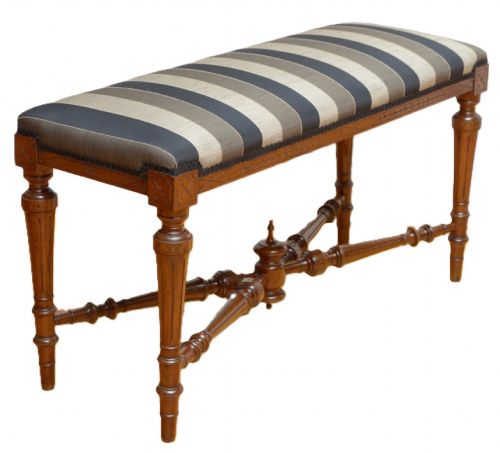


Carved Walnut Bench Seat
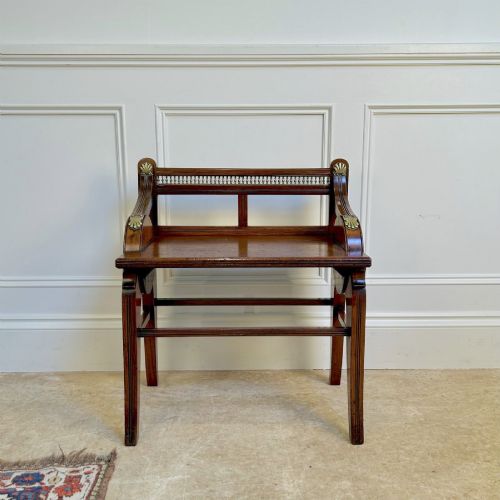
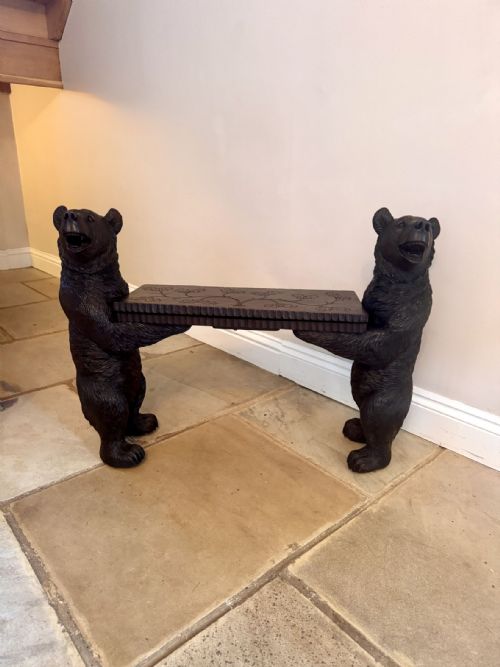
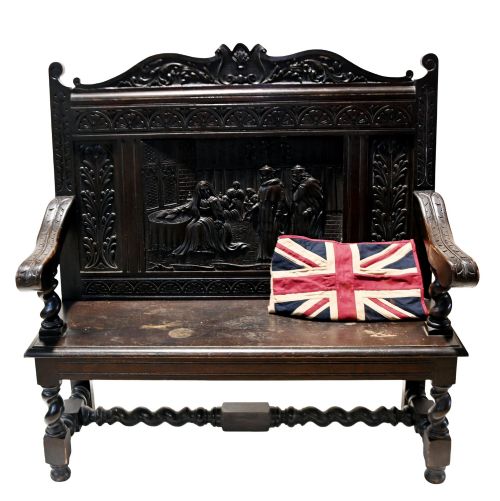
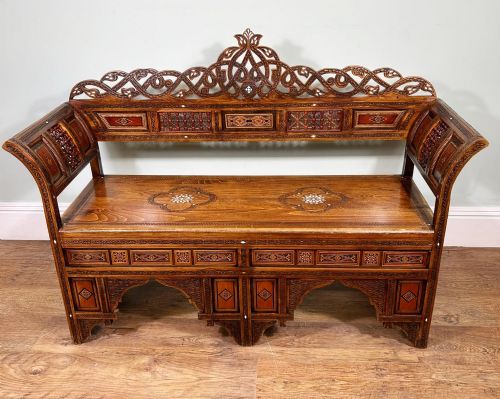
These carved walnut bench seat examples offer seating forms ranging from Victorian window seats to Italian cassapanca benches.
Carved Walnut Bench Seat
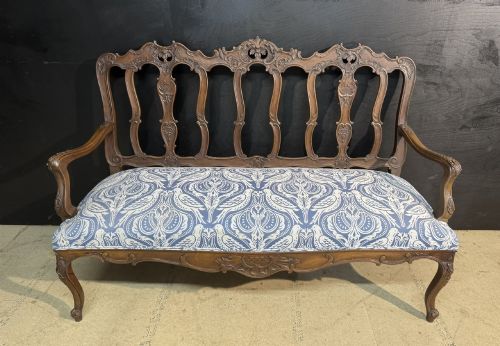
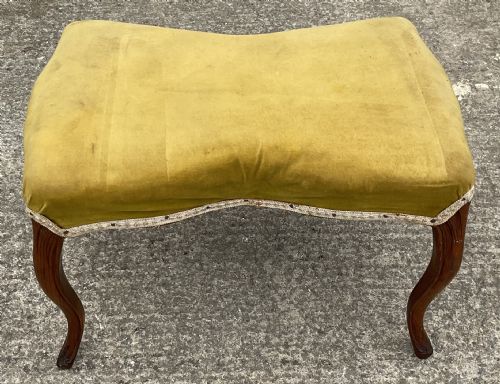
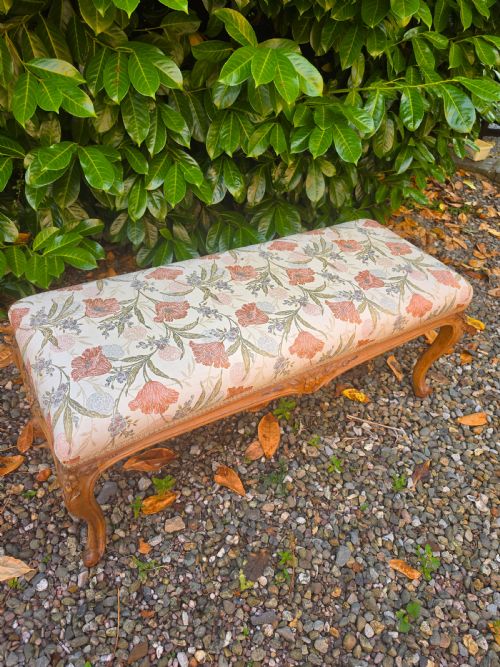
A carved walnut bench seat brings substantial timber framing and decorative joinery into domestic interiors across various historical revivals. Buyers seeking this phrase encounter formats ranging from long hall benches and window seats to footstools and multi-seater settees.
The selections span the nineteenth century through the early twentieth century, incorporating Victorian, Queen Anne, and Renaissance revival movements. Walnut frames dominate the construction, frequently paired with upholstered elements or exposed carved woodwork.
How they were made
Makers utilised solid walnut for structural frames, shaping timber through manual carving techniques to achieve cabriole legs, fluted supports, and X-frame configurations. Artisans applied decorative details including pearl inlay and Boulle work directly onto the wood surfaces.
Upholstery methods involved securing textile, velvet, fabric, leather, or tapestry coverings over internal padding. Caning and needlepoint work also appear across seats, supported by brass hardware where appropriate.
Some Victorian walnut window stools feature hand-carved hunting dog heads keeping watch beneath the cushion.
What varies in quality
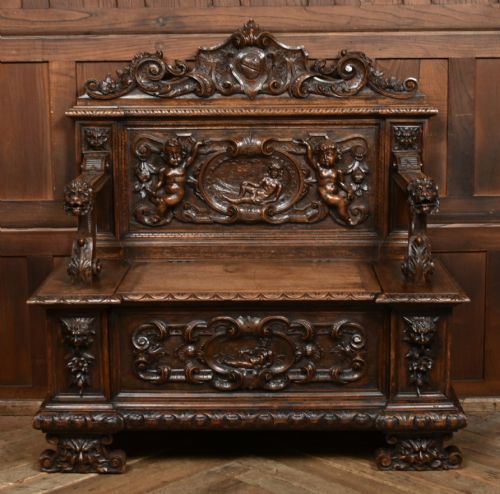
The depth and execution of the wood carving distinguish simpler production pieces from master-carved examples. Crisp detailing in motifs such as hunting dog heads or classical foliage indicates superior workshop standards.
The integrity of the walnut timber frame and the authenticity of period upholstery materials dictate the overall standing of an individual bench or stool.
Hampton & Son's
The Carved Walnut Bench Seat Glossary
- Cassapanca
- A traditional Italian wooden bench featuring a high back and arms, often incorporating storage beneath the seat. This form frequently utilises carved walnut timber in Renaissance revival designs.
- Cabriole leg
- A furniture leg that curves outward and then tapers inward, resembling an animal's curving leg. This shape appears frequently on nineteenth-century walnut stools and seats.
- Bergere
- An enclosed upholstered armchair or sofa with wooden framing, often featuring cane work on the sides or back. These French-influenced pieces utilise walnut structures.
- X-frame
- A furniture base constructed from intersecting members forming an X shape. This structural arrangement provides stability and visual symmetry to window stools.
- Settee
- A medium-length upholstered bench with a back and arms, designed to seat multiple people. Walnut versions often incorporate revival stylistic elements.
Carved Walnut Bench Seat: Frequently Asked Questions
Where were these benches used?
These benches served multiple domestic purposes in hallways, bedrooms, and reception rooms. Window seats were positioned in alcoves, while hall benches provided entryway seating and sometimes integrated storage.
Larger settees and couches furnished formal parlours and salons alongside matching stools and chairs.
How do I care for walnut furniture?
Walnut timber requires stable indoor humidity levels to prevent the wood from drying out or splitting. Routine maintenance involves dusting with a soft, dry cloth and avoiding placement near direct heat sources.
Upholstered sections benefit from professional cleaning suited to the specific textile, whether velvet, leather, or needlepoint.
How do I identify the period?
Dating relies on observing construction methods, timber patination, and stylistic revival cues. Pieces from the Victorian era often feature heavy ornamentation, while Queen Anne style revivals display characteristic cabriole legs and scrolled elements.
Reference dates in listings point to manufacture periods or specific stylistic inspirations from the nineteenth and early twentieth centuries.