




Carved Walnut Base Table
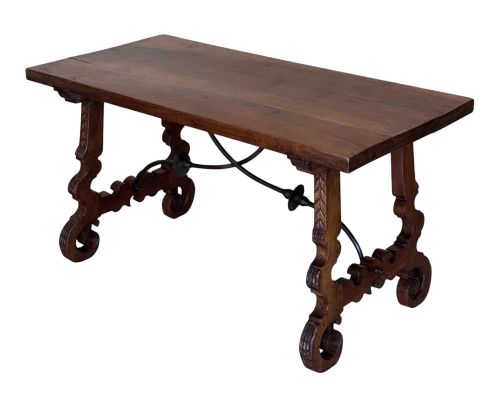
A carved walnut base table brings rich timber grain and sculptural woodwork into a room, spanning forms from Victorian card tables to Spanish dining pieces.
Carved Walnut Base Table
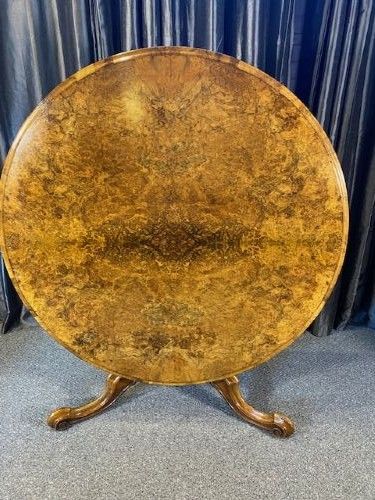
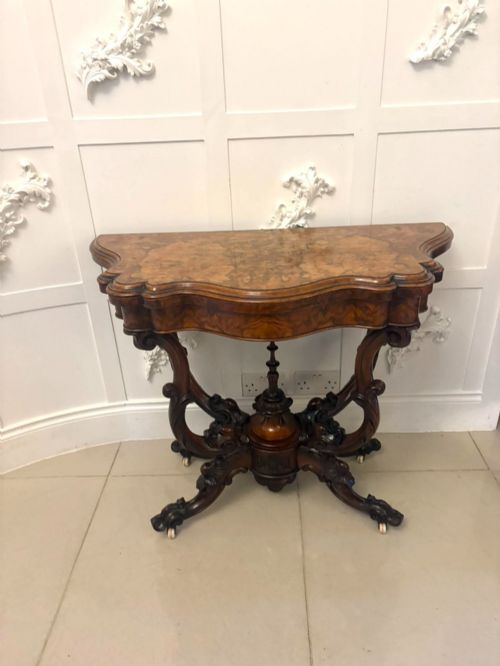
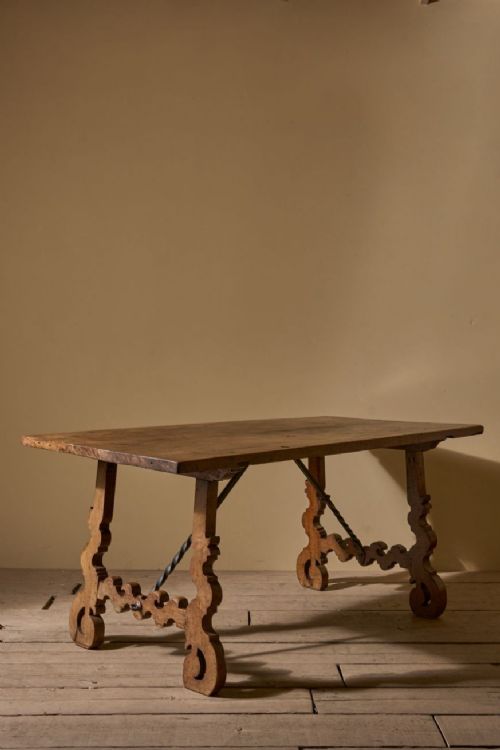
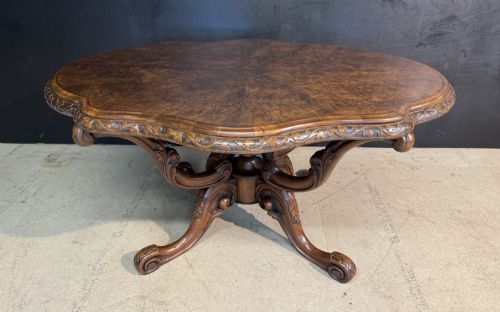
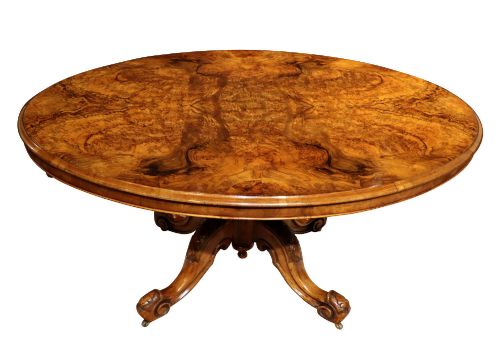
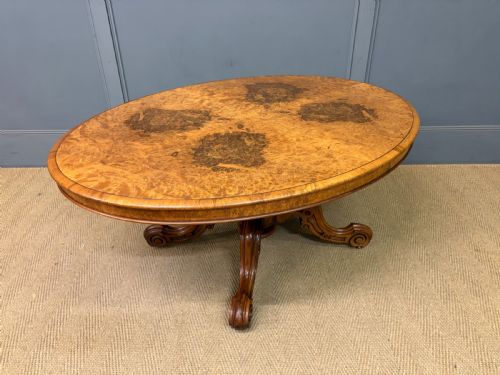
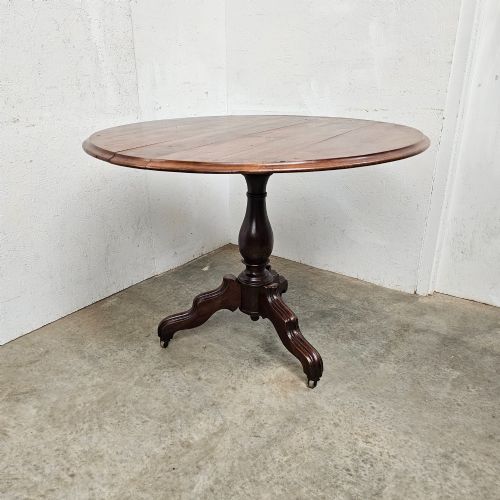
When you search for a carved walnut base table, you encounter diverse forms ranging from centre tables and coffee tables to dining tables and card tables. The selection draws heavily on the Victorian period, alongside examples from the eighteenth and early twentieth centuries.
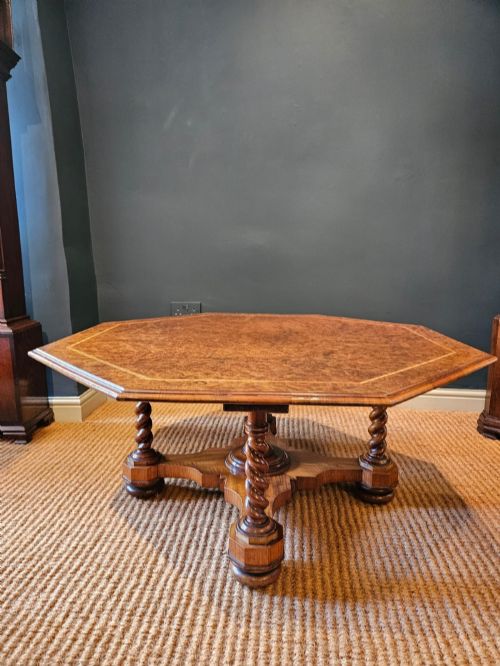
Victorian pieces dominate the selection, frequently utilising burr walnut veneers paired with elaborate hand-carved supports such as basket bases, quadrapod stands, and pedestals. Alongside these, you find Spanish Baroque influences and occasional Italian marble-topped variants.
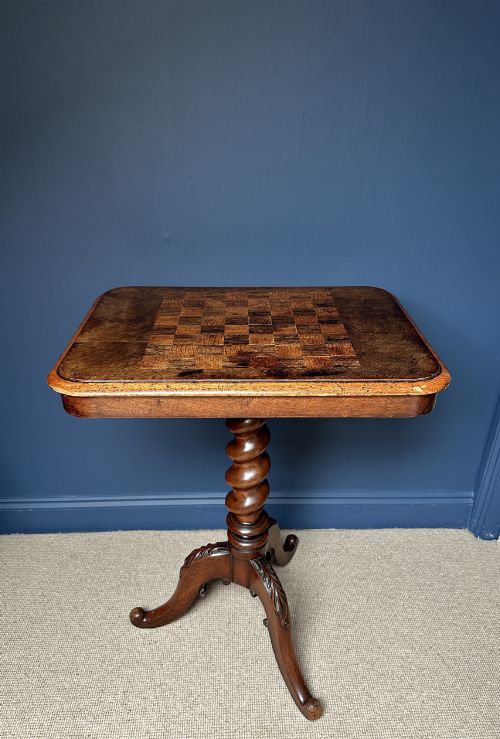
The functions vary widely according to period and form, encompassing breakfast tables, games tables with inlaid chess boards, and occasional tables. Each piece relies on the substantial character of walnut timber to anchor the design.
Distinctions in quality
Quality rests upon the crispness and depth of the hand-carved woodwork on the base, where sharply defined details distinguish superior craftsmanship from softer, mechanical shaping. The selection of the burr walnut veneer also marks the tier of the piece, with dense, symmetrical figuring commanding greater visual impact.
Structural integrity and the harmony between the upper surface and the carved base determine overall excellence. Pieces that retain their original surfaces, balanced proportions, and integrated marquetry inlay represent the finer examples found across the periods.
Carved Walnut Base Table Retail Price Guide 2026
Typical asking prices for carved walnut base table among the pieces listed under this phrase on Sellingantiques today, from the lower quarter to the upper quarter. They describe what is for sale here now, not the wider market.
Certain Victorian tables double as sewing work stations, hiding domestic industry beneath highly polished burr walnut lids.
The Carved Walnut Base Table Glossary
- Burr walnut
- A specialised wood veneer taken from the wart-like growth on a walnut tree, prized for its swirling, highly figured grain patterns.
- Marquetry
- Decorative inlay work where pieces of wood veneer are fitted together to form geometric or pictorial designs on a table top.
- Quadrapod base
- A heavy four-legged table support, frequently carved and utilised on Victorian pedestal and centre tables.
- Centre table
- A freestanding table designed to be viewed from all sides, commonly placed in the middle of a principal room.
- Snap-top table
- A table with a hinged top that tilts into a vertical position when not in use to save space.
Carved Walnut Base Table: Frequently Asked Questions
How do I date a walnut table?
Dating relies on combining the construction methods, secondary timbers, and stylistic markers visible in the piece. Victorian examples often display rich burr veneers and heavy carved basket or quadrapod bases.
Earlier eighteenth-century pieces exhibit simpler, robust structural lines associated with Spanish Baroque or Queen Anne designs, while hardware and joinery provide further clues.
Where should I place a centre table?
A centre table is designed to stand free in the middle of a room rather than pushed against a wall. This placement allows the carved base and figured walnut top to be appreciated from all angles.
In modern interiors, they function effectively in large hallways, drawing rooms, or spacious living areas as a focal point.
How do I care for burr walnut?
Burr walnut requires protection from direct sunlight and excessive heat fluctuations to prevent the delicate veneers from drying or cracking. Regular dusting with a soft, dry cloth maintains the surface sheen.
Avoid using silicone-based polishes, opting instead for traditional beeswax applied sparingly to nourish the timber.