

Carved Wall Brackets
When you search for carved wall brackets, you are looking at architectural supports and display ledges designed to project from a room's perimeter to hold ornaments, lights, or small sculptures.
Carved Wall Brackets
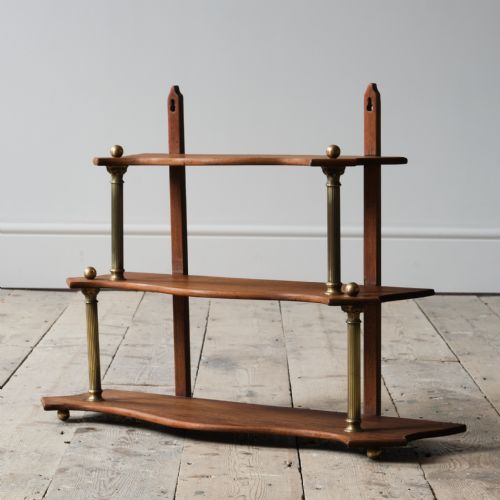
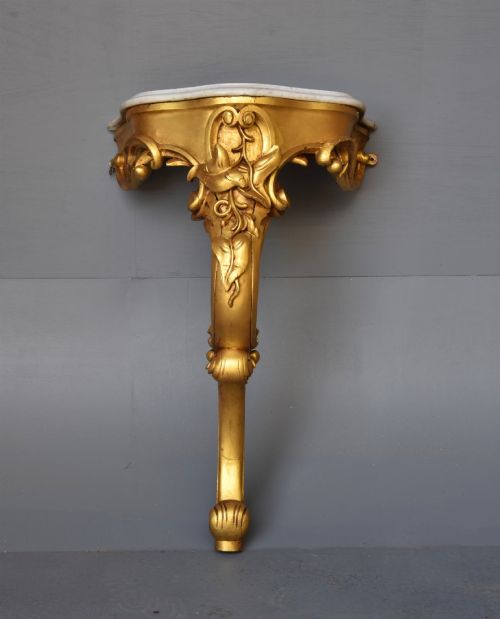
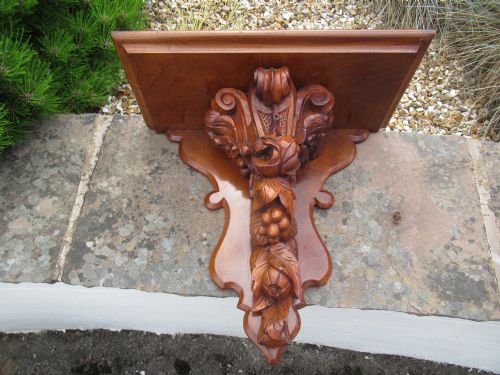
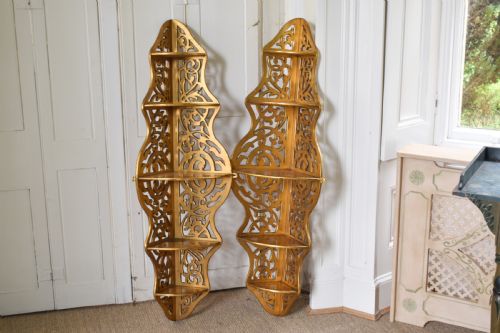
Carved wall brackets function as both structural load-bearing corbels and decorative ledges meant to project outward from vertical surfaces. The items encountered most frequently on this page span the nineteenth century, including Victorian walnut and oak examples alongside giltwood pieces modelled in revivalist aesthetics.
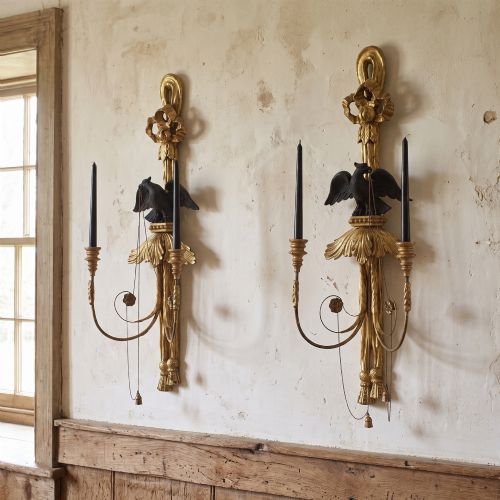
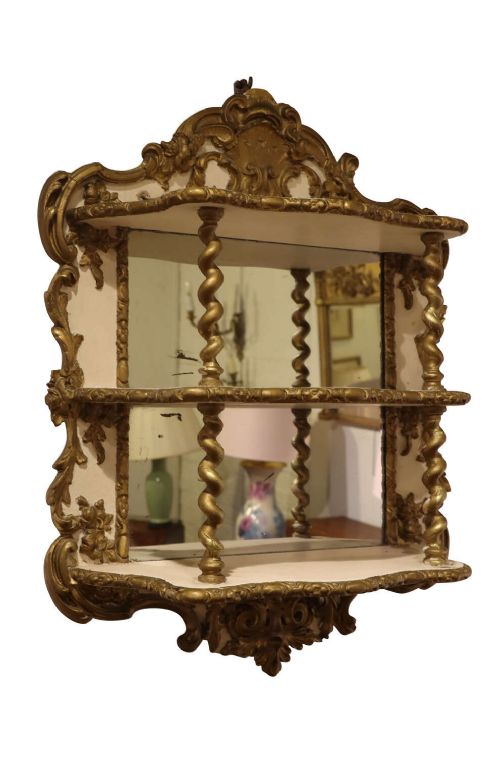
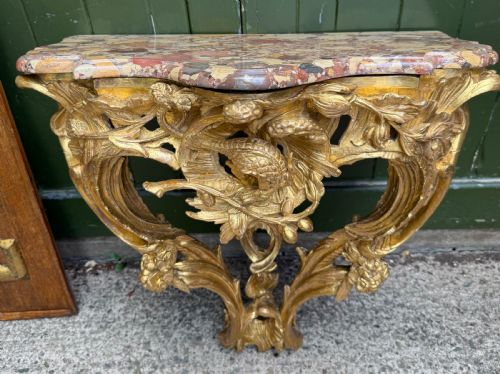
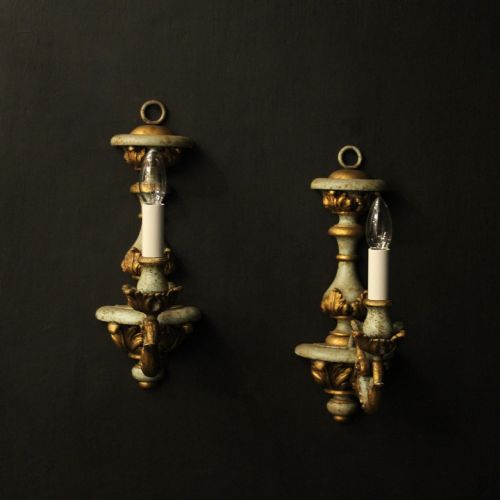
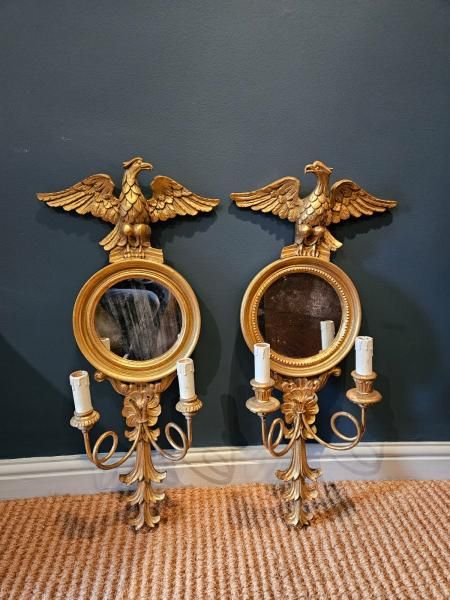
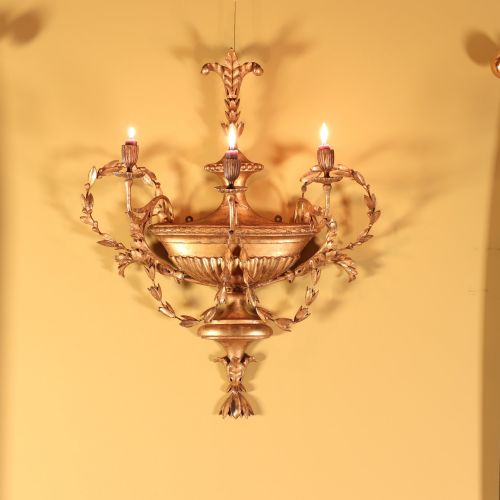
The category encompasses diverse forms such as corner shelves, console tables, and mirror-backed sconces designed to hold candles or electric lighting. Makers often utilised motifs derived from French Rococo, Florentine tastes, and Neoclassical vocabularies to enrich domestic interiors.
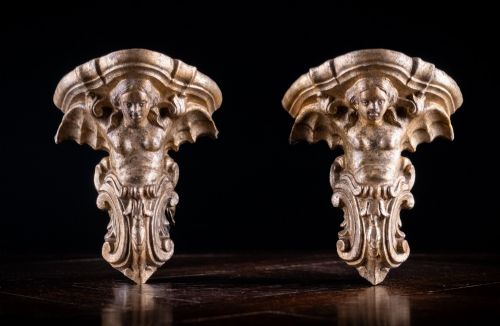
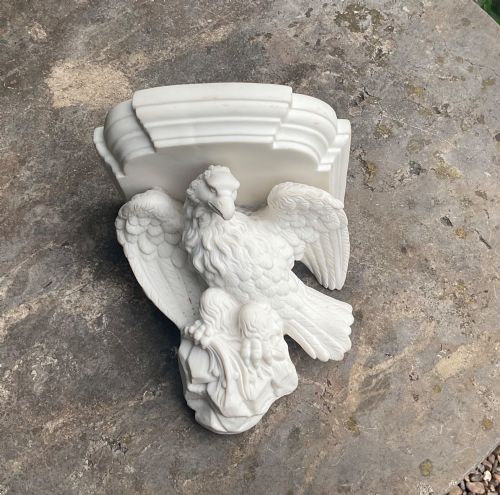
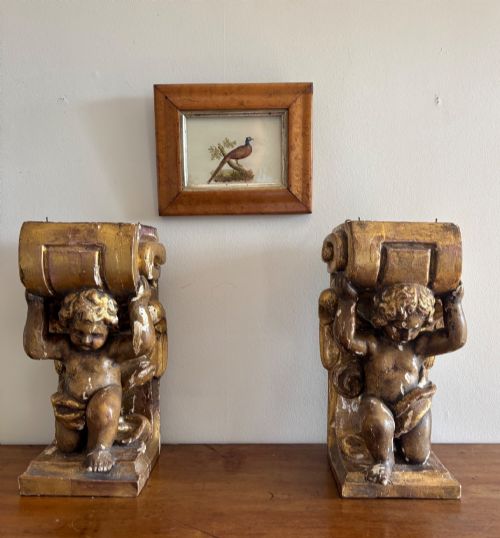
Earlier pieces from the eighteenth century appear alongside later iterations, offering substantial oak architectural elements and finely rendered putti or avian carvings. Buyers select these objects to introduce three-dimensional texture and historical character to plain wall planes.
How they were made
Artisans carved these supports primarily from timbers like oak, walnut, and mahogany, applying chisels and gouges directly to the grain to achieve deep relief. Many wooden surfaces received a layer of gesso before being gilded with gold leaf or silver leaf, creating a reflective metallic sheen.
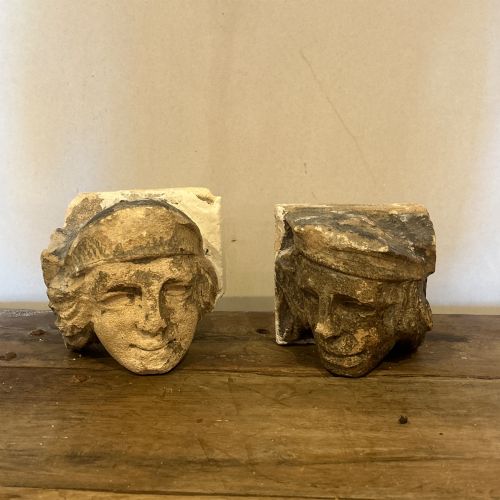
Alternative materials recorded in the evidence include terracotta, limestone, brass, and glass, demonstrating versatility in production methods across different workshops. Polychrome painted finishes also occur, adding colour and intricate detail to figures like cherubs, sirens, and birds.
The inventory records diverse functional forms including corner shelves, overdoor pediments, mirror-backed sconces, and console tables.
What varies in quality
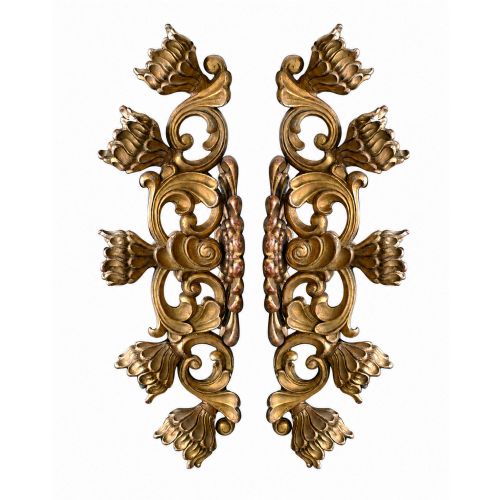
The distinction between standard examples and superior pieces rests on the crispness and depth of the hand-carving. Sharp undercut details and spirited naturalism in figurative subjects indicate a higher level of sculptural skill.
The integrity of the original surface finish, whether patinated oak or intact historic gilding, dictates the desirability of an item. Pieces retaining their original mirrors, marble tops, or structural harmony command greater interest from collectors.
Strahan of Dublin
The Carved Wall Brackets Glossary
- Corbel
- A structural projection from a wall designed to support a weight above it. These architectural elements often feature heavy carving in stone or oak.
- Giltwood
- Timber that has been coated with fine gold leaf or gold dust over a prepared ground such as gesso. This technique creates a brilliant metallic surface popular in Neoclassical and Rococo designs.
- Sconce
- A wall-mounted light fitting designed to carry candles or lamps. They frequently incorporate mirrored backs to amplify illumination within a room.
- Gesso
- A plaster mixture applied to wood surfaces as a smooth base for gilding or painting. It allows craftsmen to model delicate relief details before applying gold leaf.
- Putto
- A plump, naked male child figure frequently employed as a decorative motif in Baroque and Renaissance revival art. They often appear supporting cornices or serving as architectural shelf figures.
Carved Wall Brackets: Frequently Asked Questions
How were wall brackets used historically?
Historically, these brackets served to elevate decorative objects, clocks, or busts above floor level to showcase prized possessions. They also functioned as wall lights and sconces, reflecting candle illumination around period rooms.
In larger architectural settings, heavy wooden or stone corbels provided structural support for projecting beams or overdoor pediments. Domestic examples brought sculptural interest to plain corners and hallways without occupying floor space.
How do I date an antique bracket?
Dating relies on identifying the prevailing design style, such as Georgian, Victorian, or French Rococo, alongside the choice of timber and construction methods. Examining the tool marks and the composition of underlying gesso layers helps determine the period of manufacture.
Matching the decorative motifs, such as crisply carved acanthus leaves or specific revivalist trends, narrows down the decade. Comparing pieces with documented archive examples provides further chronological certainty.
Can these brackets support heavy objects?
Load capacity depends entirely on the material, construction, and how securely the bracket is anchored to the wall structure. Solid oak and architectural stone corbels generally handle heavier loads than delicate giltwood or plaster pieces.
Buyers should evaluate the mounting mechanism and backplate strength before placing heavy sculptures or large clock movements on antique ledges. Most decorative wall brackets are best suited for lighter display items.
What is the difference between a bracket and a sconce?
A wall bracket primarily functions as a shelf or structural support designed to hold objects or project outward from a surface. A sconce specifically incorporates arms or fittings intended to hold candles or light sources.
Many antique sconces feature mirrored glass backplates designed to multiply the flickering light of candles within the room. Some hybrid pieces combine a display shelf with integrated lighting arms.