

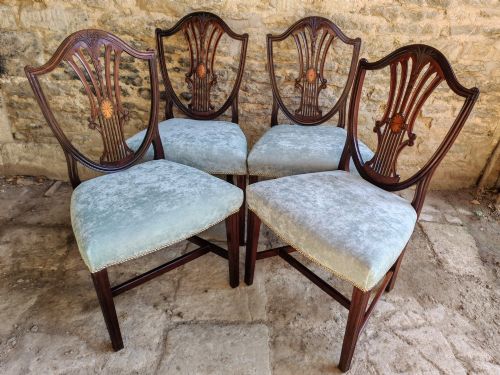
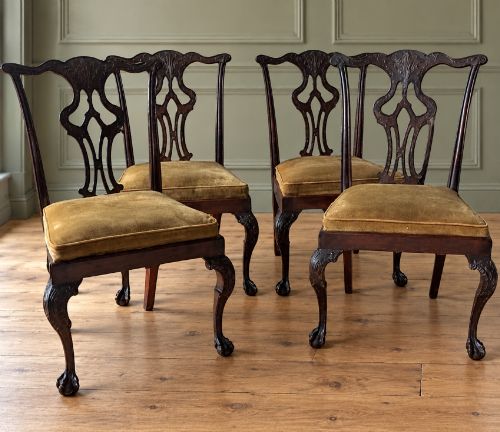
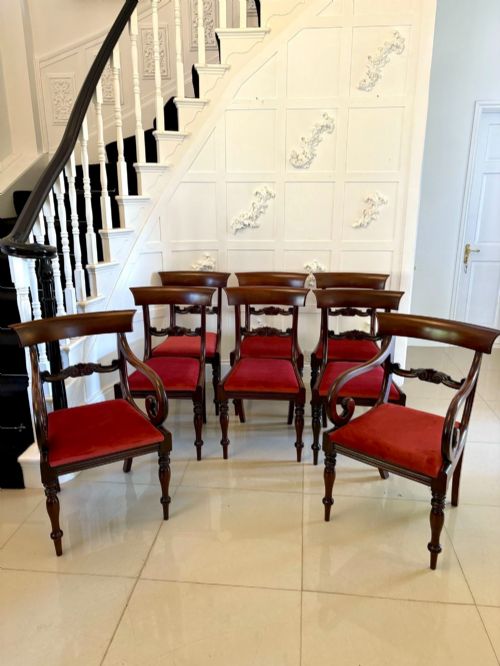
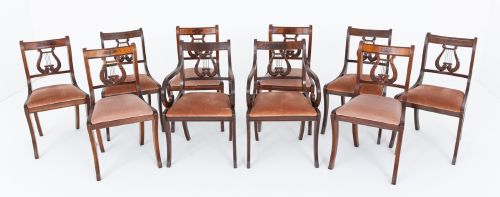
Carved Velvet Side Chairs
These carved velvet side chairs bring tactile presence and historic joinery to a room, offering structured seating shaped by centuries of cabinet-making traditions.
Carved Velvet Side Chairs
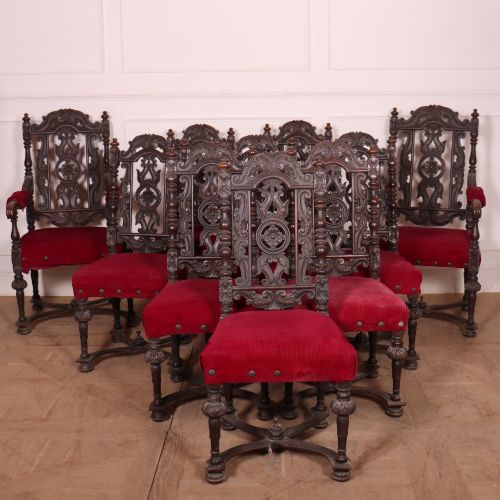
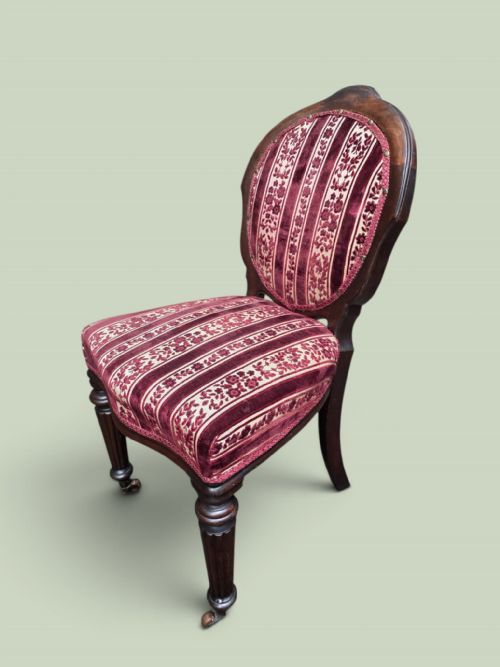
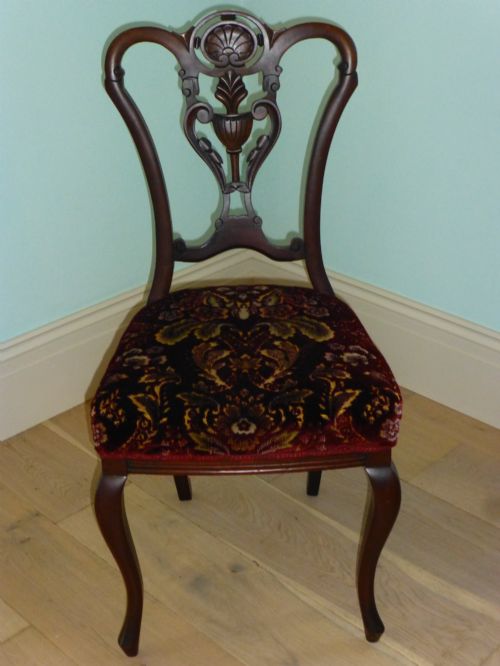
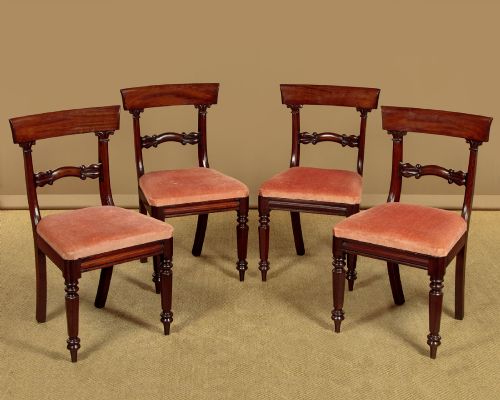
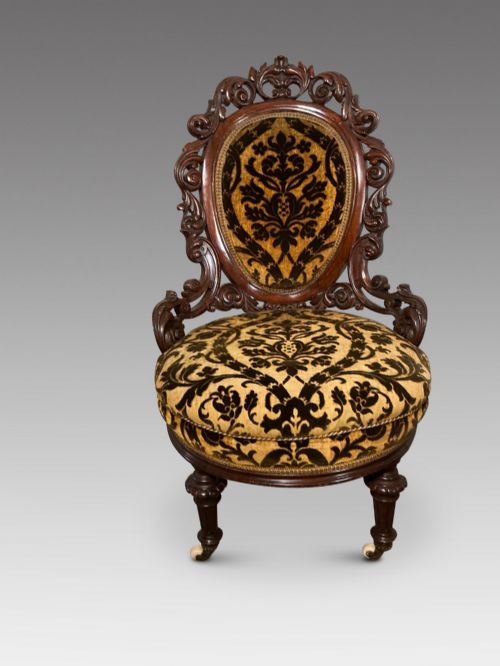
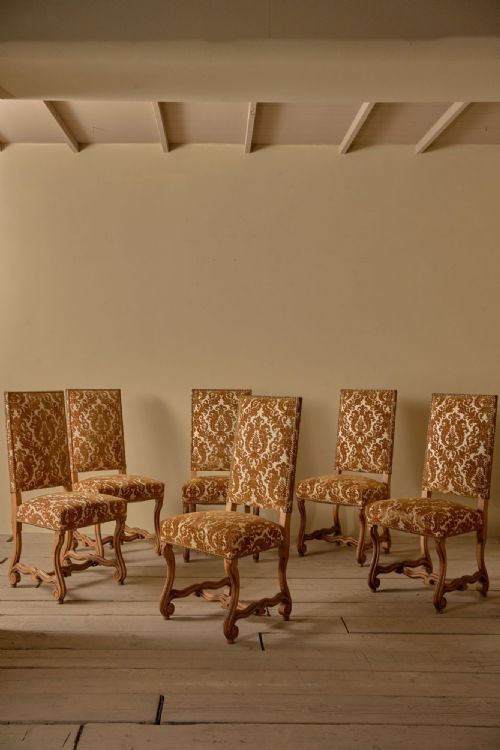
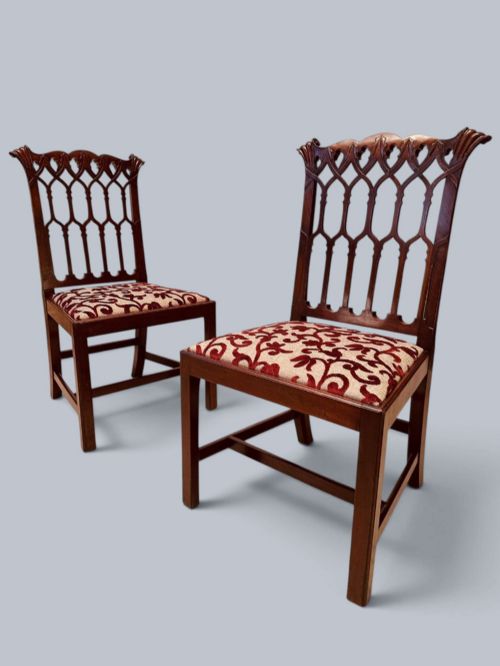
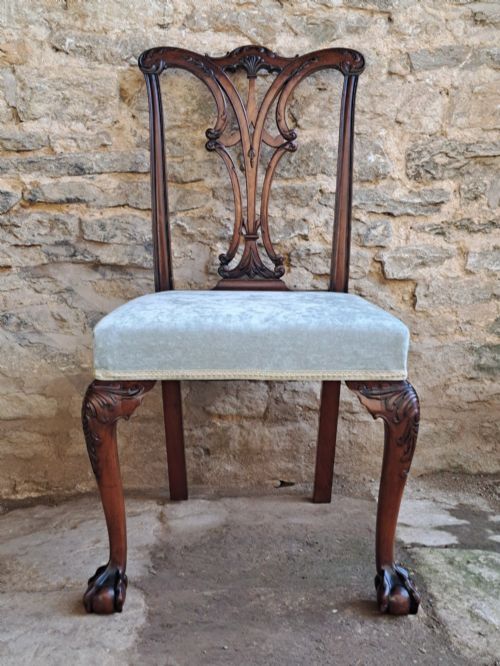
Carved velvet side chairs encompass seating forms designed without arms for dining rooms, salons, and occasional use, appearing primarily in nineteenth-century Victorian and Edwardian iterations alongside earlier eighteenth-century revivals. These pieces combine exposed timber frames with textile upholstery, drawing from Regency, Georgian, and Arts and Crafts design vocabularies.
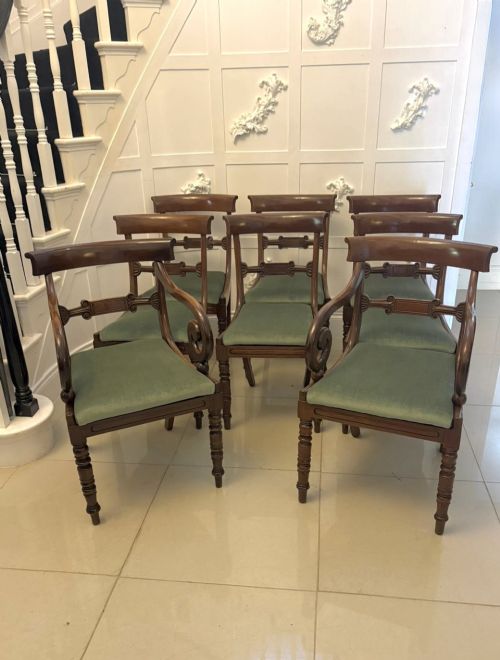
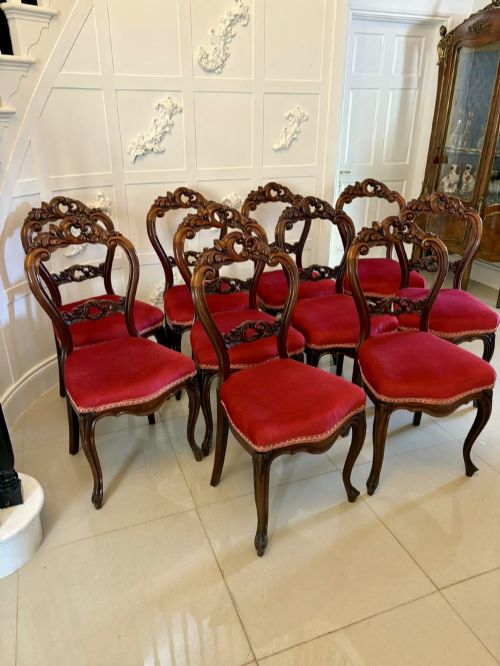
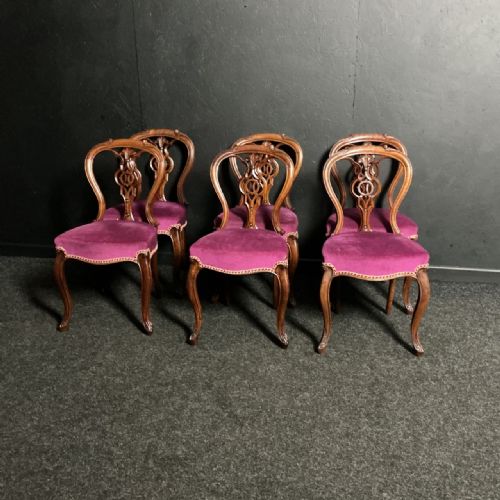
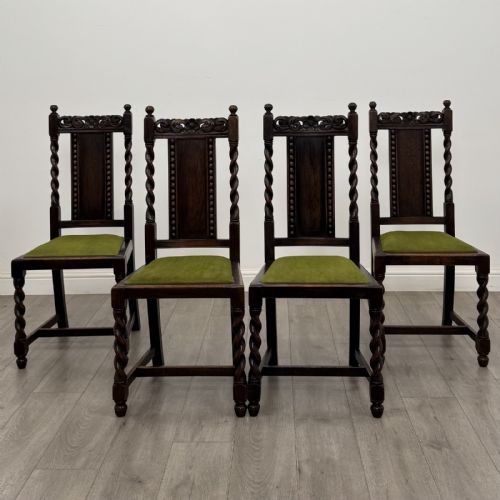
The listings on this page demonstrate that side chairs frequently arrive in matched sets of four, six, or eight, alongside smaller pairs and single salon or parlor examples. Walnut, mahogany, and oak form the structural backbone of these objects, housing padded seats and backs finished in various woven and pile textiles.
Distinctions in Quality
The standard of a carved velvet side chair rests upon the crispness of its timber carving and the architectural integrity of its frame joinery. Superior examples exhibit deep, clean chisel work on the wood and retain rigid joints without reliance on modern metal braces.
Proportion and wood selection also dictate grade, with finely figured flame mahogany or dense walnut displaying superior grain patterns. Original upholstery methods and well-preserved textile surfaces further separate standard production items from master-carved seating.
Carved Velvet Side Chairs Retail Price Guide 2026
Typical asking prices for carved velvet side chairs among the pieces listed under this phrase on Sellingantiques today, from the lower quarter to the upper quarter. They describe what is for sale here now, not the wider market.
Listings feature mahogany, walnut, and oak frames spanning the Georgian, Victorian, and Edwardian eras.
Strahan
The Carved Velvet Side Chairs Glossary
- Balloon back
- An oval or loop-shaped chair back popular during the Victorian period. This curved wooden frame provides ergonomic support while offering a distinct decorative silhouette.
- Scroll arm
- A terminal arm support shaped in a sweeping spiral scroll. Found on carver chairs accompanying dining sets, this detail reflects Regency and Victorian influence.
- Barley twist
- A cylindrical furniture leg or stretcher carved in a helical spiral resembling twisted barley sugar. This turning technique appears frequently on Jacobean style oak seating.
- Canework
- Woven rattan or cane material utilised for chair seat or back inserts. This lightweight method provides flexible support within wooden framework.
- Salon chair
- An occasional chair designed for sitting rooms rather than formal dining. These pieces often feature decorative carving and rich upholstery suited to reception spaces.
Carved Velvet Side Chairs: Frequently Asked Questions
How do I care for velvet upholstery?
Vacuum textile surfaces gently with a soft brush attachment to remove dust without crushing the pile.
Keep wooden frames polished and protect the fabric from direct sunlight to prevent colour fading over time.
Can I mix these chairs with modern tables?
Historic side chairs introduce textural contrast and traditional woodwork warmth when paired with contemporary dining or desk surfaces.
Ensure seat heights align comfortably with the underside clearance of the table in use.
Are single chairs useful in hallways?
Single side chairs serve as functional accent pieces in entrance halls or bedrooms for temporary seating.
Their compact proportions allow them to fit into narrow spaces while displaying carved wooden details.