



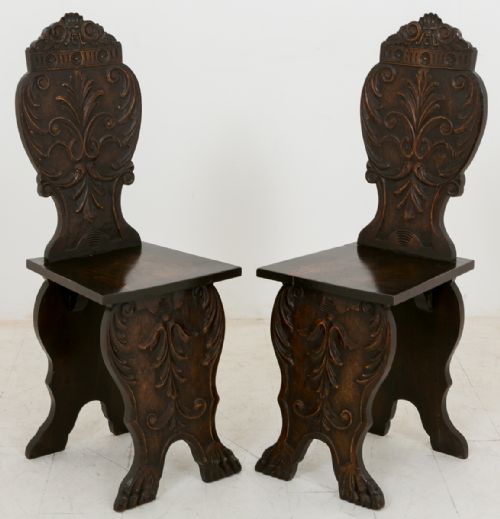
Italian Renaissance Revival Chairs
These Italian renaissance revival chairs bring monumental historic gravitas into a room through rich carved timber and traditional upholstery.
Italian Renaissance Revival Chairs
When you search for italian renaissance revival chairs, you encounter robust seating forms designed to echo the grand palaces of historic Italy. The selection spans the nineteenth century alongside earlier walnut pieces, capturing periods from seventeen hundred to eighteen eighty.
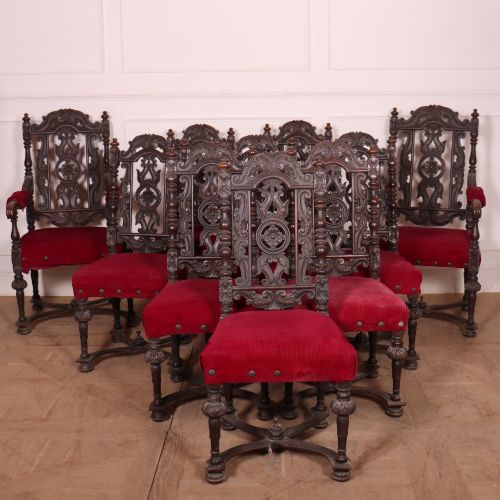
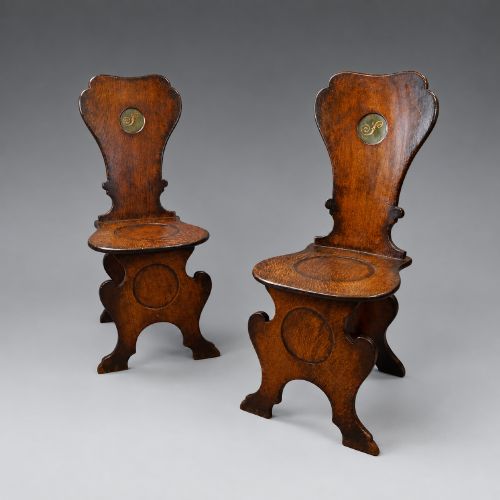
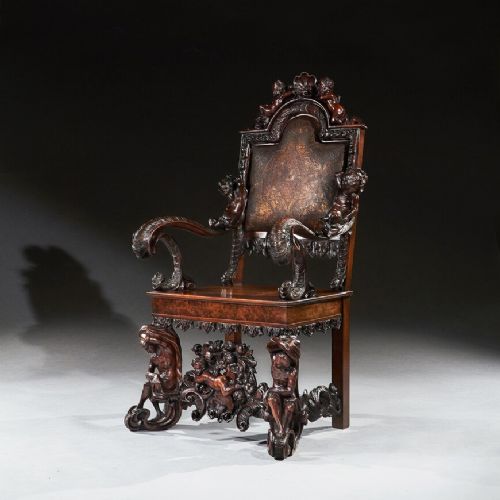
You meet a variety of seating types on this page, including sgabello hall chairs, X-framed stools, Savonarola chairs, and imposing audience armchairs. Carved walnut predominates among the materials, joined by oak, lime wood, and fruitwood.
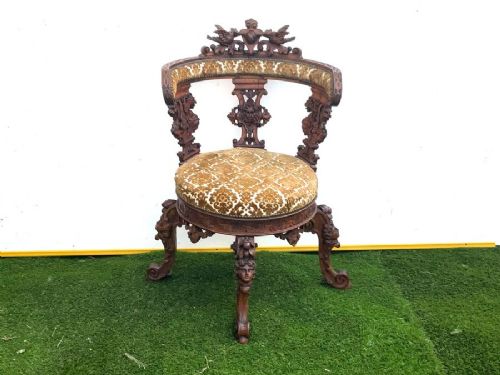
The aesthetic leans heavily into Renaissance and Baroque revival styles, often featuring figural carving, bone inlay, and textile or leather upholstery. Hall chairs and benches represent the most frequent finds for everyday interiors.
Materials and construction methods
Makers relied primarily on solid walnut and oak to achieve the heavy, substantial frames demanded by the revival style. Carving was executed by hand directly into the timber, creating deep relief panels, figures, and ornate structural elements.
Surface decoration frequently incorporated bone inlay set into the wood, alongside painted finishes or exposed grain polished to a deep lustre. Upholstered examples combined wooden frameworks with traditional textiles such as velvet and applied leather.
Italian Renaissance Revival Chairs Retail Price Guide 2026
Typical asking prices for italian renaissance revival chairs among the pieces listed under this phrase on Sellingantiques today, from the lower quarter to the upper quarter. They describe what is for sale here now, not the wider market.
The listings here span timber varieties from walnut and oak to lime wood and fruitwood, alongside decorative bone inlay.
Assessing craftsmanship and design
The distinction between standard production and exceptional work rests entirely on the depth and ambition of the carving. Exhibition quality pieces feature intricate figural elements and precise detailing that elevate them far beyond basic utility.
Materials also dictate the tier of the piece, with dense figured walnut and careful bone inlay marking out superior examples. Historical provenance or attribution to specific workshops separates standard nineteenth century revivals from masterworks.
Andrea Brustolon
The Italian Renaissance Revival Chairs Glossary
- Sgabello
- A light wooden chair featuring a tall decorated back and solid trestle supports instead of legs. It served as a portable hall seat in Renaissance Italy.
- Savonarola
- An X-shaped folding chair constructed from multiple curved wooden slats. It derives its name from the famous fifteenth century Dominican friar.
- X Framed Stool
- A folding seat supported by intersecting diagonal wooden members forming an X shape. This form dates back to ancient times and reappeared strongly during revival periods.
- Bone Inlay
- The technique of recessing small pieces of carved bone into wood to create geometric or figural patterns. It provides a striking pale contrast against dark walnut.
- Audience Armchair
- A large, high backed ceremonial seat designed for nobles or dignitaries. These chairs typically feature elaborate armrests and heavy vertical proportions.
Italian Renaissance Revival Chairs: Frequently Asked Questions
Where should I place an Italian renaissance revival chair?
These imposing seats suit high ceilinged spaces like entrance halls, libraries, or drawing rooms where their architectural presence can anchor the decor. A single sgabello or carved armchair also functions well as a striking accent piece in a corner.
Because of their historic aesthetic, they pair effectively with neutral walls and simple furnishings that allow the heavy timber carving to remain the visual focal point.
How do I care for antique walnut and leather?
Maintain the timber by applying a microcrystalline wax sparingly to nourish the wood without building up a sticky residue. Avoid placing these pieces in direct sunlight or near heat sources to prevent the historic wood from splitting.
Leather and velvet elements require gentle dusting with a soft brush rather than liquid cleaners. Professional textile conservation is recommended for fragile historic upholstery fabrics.
What is the difference between a sgabello and a hall chair?
A sgabello relies on two flat decorated boards or trestles for its base rather than four conventional legs. It is a specific historic Italian form designed to be easily moved around a great hall.
Standard hall chairs in this selection typically feature a traditional four leg configuration with carved wooden backs. Both types were originally intended for intermittent seating in entryways rather than long periods of lounging.
How can I distinguish a nineteenth century revival from an earlier piece?
Nineteenth century revival pieces often exhibit machine assistance in preliminary cuts, combined with revival styling cues that mirror sixteenth and seventeenth century aesthetics. Tool marks and timber shrinkage patterns provide key clues to a piece's actual age.
Evaluating the patina of the wood and the construction joints helps clarify whether an item originates from the seventeenth century or the eighteen hundreds.