




Carved Urn Wall Mirror
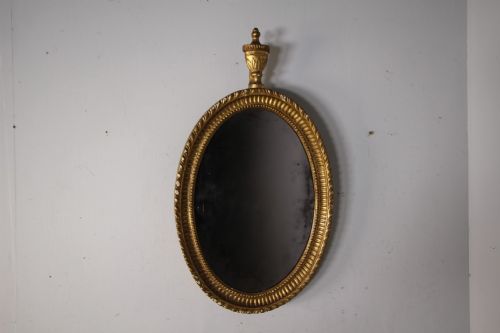
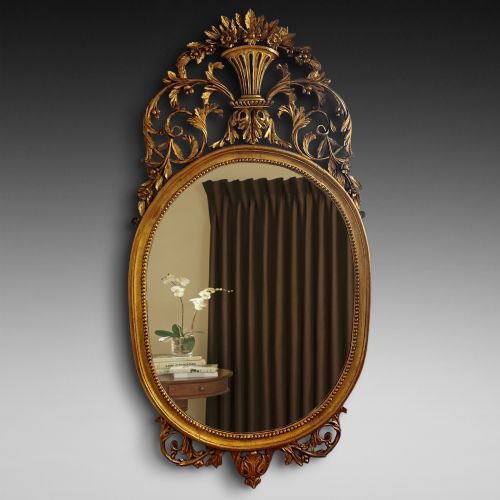
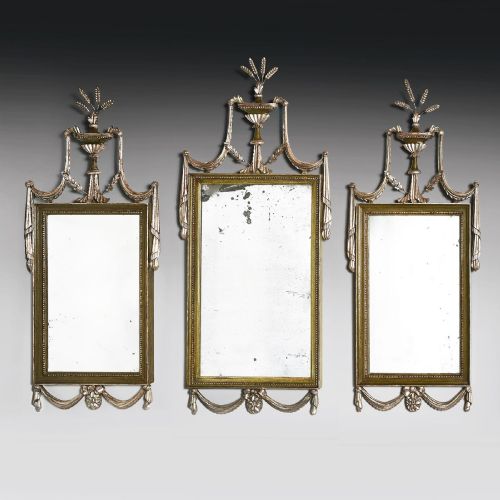
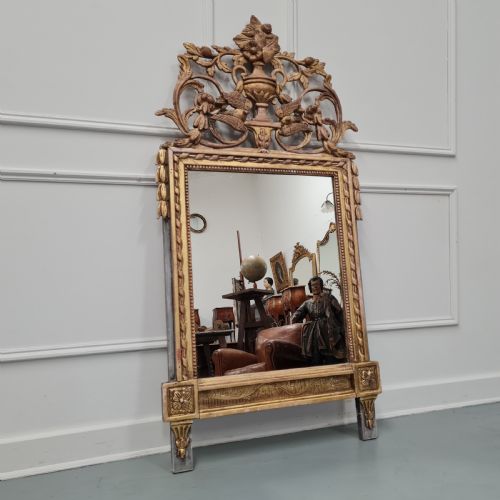
A carved urn wall mirror brings neoclassical symmetry to a room, framing reflection with classical urn motifs.
Carved Urn Wall Mirror
A carved urn wall mirror draws upon neoclassical design principles, featuring prominently in Georgian, Edwardian, and later revival periods. These pieces often incorporate giltwood, gesso, and mahogany, presenting oval or rectangular formats suited to drawing rooms and boudoirs.
The selection on this page spans the eighteenth, nineteenth, and early twentieth centuries, encompassing English, French, and Swedish origins. Styles range from strict Adam revival to ornate French château interpretations.
Buyers encounter various configurations, including pier glasses, overmantel mirrors, and smaller oval wallhangings. Each form utilises traditional wooden structures embellished with carved crestings and gilded surfaces.
Construction and materials
Craftsmen built the foundational frames using timber such as mahogany, oak, or pine, applying layers of gesso to create crisp sculptural details before gilding. Gold leaf or paint finishes were then applied to the prepared surfaces.
Mirror glass was set into these carved wooden armatures, sometimes utilising multi-plate configurations or retaining original silvered surfaces. Joinery techniques varied by period, employing pegged or dowelled joints within the heavier overmantel and pier mirror formats.
French marriage mirrors carry a legacy of romantic gifting, preserving intricate glasswork once destined to celebrate union.
Assessing quality and craftsmanship
Quality rests upon the crispness of the hand-carving and the depth of the gilding layers. Superior examples exhibit intricate relief work on the urn cresting and floral swags without soft edges in the gesso.
The integrity of the frame construction and the preservation of original mirror glass plates influence the standing of a piece. Finer mirrors maintain structural stability in their joints and harmonious patination across the gilt or painted surfaces.
Gillows Of Lancaster
The Carved Urn Wall Mirror Glossary
- Giltwood
- Wood that has been coated with gold leaf over a prepared bole and gesso ground. This finish provides a warm, reflective surface characteristic of formal period mirrors.
- Gesso
- A plaster-like mixture applied to wooden frames to form a smooth surface for carving and gilding. It allows for intricate, sharp ornamental details.
- Pier glass
- A tall mirror designed to hang on the wall between windows, often placed above a pier table. These tall formats frequently incorporate neoclassical urn motifs.
- Overmantel mirror
- A wide mirror specifically proportioned to hang above a fireplace mantelpiece. They reflect light across the room and often feature extended horizontal frames.
- Neoclassical
- A style drawing inspiration from classical antiquity, prominent during the Georgian and Adam periods. It emphasises symmetry, urns, swags, and classical columns.
Carved Urn Wall Mirror: Frequently Asked Questions
Where should I hang a carved urn wall mirror?
These mirrors suit principal reception rooms, hallways, or above fireplace mantels where their symmetry commands attention. Placing them opposite windows maximises natural light distribution.
Ensure wall fixings adequately support the weight of wooden and gilt frames, particularly for larger overmantel or pier glass formats.
How do I date a carved urn wall mirror?
Examine the timber, the construction of the backboards, and the characteristics of the gesso and gilding. Eighteenth-century examples display hand-cut joinery and specific neoclassical proportions associated with the Adam style.
Later nineteenth-century and Edwardian revivals often utilise machine-sawn elements and distinct composition ornament, even when replicating earlier Georgian forms.
Are the mirror plates original?
Many period mirrors retain their original glass, which can exhibit subtle foxing, minor pitting, or uneven silvering. These characteristics indicate age rather than defect.
Replacement glass often appears brighter and lacks the distortion or depth found in historic float or cylinder glass plates.
How do I clean a giltwood frame?
Dust the carved surfaces gently with a soft, dry brush to prevent accumulation in the recesses of the gesso. Avoid water, solvents, or modern cleaning sprays, which strip delicate gold leaf.
Professional conservation is recommended for fragile or flaking gilt surfaces to preserve the historic finish.