
Carved Tripod Candle Stand
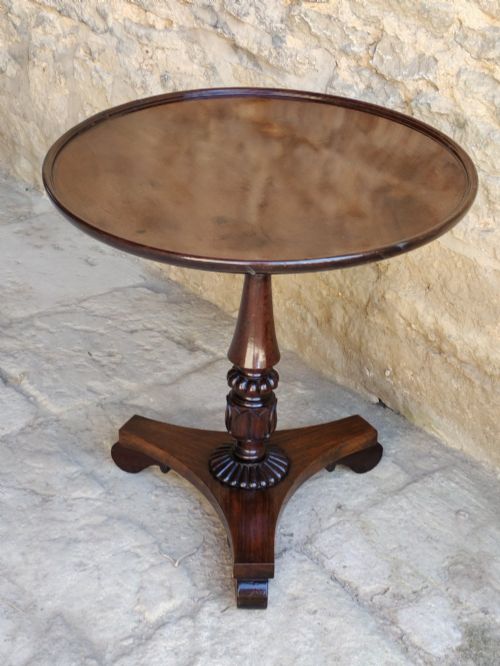
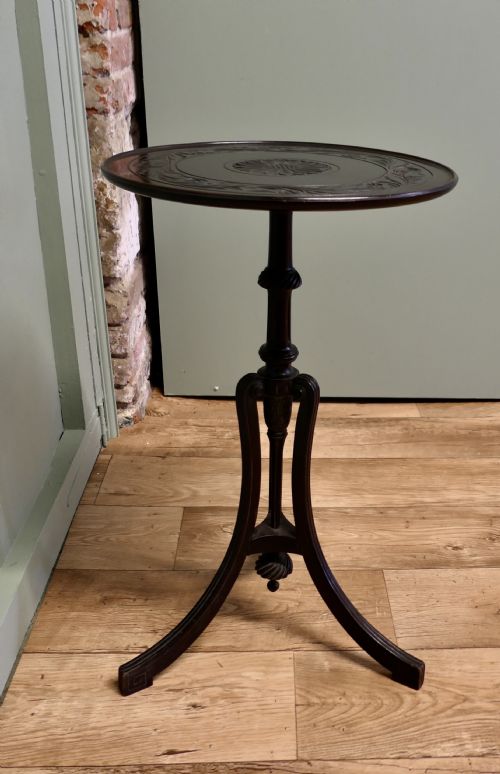
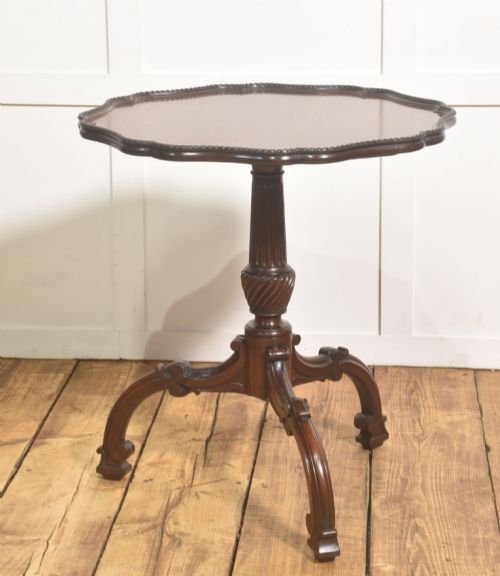
Carved tripod candle stand designs range from Georgian pillar forms to Edwardian wine tables, offering sturdy timber surfaces supported on three legs.
Carved Tripod Candle Stand
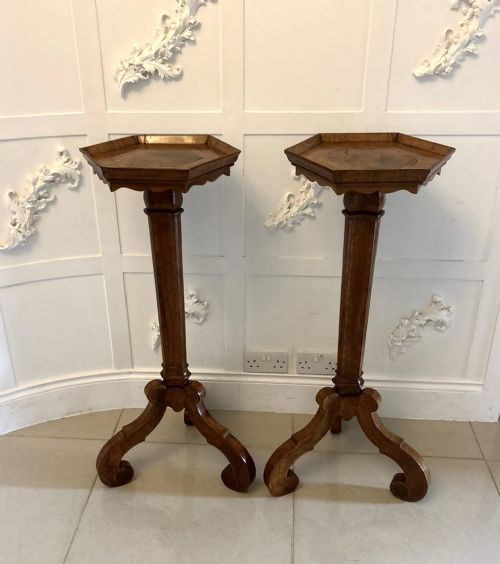
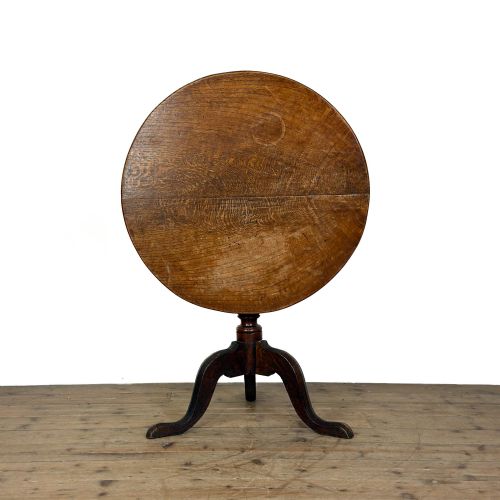
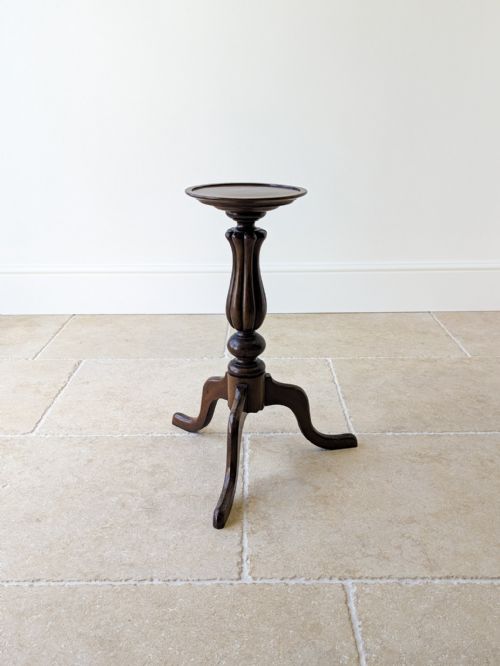
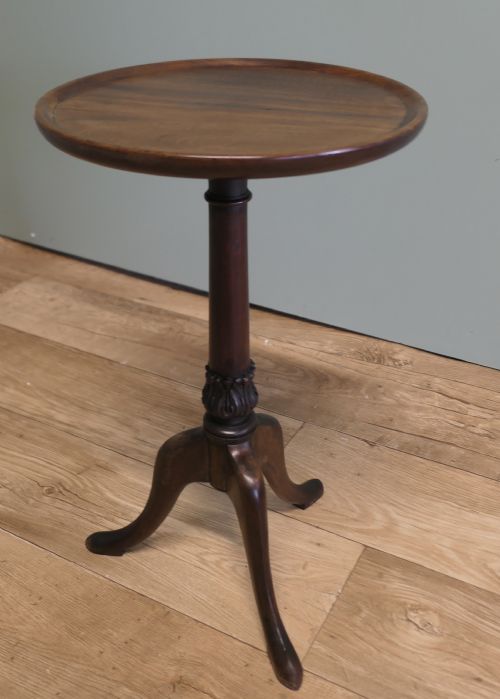
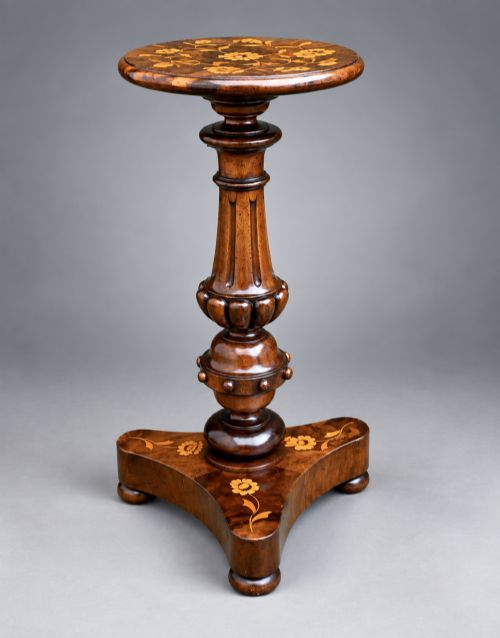
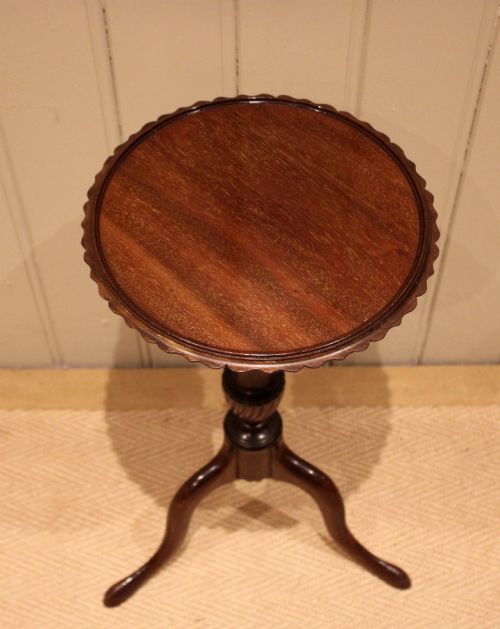
A carved tripod candle stand sits on three legs that diverge from a central vertical pillar, providing a raised surface for lighting, small objects, or drinks. Buyers searching for a carved tripod candle stand typically encounter compact timber tables spanning the eighteenth, nineteenth, and early twentieth centuries.
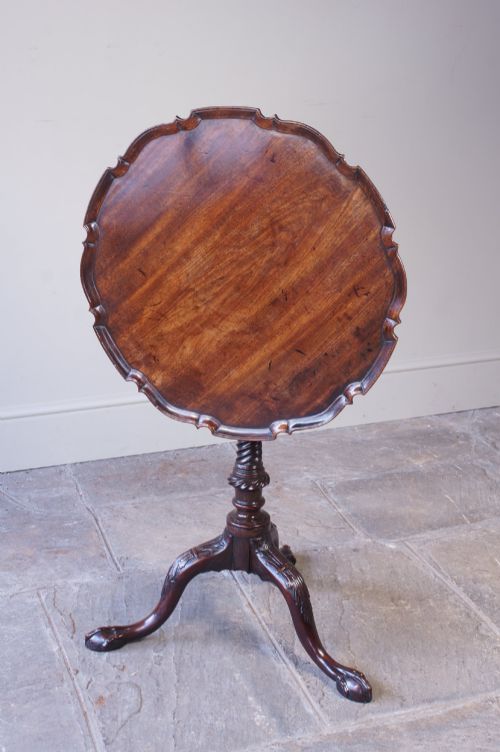
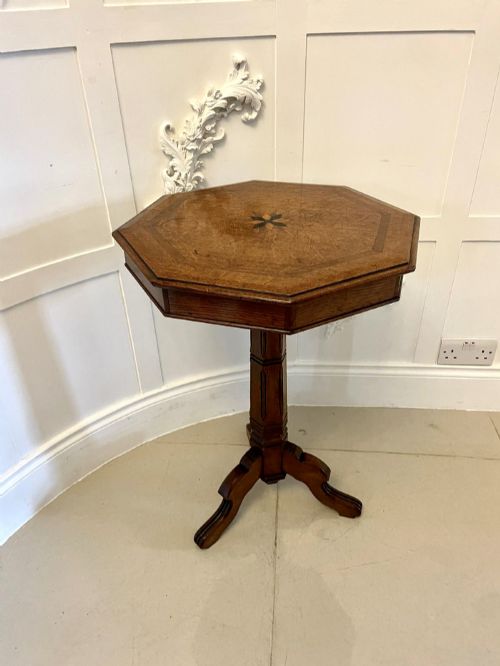
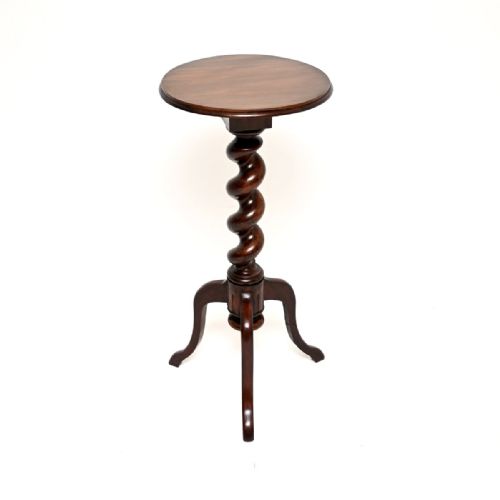
The form appears across various domestic spaces as a wine table, lamp table, torcheres, or occasional table. Mahogany, walnut, and rosewood examples dominate, often featuring circular, shaped, or tilt tops supported on turned or carved pedestals.
How they were made
Cabinetmakers constructed these stands predominantly from dense hardwoods such as mahogany, walnut, and oak, occasionally incorporating rosewood, ebony, or burr wood veneers. Timber was selected for grain pattern and strength, particularly for the slender stems and outstretched legs.
Joinery combined turned central columns with tenoned or dovetailed leg assemblies, sometimes incorporating tilt-top mechanisms with brass catches. Carving was executed by hand directly into the solid timber along the knees, pillar shafts, and raised rims.
Listings feature walnut, mahogany, oak, rosewood, and ebony across pieces dated from the eighteenth to the early twentieth century.
What varies in quality
Quality rests in the crispness of the hand carving and the selection of timber, where figured veneers and dense, heavy hardwoods indicate superior initial workmanship. The stability of the three-legged base and the precision of the turning on the central column distinguish finer items from standard production.
Proportion and balance define the aesthetic success of the piece, ensuring the top aligns harmoniously with the spread of the legs. Original mechanisms, such as tilting tops and retaining catches, maintain the integrity and historical completeness of the stand.
Gillow
The Carved Tripod Candle Stand Glossary
- Torchere
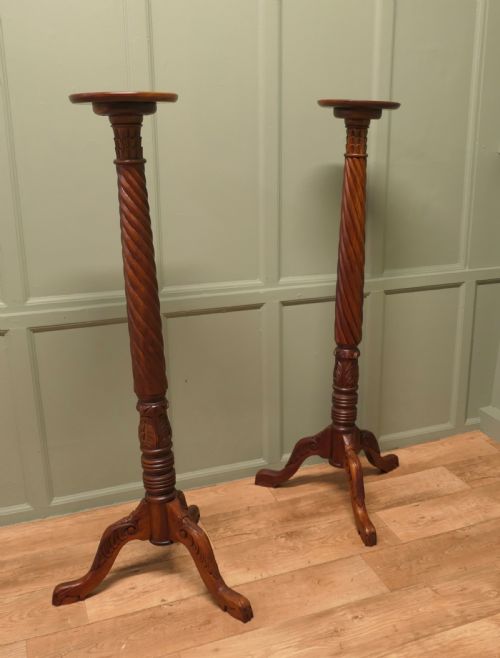
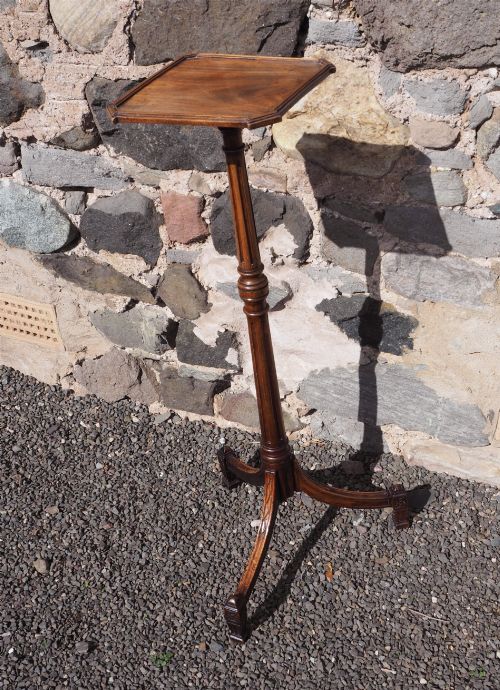
- A tall, slender stand designed specifically to support a candle or lamp. These elevated pieces often feature elaborate carving along the pedestal and slender proportions.
- Tilt top
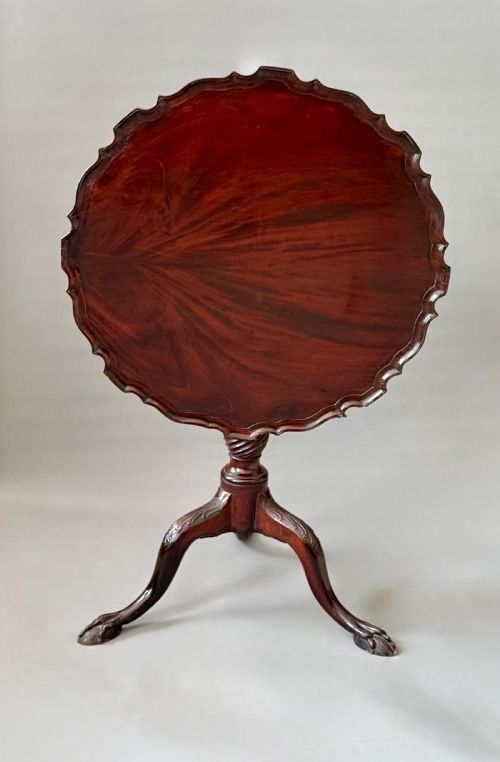
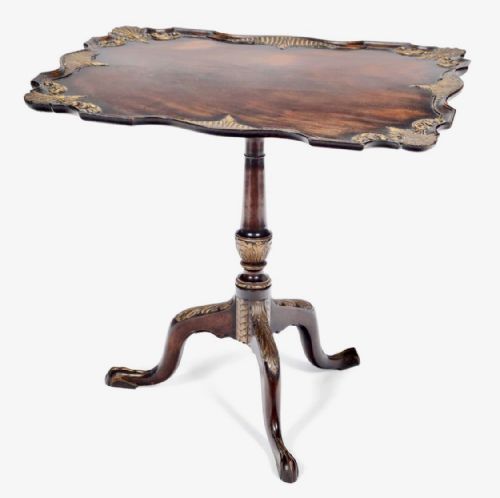
- A tabletop mounted on a hinge mechanism that allows the surface to fold vertical when not in use. This clever design saved space in period rooms.
- Pie crust rim
- A carved, undulating tabletop edge resembling pastry work on a pie. This decorative border is typically worked into solid mahogany or walnut.
- Tripod base
- A three-legged support structure providing stability on uneven floors. The legs often terminate in pad, claw-and-ball, or spade feet.
- Parcel gilt
- A surface decoration technique where specific carved details receive a thin application of gold leaf. It highlights particular motifs against a dark wood background.
Carved Tripod Candle Stand: Frequently Asked Questions
What is a tripod candle stand used for?
These compact stands served primarily to hold lighting devices such as candles or oil lamps close to seating areas. Their small footprints made them versatile for holding drinks, books, or decorative objects without crowding a room.
Today, they function effectively as lamp tables or occasional side tables beside chairs and sofas. Their elevated surfaces bring useful display space into corners and narrow gaps between furniture.
Are tilt top tables stable?
A well-adjusted tilt top table remains stable when the brass catch or wooden peg secures the horizontal top firmly to the pillar block. The three-legged base naturally accommodates uneven floorboards without rocking.
When moving the stand, lift it by the central pillar rather than the edge of the top to protect the hinge mechanism. Regular checks of the under-pivots ensure the top locks securely into position during daily use.
What woods were used for stands?
Mahogany served as the primary timber for most quality stands due to its strength and rich grain. Walnut, oak, and rosewood appear frequently across different decades and regional workshops.
Exotic additions like ebony and burr wood veneers provided striking contrast on luxury items. Secondary woods beneath or inside the construction often include pine or oak depending on the maker's origin.