





Carved Treen Snuff
These carved treen snuff boxes are small wooden containers shaped into shoes, books, and hands that bring genuine tactile history to your desk.
Carved Treen Snuff
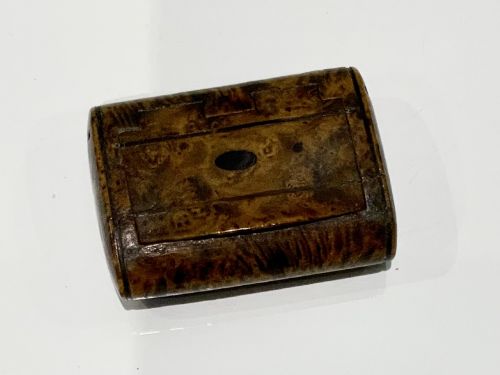
When you search for carved treen snuff, you are looking at small wooden containers fashioned by hand to hold tobacco. The examples on this page span the eighteenth, nineteenth, and early twentieth centuries, encompassing Georgian, Victorian, and Edwardian periods.
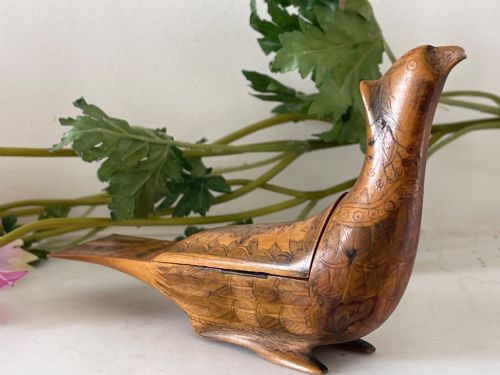
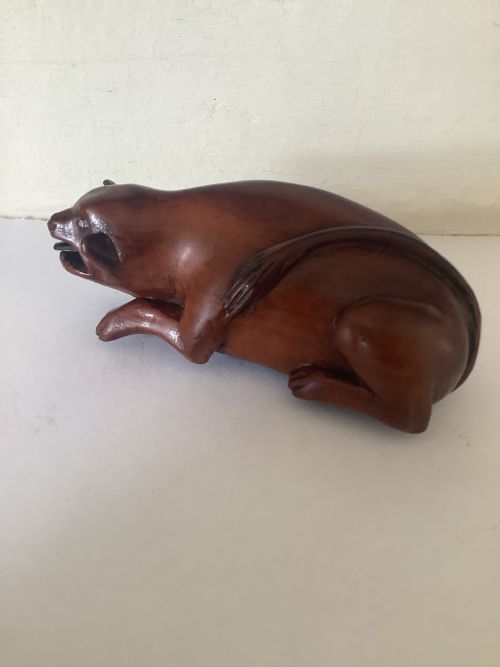
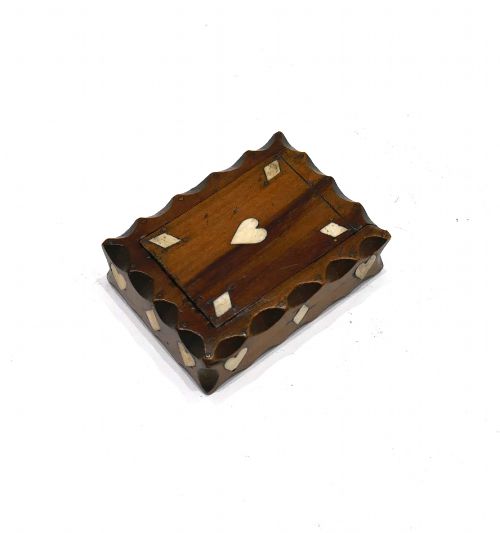
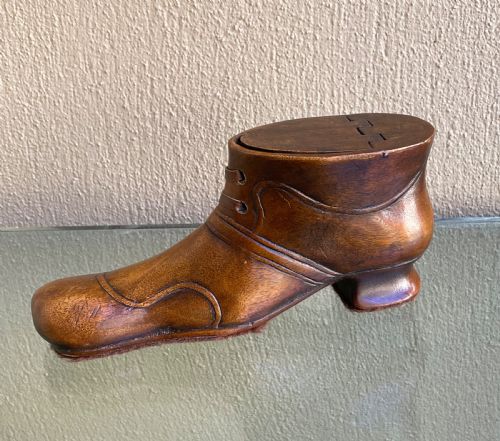
The most common forms you will meet here are shoes, boots, and pocket boxes. Makers also shaped these items into books, hands holding pinches, and whimsical figural pieces decorated with bone and heart inlays.
Originating from British workshops, these objects served daily social rituals before manufactured packaging took over. They survive today as folk art objects valued for their clever craftsmanship and varied timber surfaces.
How they were made
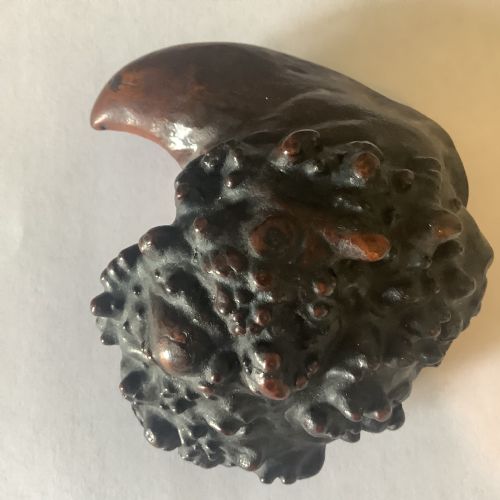
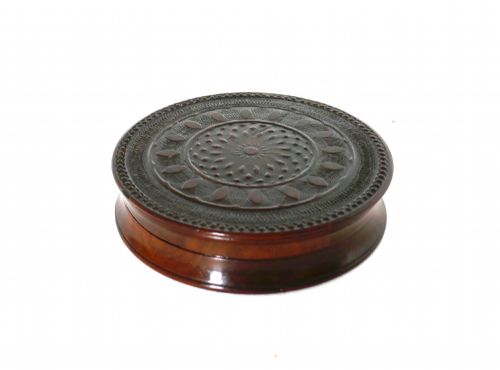
Carved treen snuff pieces rely primarily on dense hardwoods and fruitwoods such as laburnum, walnut, mahogany, and coquilla nut. Craftsmen selected these timbers for their tight grain, which allowed for crisp chip carving and engine-turned decoration without splintering.
Many boxes incorporate contrasting materials like bone for geometric hearts and diamond shapes, alongside small glass panels or metal fittings. Artisans carved these woods by hand or turned them on small lathes before polishing the surfaces to a warm sheen.
Carved Treen Snuff Retail Price Guide 2026
Typical asking prices for carved treen snuff among the pieces listed under this phrase on Sellingantiques today, from the lower quarter to the upper quarter. They describe what is for sale here now, not the wider market.
Listings feature 19th Century, Georgian, Victorian, and Edwardian periods alongside materials like hardwood, fruitwood, bone, and coquilla nut.
What varies in quality
The distinction between ordinary and exceptional pieces lies in the crispness of the carving and the ingenuity of the form. A shoe with well-defined buckles, pegged joints, and balanced proportions demonstrates a higher level of artisan skill than a plain rectangular box.
Material choice and surface patination further define the hierarchy. Naturally figured timbers like burr walnut or intricate chip-carving executed without hesitation elevate a piece far above utilitarian workshop production.
The Carved Treen Snuff Glossary
- Treen
- Small handmade wooden household objects. The term derives from old English words for tree and timber.
- Coquilla nut
- The hard, mottled brown seed of an exotic South American palm. Craftsmen carved it into small detailed boxes and patch containers.
- Chip carving
- A method of removing small triangles of wood from a flat surface to create geometric patterns. This technique appears frequently on Welsh folk art pieces.
- Engine turning
- A decorative mechanical process that cuts precise geometric patterns into wood or metal using a lathe. Scottish makers utilised this on laburnum boxes.
- Snuff box
- A small lidded container designed to hold ground tobacco. These were carried in pockets for consumption throughout the day.
Carved Treen Snuff: Frequently Asked Questions
How were shoe snuff boxes used?
Shoe snuff boxes served as functional containers and conversation pieces in social settings. Owners slid or lifted the heel or sole to access the tobacco inside.
Their distinct footwear shape often carried romantic symbolism or personal associations.
How do I date a wooden snuff box?
Dating relies on examining the timber species, construction methods, and decorative styles such as chip carving or engine turning. Georgian and Victorian examples often feature distinct regional characteristics.
Material choices like bone inlay and coquilla nut also help narrow down the period of manufacture.
Are these boxes made of fruitwood?
Many of these pieces utilise dense fruitwoods and hardwoods that accept fine detail work. Timbers like laburnum and mahogany provided durable surfaces for intricate carving.
Makers selected these woods specifically because they resisted splitting during detailed shaping.