

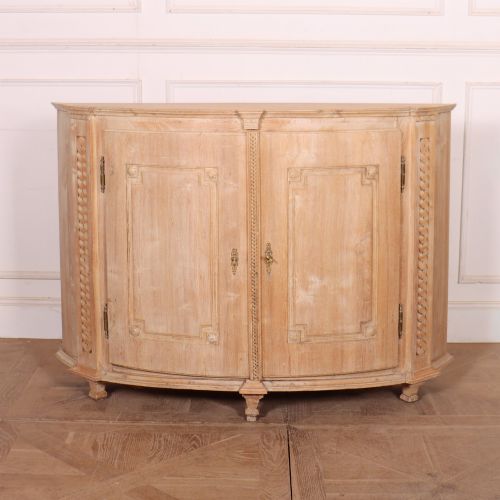
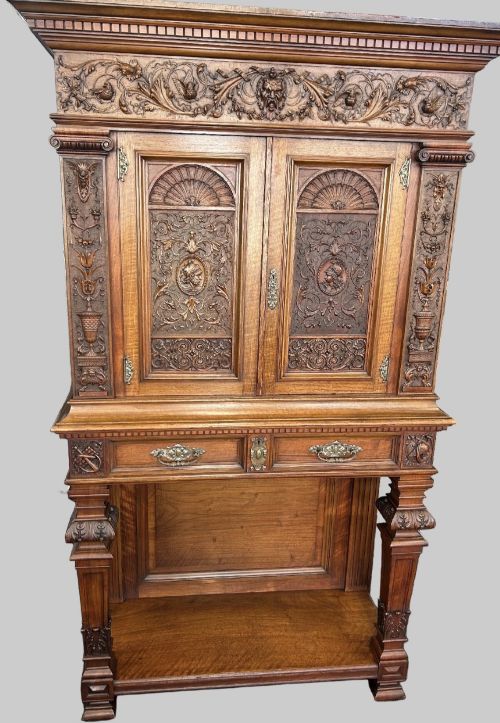
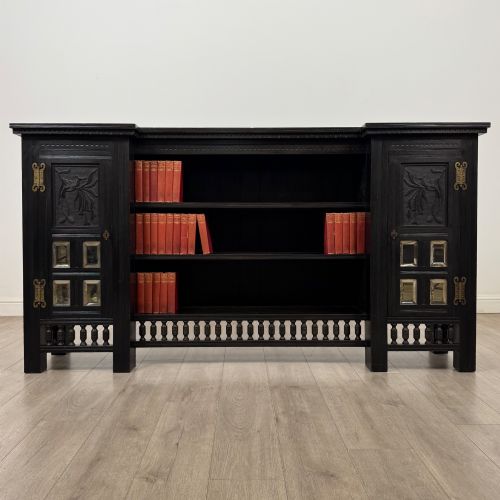
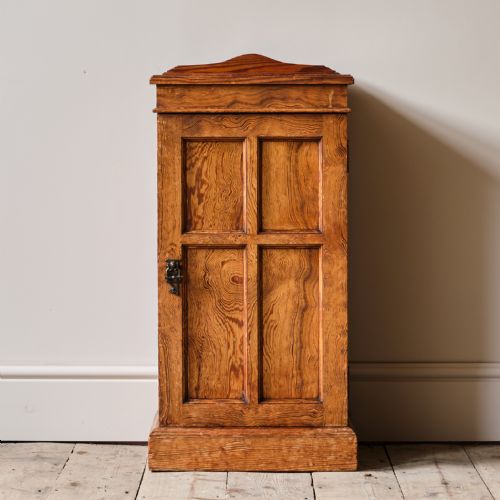

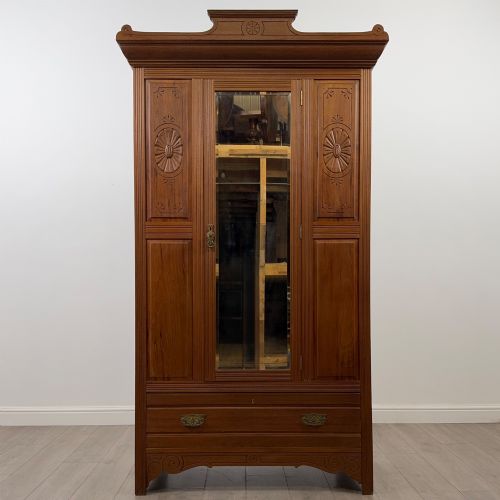


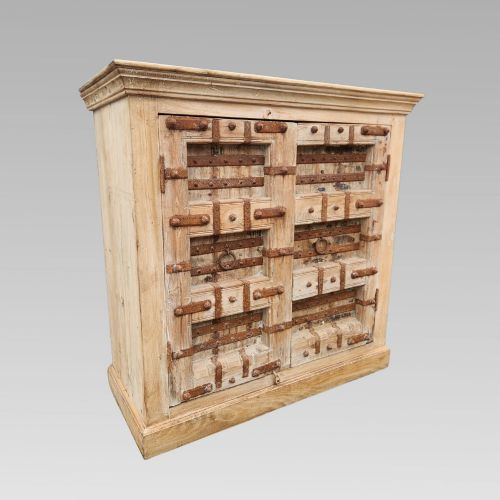
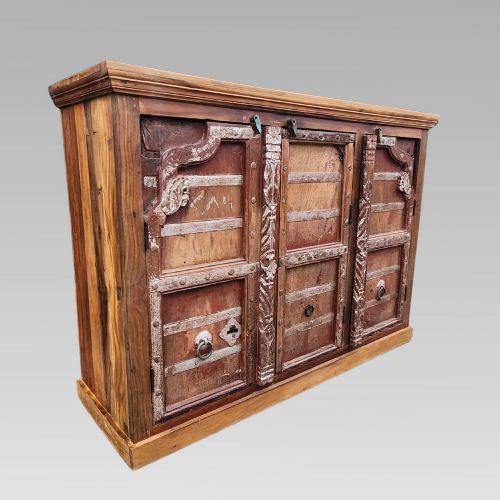
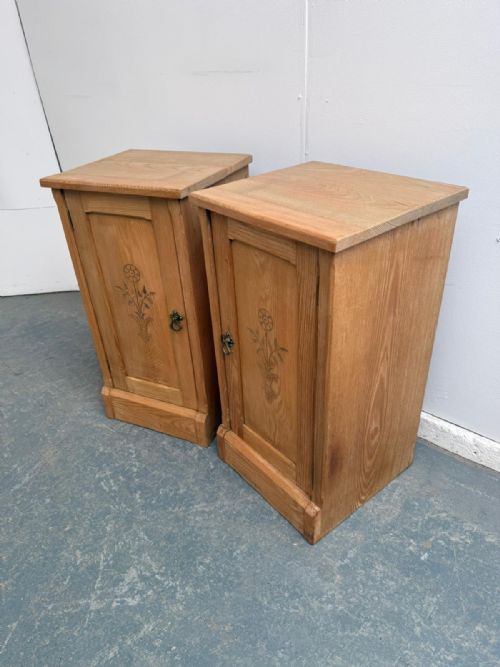
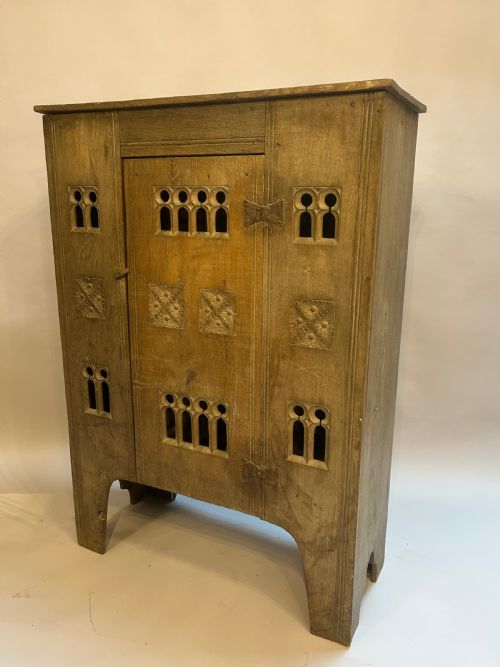
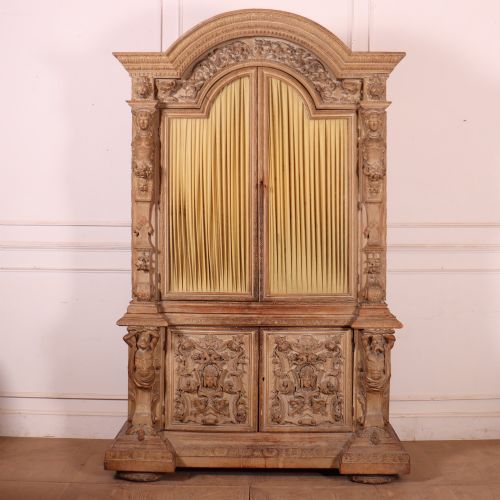

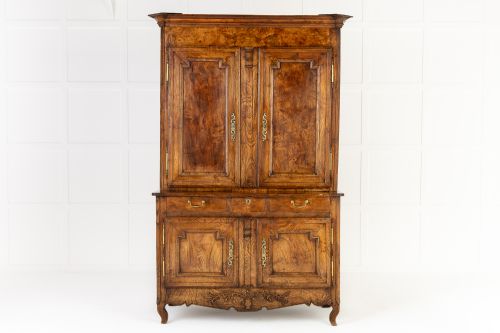

Carved Timber Cupboard
These carved timber cupboards span centuries of joinery, offering storage shaped by regional woods and revivalist hands.
Carved Timber Cupboard
A carved timber cupboard brings domestic storage into the room through panelled doors, architectural cornices and heavy mouldings. When searching for a carved timber cupboard, buyers encounter forms ranging from towering wardrobes and kitchen food cupboards to compact bedside cabinets and display vitrines.
The pieces on this page draw from periods such as the 17th, 18th and 19th centuries, alongside Victorian, Edwardian and early 20th-century eras. Regional variations emerge across English country house styles, French provincial armoires, Italian walnut cabinets and Indian reclaimed teak storage.
Makers and workshops across these eras employ diverse timber species, translating architectural motifs into domestic furniture. The resulting pieces function equally as principal storage units in bedrooms or decorative sideboards in reception rooms.
Materials and construction methods
Cabinet makers rely on sturdy hardwoods and fruitwoods, utilising oak, mahogany, walnut, ash, elm and chestnut alongside exotic imports like padouk and amboyna. Construction involves traditional joinery such as mortise and tenon frames, dovetailed drawers and panelled door assemblies that accommodate timber movement over time.
Surface decoration relies heavily on hand carving, creating relief panels, Gothic tracery, Rococo curves and geometric mouldings directly into the timber. Finishing techniques range from wax polishing and ebonising to hand-painting in regional or revivalist palettes.
Carved Timber Cupboard Retail Price Guide 2026
Typical asking prices for carved timber cupboard among the pieces listed under this phrase on Sellingantiques today, from the lower quarter to the upper quarter. They describe what is for sale here now, not the wider market.
Listings feature timbers including oak, mahogany, walnut, ash, elm, chestnut, teak, padouk and amboyna across multiple centuries.
Distinctions in quality
The calibre of a piece rests on the crispness of the hand carving and the selection of figured timber veneers or solid planks. Superior examples display tight, uncompromised joinery where doors hang square and panels seat cleanly within their frames.
Original hardware, including brass hinges, iron strapwork and working locks with period keys, elevates the integrity of a cabinet. Alterations, replacement backs or heavily sanded surfaces distinguish workshop-made masterworks from heavily restored utility furniture.
Gillows
The Carved Timber Cupboard Glossary
- Armoire
- A large freestanding wardrobe or cupboard with doors, traditionally used in France for storing garments and linens.
- Vitrine
- A glass-fronted cabinet or display case designed for showing porcelain, books or curiosities.
- Buffet deux corps
- A traditional two-stage French cupboard featuring an upper section set back upon a deeper lower cabinet.
- Court cupboard
- A low medieval or 17th-century English sideboard or cupboard used for displaying plate and serving food.
- Shodana
- A traditional Japanese display cabinet featuring asymmetrical shelving, sliding doors and carved wooden panels.
Carved Timber Cupboard: Frequently Asked Questions
How do I style a large antique cupboard in a modern home?
Position the piece against a neutral wall to let the carved timber grain and architectural mouldings define the room's focal point. Allow adequate clearance around the cabinet doors so they swing open fully without obstruction.
Utilise the internal shelving for functional storage or display ceramics behind glass doors. Pair the rich tones of oak, walnut or mahogany with minimalist contemporary furniture to create a balanced interior.
How do I care for antique timber and carved surfaces?
Keep wooden cabinets away from direct sunlight and heat sources to prevent the timber from drying out, warping or splitting. Dust the carved panels regularly with a soft, dry cloth to prevent particulate buildup in the recesses.
Apply a microcrystalline wax or traditional beeswax sparingly once or twice a year to nourish the grain and maintain the surface sheen. Avoid silicone-based sprays, which can penetrate porous antique finishes and attract dust.
How can I distinguish an 18th-century cupboard from a Victorian revival piece?
Examine the construction marks inside the cabinet, as 18th-century makers relied on hand-sawn timber, pegged mortise and tenon joints, and irregular hand-planed boards. Tool marks and subtle asymmetries often reveal the hand of an earlier provincial joiner rather than industrial machinery.
Review the timber species and hardware against known historical periods, noting that Victorian and Edwardian revival pieces frequently employ machine-cut screws and standardised hinges. Comparing the depth of the carving and the ageing of the patina helps confirm the true era of manufacture.
What is the difference between a wardrobe and a court cupboard?
A wardrobe functions primarily as a tall, enclosed hanging space for garments, often fitted with internal rails, hooks or sliding trays. These pieces emerged later to accommodate changing fashions in clothing storage.
A court cupboard is a low, sturdy storage unit originating in earlier centuries, featuring enclosed lower compartments and display tiers above. These early cupboards served dining halls for displaying silver plate and serving food rather than hanging coats.