



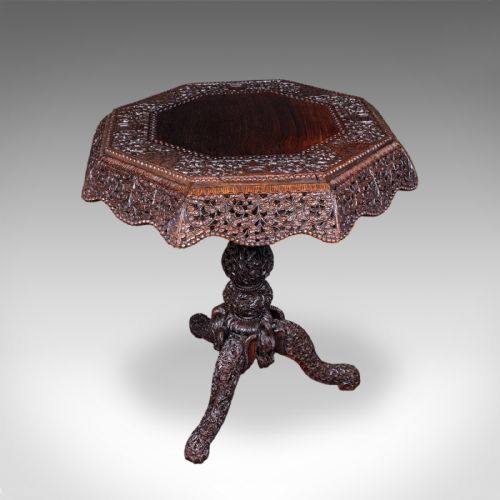
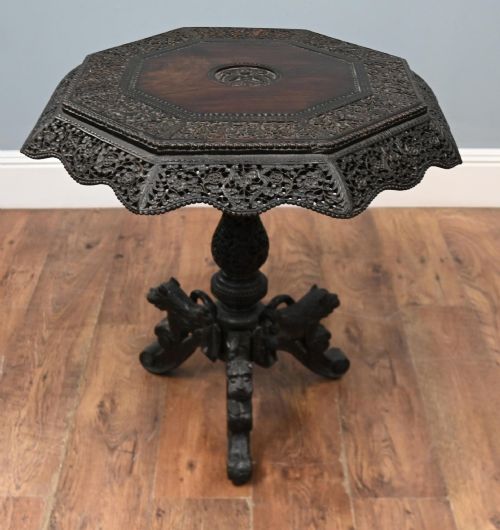
Carved Teak Furniture
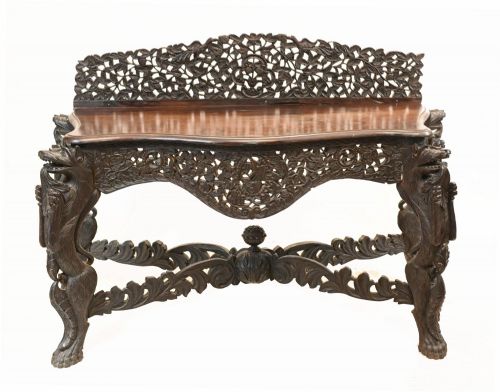
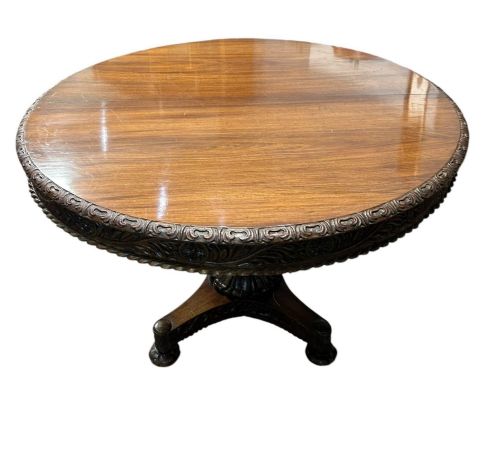
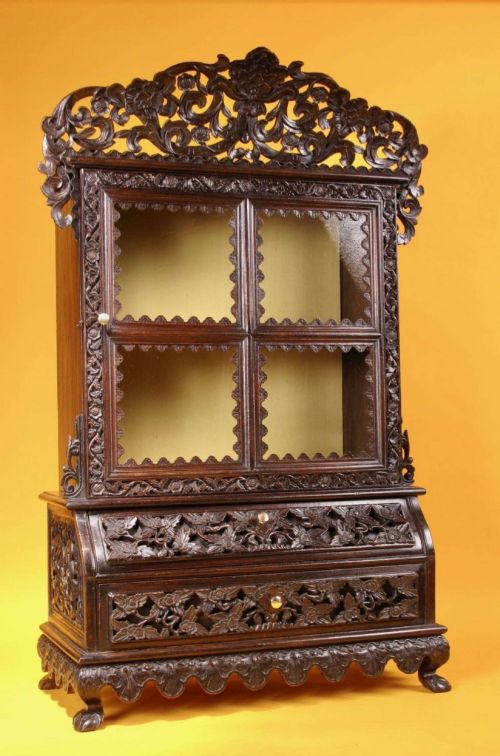
These carved teak furniture pieces bring dense colonial craftsmanship and deep timber grain directly into domestic rooms.
Carved Teak Furniture
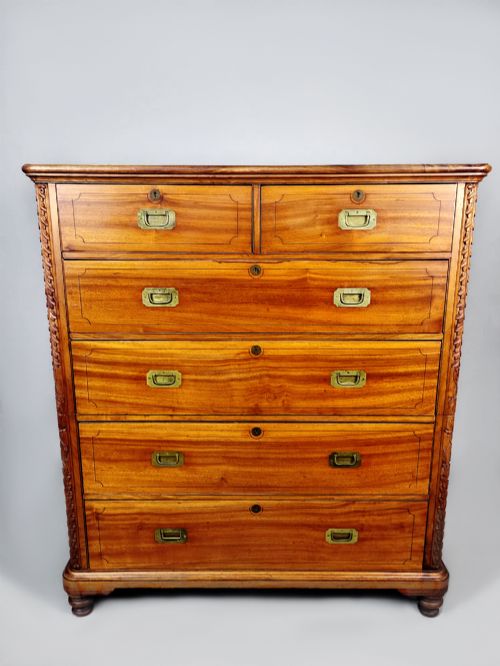
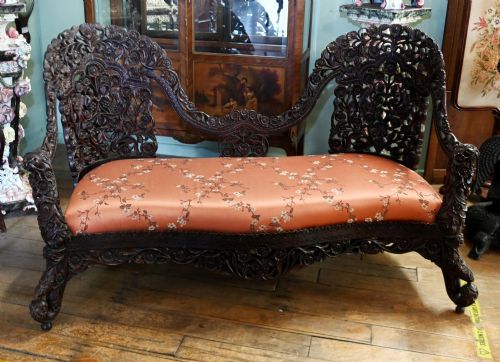
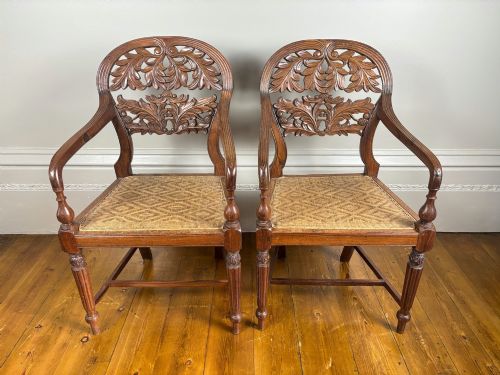
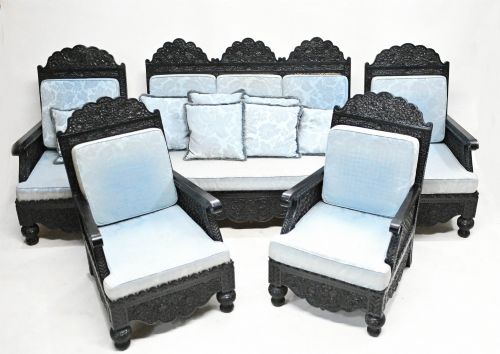
Carved teak furniture encompasses an array of tables, storage cupboards, and seating originating from nineteenth and early twentieth-century workshops. Buyers exploring this category encounter items produced across the Indian subcontinent and Burma during the colonial era.
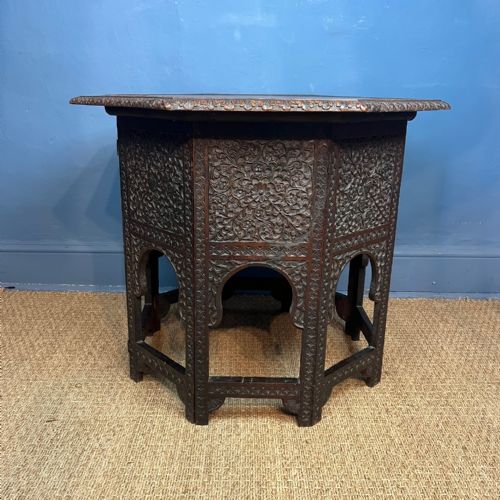
The most common forms on this page include octagonal side tables, occasional tables, and large storage cabinets such as almirahs and dowry chests. These pieces reflect distinct regional traditions spanning Anglo-Indian, Burmese, and traditional Indian styles.
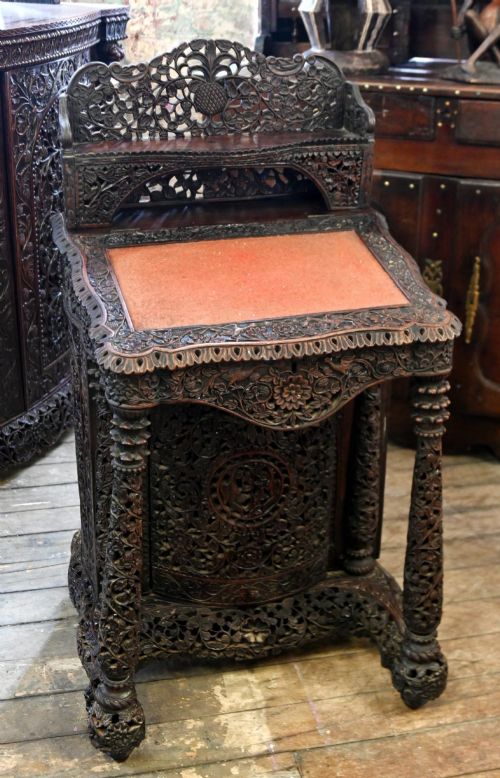
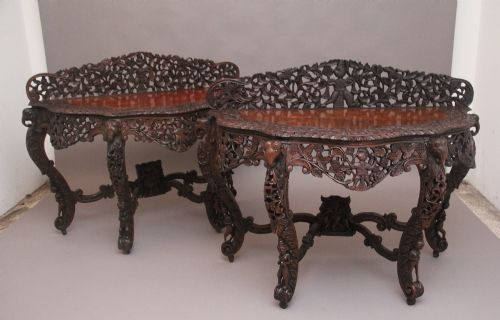
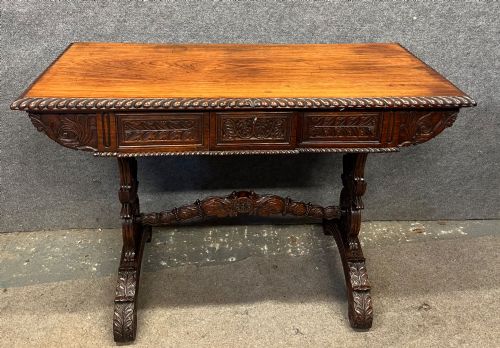
Objects range from compact brass-inlaid tray tables to substantial sideboards, dining tables, and conservatory suites. Their forms often incorporate intricate foliage, animal motifs, and geometric patterns carved directly into the dense timber.
How they were made
Construction relies primarily on dense tropical hardwoods, chiefly teak, complemented by secondary timbers like rosewood and reclaimed wood. Artisans shaped these heavy materials using hand tools to achieve deep relief carving and structural stability.
Many surfaces integrate contrasting elements, utilising brass wire, bone, and bone inlay set precisely into channels within the timber. These mixed media techniques define the decorative vocabulary of specific regional centres such as Hoshiarpur and Bombay.
Carved Teak Furniture Retail Price Guide 2026
Typical asking prices for carved teak furniture among the pieces listed under this phrase on Sellingantiques today, from the lower quarter to the upper quarter. They describe what is for sale here now, not the wider market.
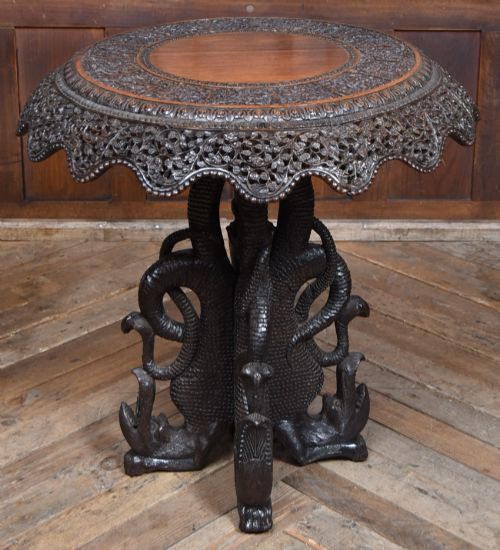
Elephant tables incorporate carved pachyderms supporting the top, proving that nineteenth-century artisans took structural zoology very seriously indeed.
What varies in quality
Quality rests upon the depth, clarity, and continuity of the hand carving across the timber surface. Superior examples display sharp undercutting and well-defined motifs, whereas lesser pieces feature shallow, hurried incisions that obscure the natural grain.
The integration of secondary materials such as brass and bone inlay dictates the refinement of an item. Securely fitted inlays and balanced structural proportions distinguish the finest workshop output from simpler domestic furniture.
The Carved Teak Furniture Glossary
- Almirah
- A tall freestanding storage cupboard or wardrobe typical of Indian domestic interiors. These units often feature heavy panel doors and substantial cornices.
- Damchiya
- A traditional low storage cabinet or dowry chest originating from India. They typically incorporate deep relief carving and hinged compartments.
- Octagonal table
- A tabletop shape with eight distinct sides frequently utilised in Anglo-Indian occasional and tea tables. This geometry accommodates complex surface carving and inlay.
- Tray top
- A removable or recessed tabletop surface with a raised edge resembling a serving tray. This form appears often on folding occasional tables from the Hoshiarpur region.
- Anglo-Indian
- A stylistic description for furniture made in India under British colonial rule. These pieces blend indigenous craft techniques with European forms.
Carved Teak Furniture: Frequently Asked Questions
What is carved teak furniture?
Carved teak furniture comprises tables, cabinets, and seating created primarily during the nineteenth and early twentieth centuries in India and Burma. These items combine local timber traditions with colonial forms and dense surface decoration.
Craftsmen utilised heavy tropical hardwoods to build functional household items ranging from small occasional tables to large storage cupboards and seating suites.
How do I identify Hoshiarpur pieces?
Hoshiarpur items are typically recognised by their extensive use of geometric inlay work executed in brass and bone. These pieces often feature folding octagonal or square tops adorned with dense floral and foliage patterns.
The woodwork on these tables and stands covers every visible surface, leaving little plain timber exposed between the metal and bone details.
Where were these pieces used?
Such furniture served British colonial households, administrative offices, and country residences both abroad and in Europe. They functioned as everyday dining tables, tea tables, and display surfaces in drawing rooms and conservatories.
Large cupboards and almirahs provided secure domestic storage for garments and household goods within traditional and colonial settings.
How should I care for teak furniture?
Teak is a dense, durable timber that requires minimal intervention to maintain its condition over time. Regular dusting with a soft cloth preserves the dry finish typically found on these antique carved surfaces.
Avoid placing these items near direct heat sources or rapid temperature shifts to protect the integrity of the timber and any delicate bone or brass inlay work.