




Carved Stick Rack
A carved stick rack keeps hallway floors clear of damp weather gear while anchoring the entryway with solid timber and character.
Carved Stick Rack
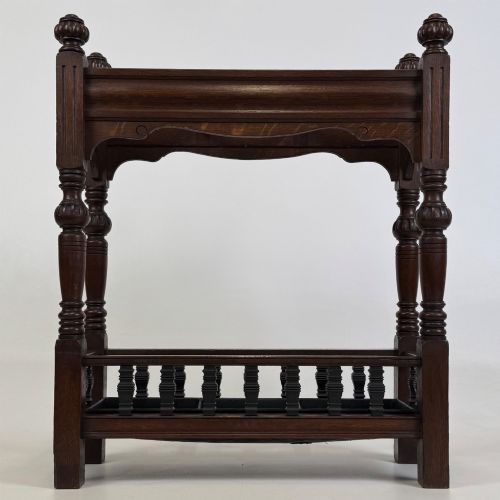
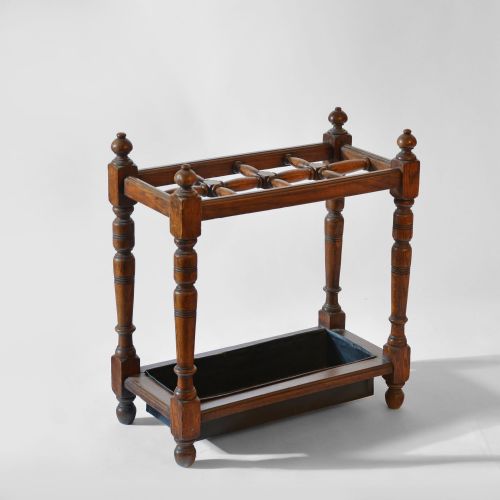
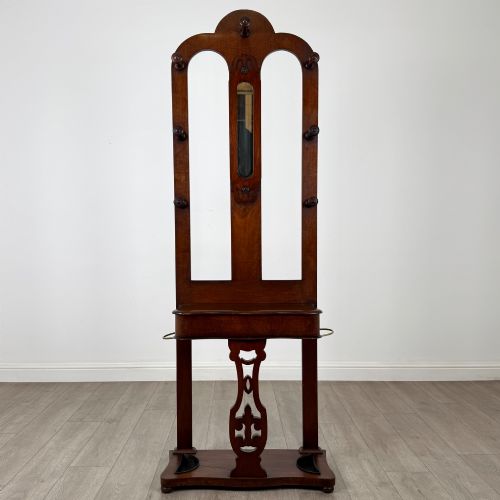
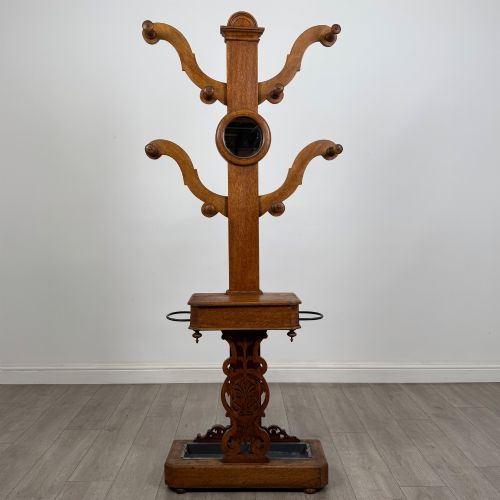
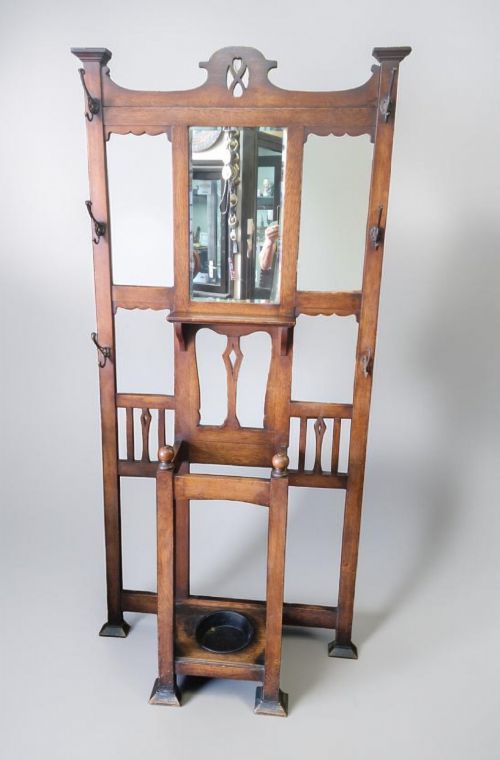
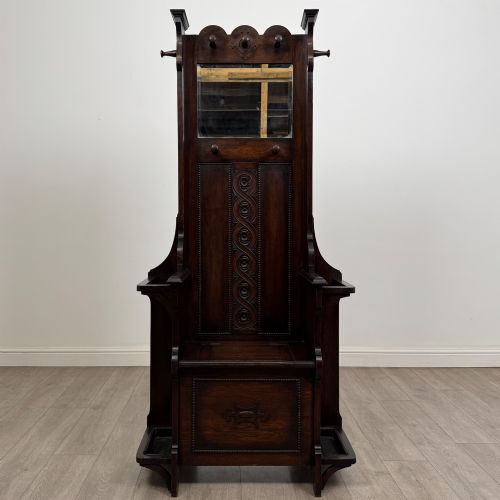
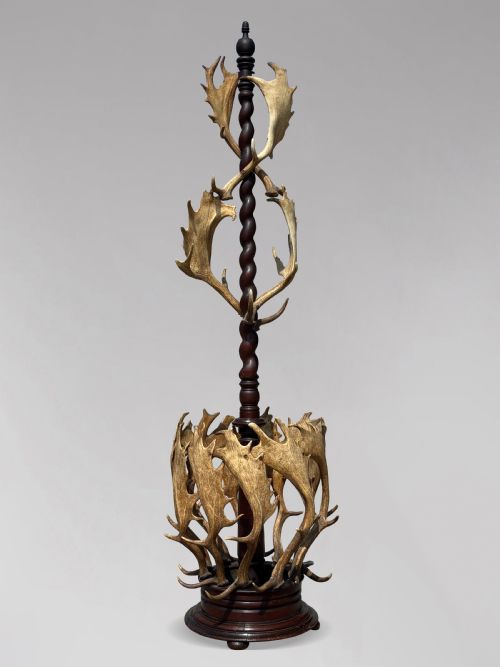
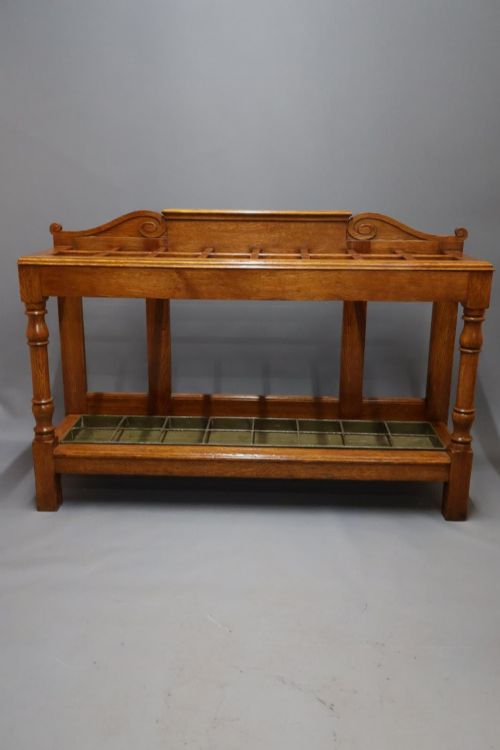
A carved stick rack is an entryway piece designed to hold walking sticks, umbrellas and coats in a domestic hall. When you search for a carved stick rack, you meet a variety of sturdy hall furniture, with oak versions appearing frequently alongside mahogany, walnut and maple.
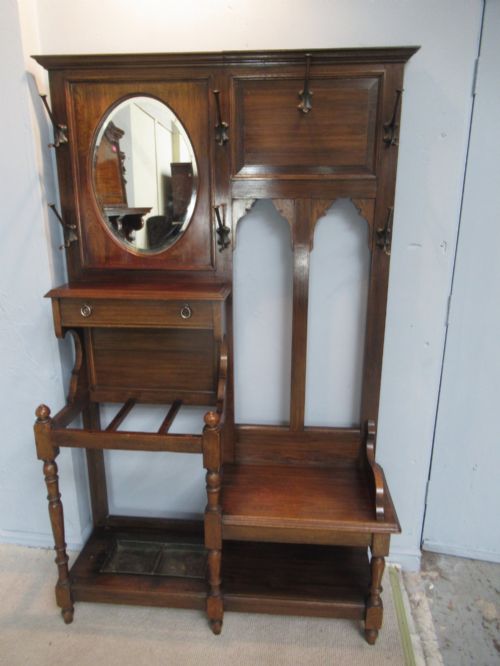
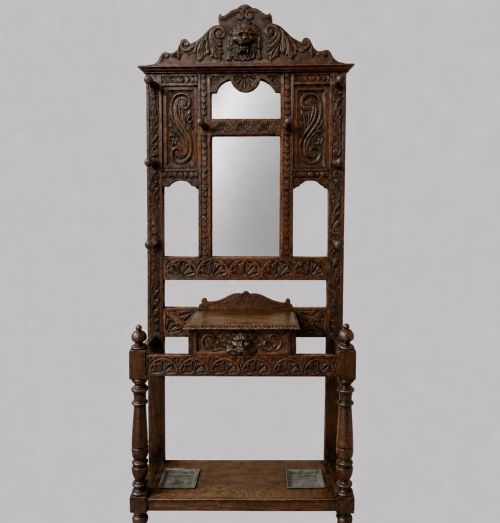
These items span periods from the nineteenth century into the twentieth, taking forms such as umbrella stands, coat stands and combined hall stands. Styles range from Victorian and Edwardian to Arts and Crafts, Gothic Revival and Black Forest, often incorporating carved details like Green Man motifs or animal figures.
How they were made
Makers utilised solid timbers such as oak and mahogany, shaping them through traditional joinery and hand-carving techniques. Structural elements often integrated metal trays to catch water, while glass mirrors and marble shelves appeared on more elaborate hall stand variants.
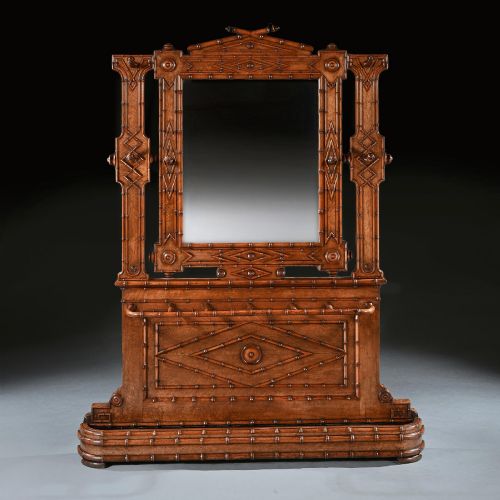
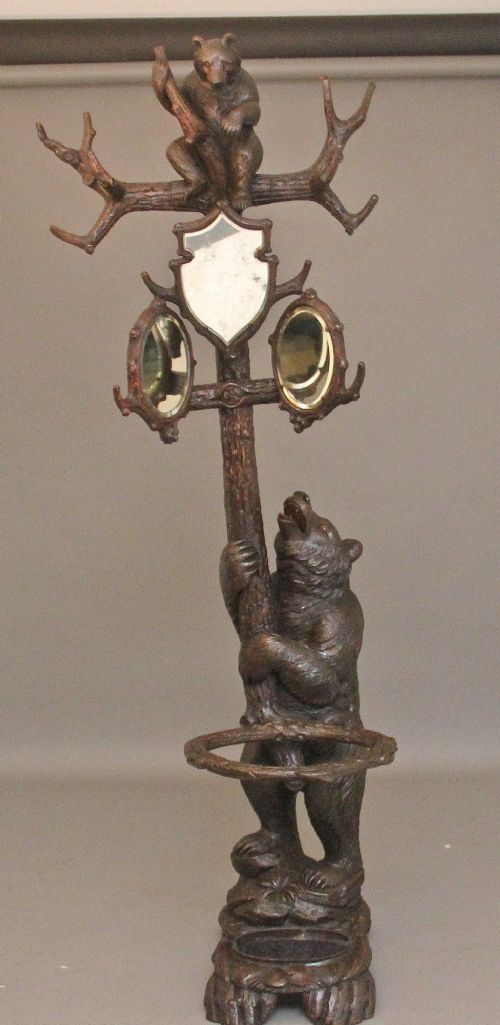
Surface decoration relied on depth of relief carving, seen clearly in Black Forest bear figures, botanical motifs and Gothic tracery. Caning and faux bamboo details further expanded the decorative repertoire available to nineteenth-century cabinet makers.
Several carved bears double as faithful hallway guardians, holding your walking stick firmly in their wooden paws.
What varies in quality
Quality rests upon the ambition of the carving and the integrity of the timber construction. Pieces featuring deep, expressive relief work, such as detailed bears or Green Man masks, stand apart from simpler utilitarian frames.
The choice of materials also dictates standing, with dense golden oak or figured mahogany outlasting softer woods. Original metal drip pans, intact mirrors and secure joinery separate standard examples from finer exhibition pieces.
J Parker of Woodstock
The Carved Stick Rack Glossary
- Black Forest
- A regional style of wood carving originating in Switzerland and Germany, famous for lifelike animal figures like standing bears. These pieces use rich brown timbers and dramatic sculptural depth.
- Green Man
- A decorative architectural and furniture motif depicting a human face carved from or entwined with leaves and vines. It symbolises rebirth and appears prominently on nineteenth-century oak hall furniture.
- Demi Lune
- A half-moon shape used for hall furniture designed to sit flush against an entryway wall. This profile saves floor space while providing a stable footprint for storing walking sticks.
- Japonisme
- A late nineteenth-century Western fascination with Japanese art, influencing furniture design through asymmetry and stylised natural motifs. It frequently appears alongside faux bamboo turning.
- Gothic Revival
- An architectural and decorative style that revives medieval forms, featuring pointed arches, tracery and heavy timber construction. Pieces of this style command attention with their solemn vertical lines.
Carved Stick Rack: Frequently Asked Questions
Where should a carved stick rack go?
These pieces belong in a hallway or boot room where guests enter the home. Their primary role is holding wet umbrellas and walking sticks near the front door.
Placing one against a sturdy wall ensures that heavy timber frames and combined coat hooks remain secure during daily use.
How do I maintain the timber?
Feed the wood periodically with appropriate wax to preserve the finish and prevent the carved details from drying out. Keep metal drip pans clean and dry to avoid moisture damage at the base.
Avoid placing these stands in direct sunlight or beside active heat sources which can cause old oak or mahogany to split.
Are these pieces suitable for daily use?
Most examples were built for robust domestic service and handle everyday umbrellas and coats with ease. Solid construction in oak and mahogany ensures lasting structural stability.
Care should be taken with delicate carved extremities, such as Black Forest bear paws or projecting foliage, to prevent accidental knocks.
How do I identify a Black Forest piece?
Black Forest stick stands are characterised by sculptural animal carvings, most commonly bears holding barrels or standing upright as supports. The wood is typically dark, deeply textured and rendered with high realism.
These distinctive items often incorporate naturalistic tree branches and rough bark textures into the main framework.