

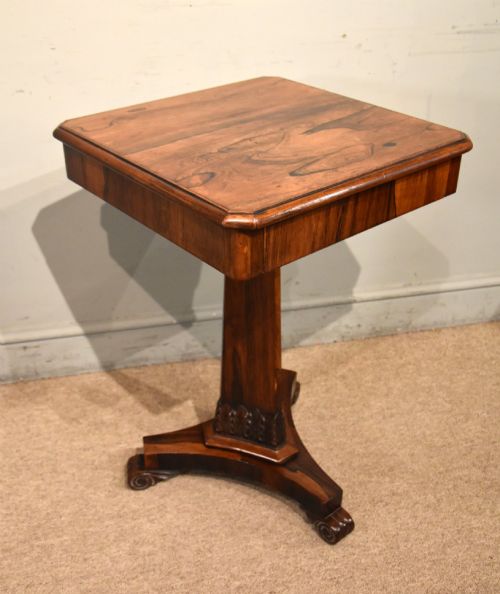

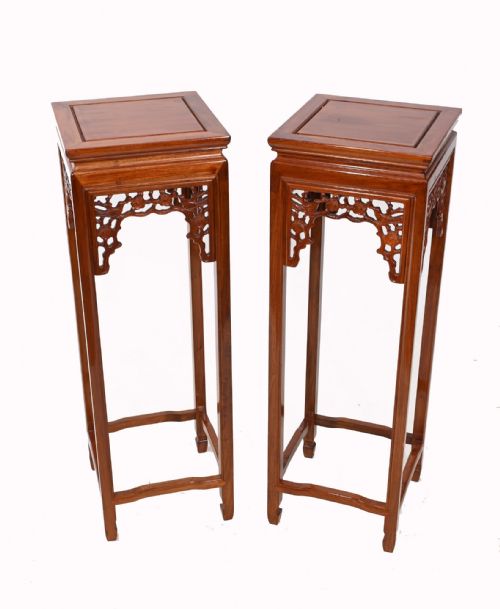


Carved Square Pedestal
A carved square pedestal stands ready to hold a lamp, plant, or sculpture, bringing architectural form and solid timber into a room.
Carved Square Pedestal
A carved square pedestal appears in forms ranging from plant stands and lamp tables to occasional tables and columns, spanning the eighteenth century through to the early twentieth century.
The versions most likely to meet a buyer on this page include nineteenth-century mahogany occasional tables, Victorian lamp tables, and Chinese hardwood plant stands.
The selection encompasses pieces from the Georgian, William IV, and Regency periods, alongside revival styles and Asian imports.
Materials and construction
Makers utilised dense timbers such as mahogany, oak, rosewood, burr yew, and padouk, often selecting hardwoods for durability and rich grain pattern.
Surface treatments and inserts include inset marble slabs and scagliola, paired with brass fittings and traditional joinery methods suited to freestanding tables and stands.
Carved Square Pedestal Retail Price Guide 2026
Typical asking prices for carved square pedestal among the pieces listed under this phrase on Sellingantiques today, from the lower quarter to the upper quarter. They describe what is for sale here now, not the wider market.
Several stands come with heavy stone tops ready to hold your heaviest ferns.
Judgement of quality
Quality rests in the crispness of the carved detail, the choice of timber figure such as burr yew or rosewood, and the structural integrity of the base.
Proportion and stability distinguish finer stands and tables from simpler utility pieces, particularly in tripod and pillar designs.
The Carved Square Pedestal Glossary
- Pedestal stand
- A supporting column or base designed to elevate a plant, vase, or decorative object. These forms often feature a square top and carved detailing.
- Scagliola
- A composite material made from selenite, glue, and pigments, mimicking marble and other stones. It appears on decorative table tops and architectural columns.
- Tilt-top
- A table mechanism allowing the top to pivot to a vertical position when not in use. This clever space-saving design became common on occasional and tripod tables.
- Padouk
- A heavy, durable tropical hardwood prized for its reddish hue and smooth finish. It was frequently utilised for nineteenth-century tables and stands.
Carved Square Pedestal: Frequently Asked Questions
What is a carved square pedestal used for?
These pieces serve primarily as display surfaces for lamps, plants, vases, and sculptures within a room. Their compact footprint allows them to occupy corners and tight spaces effectively.
Historically, similar stands also functioned as kettle stands or occasional tables for entertaining. Today, they bring height variation and architectural interest to interior layouts.
How do I identify a Georgian piece?
Georgian pieces display the restrained classical proportions, premium timber selection, and hand-carved details typical of the eighteenth century. Look closely at the joinery and timber ageing for clues to authenticity.
Later revival pieces often imitate these earlier stylistic cues, making timber density and tool marks key indicators of actual period manufacture.
How do I care for mahogany and rosewood?
Maintain these dense hardwoods by keeping them away from direct heat sources and strong sunlight that can dry out the timber. Regular dusting with a dry, soft cloth preserves the natural finish.
Occasional application of appropriate beeswax feeds the wood without building up a heavy, dull film. Avoid using abrasive household cleaners or excessive moisture on antique surfaces.
Are marble top tables heavy?
Marble and scagliola tops add substantial weight to occasional tables and plant stands, which actually increases their stability in daily use. This weight helps prevent tipping when the tables hold heavy planters or lamps.
When moving these pieces, lift them from the main frame rather than the top alone to protect the structural joints.