

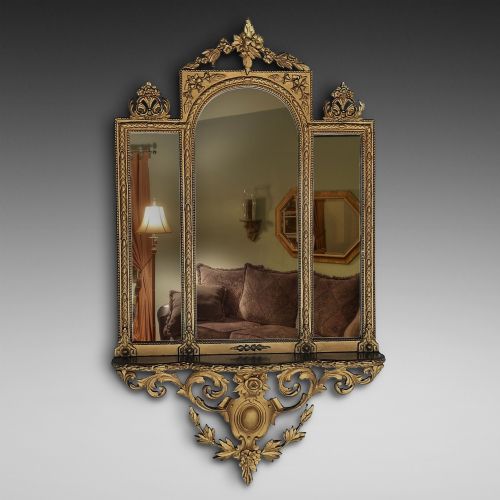


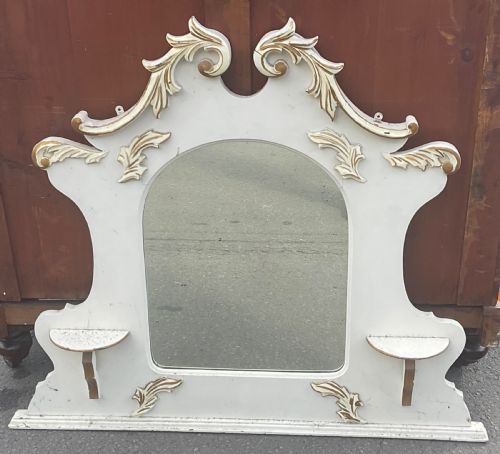


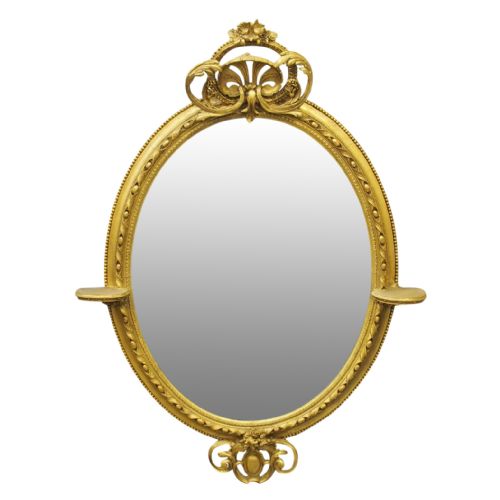


Carved Shelf Overmantel Mirror
A carved shelf overmantel mirror anchors a chimney breast with functional display space and reflected light, offering genuine period character for a traditional interior.
Carved Shelf Overmantel Mirror
A carved shelf overmantel mirror is a substantial architectural looking glass designed specifically to sit above a fireplace mantelpiece. These pieces combine a functional reflective surface with an integrated display shelf, serving as the visual anchor of a reception room.
The selections available here span from the early nineteenth century through the Edwardian period, encompassing Victorian Rococo Revival, Moorish Revival, and Arts and Crafts styles. Forms range from large mahogany and giltwood frames to smaller oak and painted versions.
Makers and craftsmen utilised diverse woods such as oak, mahogany, rosewood, and walnut, alongside gesso and giltwood. While most listings function purely as overmantel mirrors, related wall mirrors and display cabinets also appear within the selection.
How they were made
Makers constructed these frames using solid hardwoods like oak, mahogany, rosewood, and walnut, frequently applying gesso or gilding to create decorative surface detail. Carved elements, fretwork, and applied mouldings defined the aesthetic of the Victorian and Edwardian periods.
Techniques varied from elaborate Victorian Rococo Revival gilding to Moorish style fretwork and black lacquer finishes. The integration of a functional wooden shelf required sturdy joinery to support decorative objects placed above the hearth.
Carved Shelf Overmantel Mirror Retail Price Guide 2026
Typical asking prices for carved shelf overmantel mirror among the pieces listed under this phrase on Sellingantiques today, from the lower quarter to the upper quarter. They describe what is for sale here now, not the wider market.
The selection spans multiple decades, utilising oak, mahogany, rosewood, and giltwood across Victorian and Edwardian periods.
What varies in quality
The distinction between standard and superior examples lies in the depth of the carving and the quality of the timber preparation. Finer pieces display crisp hand-carved fretwork and well-preserved original gilding rather than repetitive machine mouldings.
The integration of the shelf and the preservation of the original mirror glass significantly influence the character of an overmantel. Heavier Victorian and William IV pieces demonstrate substantial joinery, whereas Edwardian iterations often favour lighter painted finishes.
Liberty & Co
The Carved Shelf Overmantel Mirror Glossary
- Overmantel mirror
- A large looking glass designed to hang or stand upon a mantelpiece. These pieces frequently incorporate a small display shelf at the top.
- Giltwood
- Timber that has been covered with a thin layer of gold leaf or gesso finish. This material is particularly prominent in mid-nineteenth century revival pieces.
- Fretwork
- Ornamental design created by cutting patterns through wood with a scroll saw or piercing tools. It appears frequently on Victorian wall mirrors.
- Gesso
- A plaster-like mixture applied to wood frames as a base for painting or gilding. Skilled application allows for intricate moulded relief work.
- Moorish Revival
- An architectural and decorative style drawing on Islamic design motifs. Pieces in this style often feature complex lattice woodwork.
Carved Shelf Overmantel Mirror: Frequently Asked Questions
How do I secure an overmantel mirror to the wall?
These heavy wooden frames require robust fixings attached directly into the wall studs or brickwork above the fireplace. Because of their substantial weight, professional installation is strongly recommended to ensure stability.
Many period examples also rely on the mantelpiece itself to bear a portion of the vertical load, utilising wall straps simply to prevent the glass from tipping forward.
What is the difference between an overmantel and a wall mirror?
An overmantel mirror is specifically proportioned to sit above a fireplace, featuring a horizontal layout and an integrated display shelf. Standard wall mirrors are designed for general room placement without regard for a mantel.
The inclusion of a shelf allows these pieces to hold small ornaments, bridging the gap between functional furniture and decorative architectural wall art.
How do I date a carved overmantel mirror?
Dating relies on identifying the primary wood species, construction techniques, and stylistic revival cues such as Victorian Rococo or Moorish fretwork. Heavier rosewood and mahogany frames typically point to the nineteenth century.
Lighter painted finishes and simpler oak constructions often indicate later Edwardian or early twentieth-century production dates.
Can these mirrors be cleaned safely?
The wooden frames and gilt surfaces require dusting with a dry, soft cloth to prevent moisture damage. Avoid modern chemical sprays on antique gesso or lacquer.
Mirror glass can be cleaned sparingly using a mild glass cleaner applied to a cloth rather than directly onto the glass, protecting the surrounding timber and silver backing.