

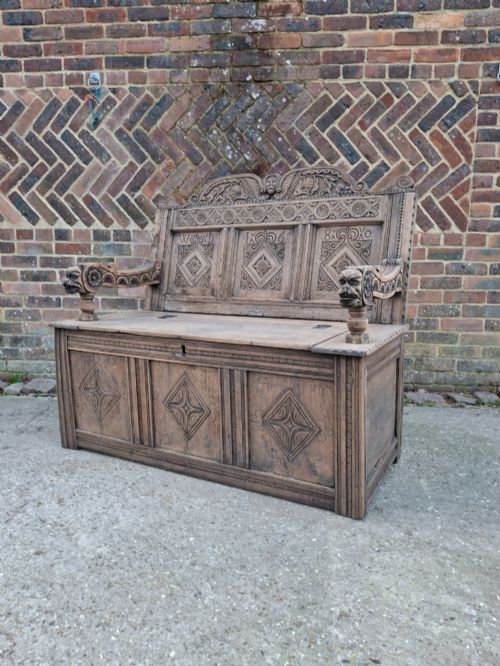
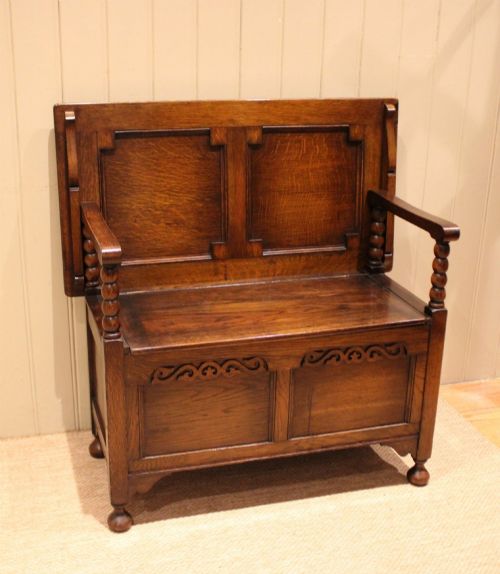
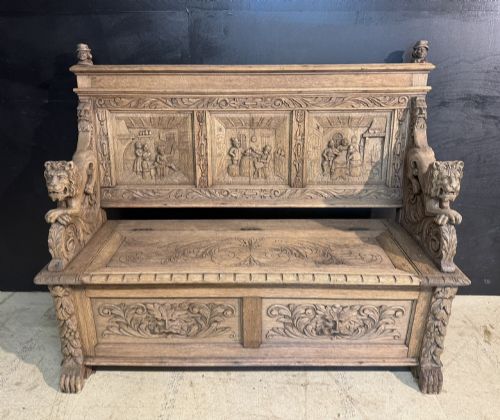

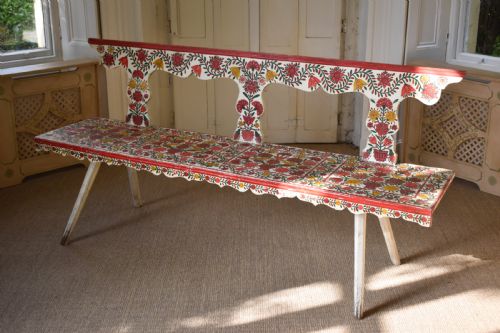




Carved Settle Seat
A carved settle seat brings centuries of sturdy craftsmanship and distinct domestic history straight into a hallway or boot room.
Carved Settle Seat
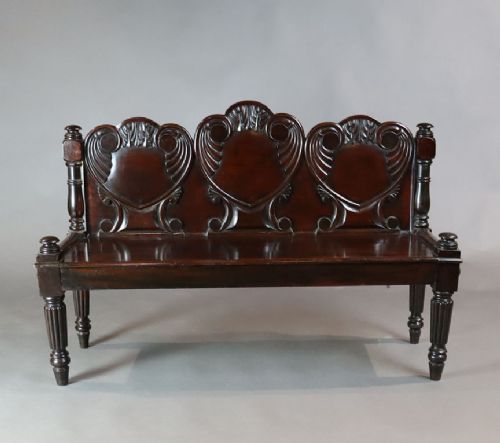
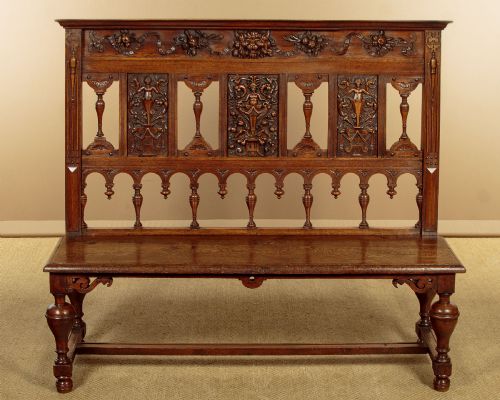
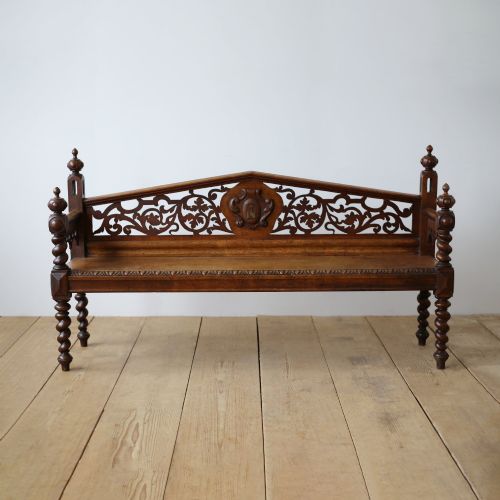
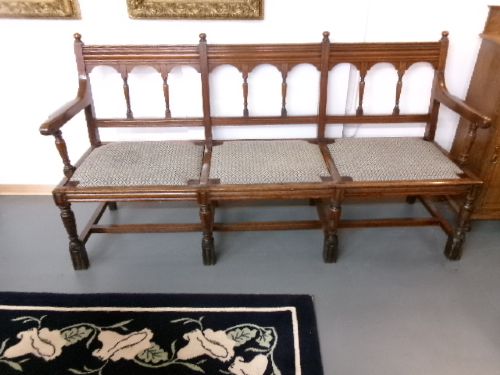
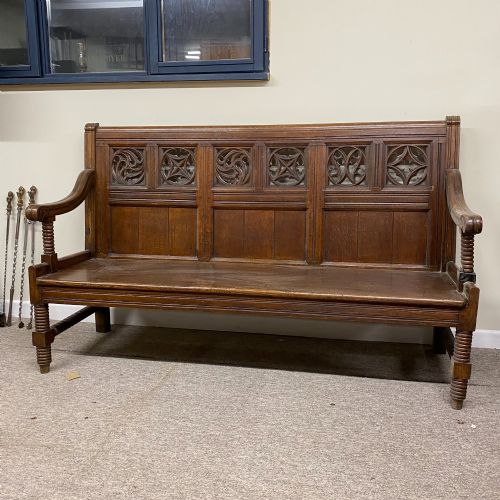
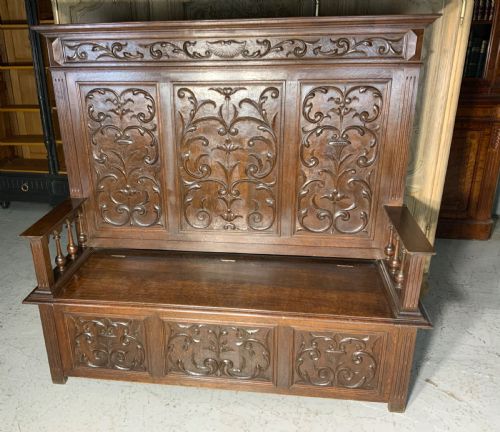
A carved settle seat is a traditional wooden bench, most frequently encountered here in solid oak from the Victorian, Edwardian, and eighteenth-century periods. These pieces function as substantial hall seats, often incorporating high panelled backs and enclosed storage compartments beneath the hinged seat. Regional variations range from simple English country forms to elaborate Jacobean revival styles.
Makers produced these benches to keep draughts away from firesides and entranceways, utilising the box base for practical household storage. Alongside traditional oak examples, the selection includes walnut and exotic hardwoods featuring intricate inlay, marquetry, and architectural panelling. They serve today as commanding focal points in domestic hallways, boot rooms, and large living spaces.
Materials and construction methods
Cabinet makers built the majority of these benches using solid oak, employing traditional mortise and tenon joinery to ensure structural rigidity. Surfaces were frequently hand-carved with floral motifs, linenfold panelling, or geometric strapwork, then finished with wax or polish to protect the timber. Secondary materials like brass hinges and iron fixings provide robust mechanical support for the lifting seat lids.
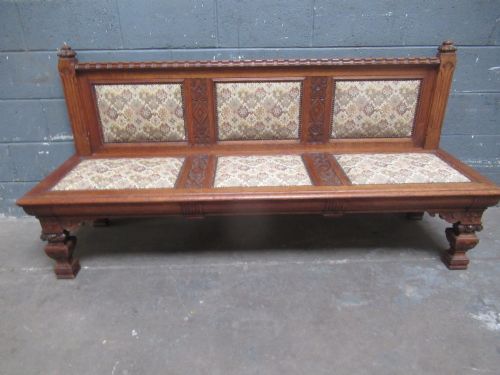
Certain examples incorporate elaborate decorative elements, including mother-of-pearl inlay, bone detailing, or upholstered leather and fabric pads. Walnut, mahogany, and Syrian hardwood variants demonstrate diverse regional woodworking traditions, from European Renaissance revivals to intricate Damascan joinery. Each piece relies on thick timber planks capable of withstanding heavy daily use.
Carved Settle Seat Retail Price Guide 2026
Typical asking prices for carved settle seat among the pieces listed under this phrase on Sellingantiques today, from the lower quarter to the upper quarter. They describe what is for sale here now, not the wider market.
Several listings feature dragons, suggesting that historic woodcarvers enjoyed incorporating mythical beasts into hallway furniture.
Differentiating quality across examples
The distinction between ordinary and superior pieces lies primarily in the depth, crispness, and originality of the wood carving. Fine examples display confident, hand-chiselled ornamentation with balanced proportions, whereas lesser items may feature shallow, mechanical tooling or later adaptations. The integrity of the timber, particularly the preservation of original patination on the oak or walnut surfaces, significantly elevates a piece.
Construction details also dictate standard, such as the survival of original brass hardware and the uncompromised fit of the panelled box base. Pieces retaining their structural foundations without extensive timber replacement command greater respect from collectors. The complexity of the design, whether architectural framing or pictorial inlay, reflects the original maker's ambition and skill.
James Shoolbred·Gillows
The Carved Settle Seat Glossary
- Settle
- A wooden bench with a high back, solid arms, and often a storage box beneath the seat. Historically placed near hearths to block cold air.
- Cassapanca
- An Italian chest bench featuring a backrest and arms, combining seating with substantial internal storage. These often showcase Renaissance revival carving.
- Monk's bench
- A multi-functional form where the hinged back folds down over the arms to transform the seating into a table. They are commonly found in compact oak versions.
- Box settle
- A heavy seat featuring a enclosed storage compartment beneath the hinged lid, functioning simultaneously as a bench and a blanket chest.
- Strapwork
- A carved decorative motif resembling intersecting flat bands or leather ribbons, frequently seen on Jacobean revival panels.
Carved Settle Seat: Frequently Asked Questions
Where should I put a carved settle seat?
These benches suit large entrance halls, boot rooms, or spacious dining areas where their substantial presence and high backs provide a strong focal point. They also function well against long corridor walls, offering practical seating combined with concealed storage.
Because of their depth and high backs, ensure you measure your space carefully before placement. They work best away from direct heat sources to protect the historic timber.
How do I maintain the wood on an antique settle?
Keep the timber healthy by applying a traditional beeswax polish once or twice a year, avoiding modern silicone sprays that damage old finishes. Dust regularly with a dry cloth to prevent dirt accumulation in the carved recesses.
Position the bench away from radiators and direct sunlight to prevent the oak or walnut from drying out and splitting. Consistent indoor humidity levels help preserve the joints and prevent warping.
How do I tell an 18th-century settle from a Victorian revival?
Eighteenth-century examples typically exhibit hand-cut peg joints, deeper patination, and timber shrinkage that feels organic to the touch. Victorian revival pieces often display machine-tooled elements, tighter uniformity, and cleaner internal construction.
Examining the underside and the interior of the box base usually reveals the age of the fixings and tool marks left by the maker. Comparing the style of the carving to known period motifs also clarifies the date of origin.
Can I use a settle seat for everyday seating?
These benches are constructed from solid hardwoods like oak and walnut, making them exceptionally sturdy for daily use. Adding a loose cushion can improve comfort, as historic wooden seats were designed for utility rather than lounging.
The hinged lids and internal storage compartments remain fully functional for holding boots, blankets, or household items. Regular use helps maintain the natural wax finish through human contact.