
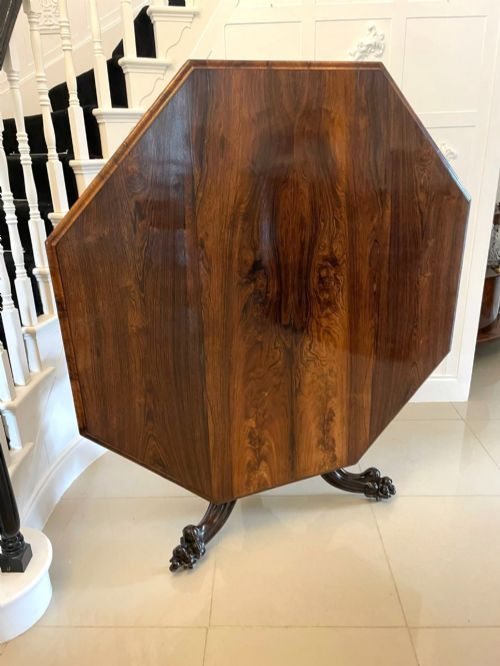
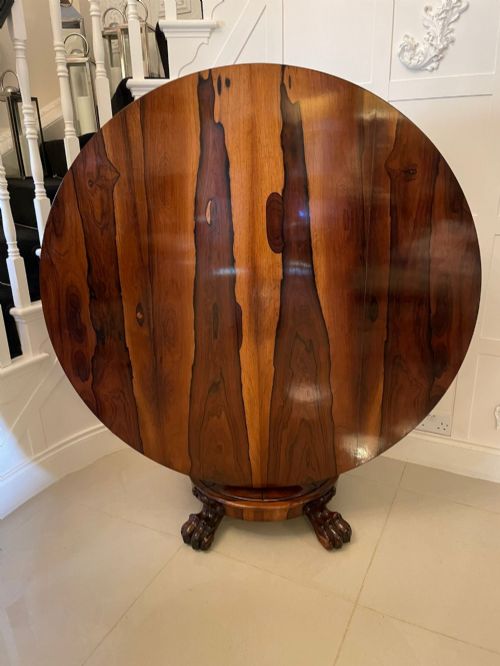
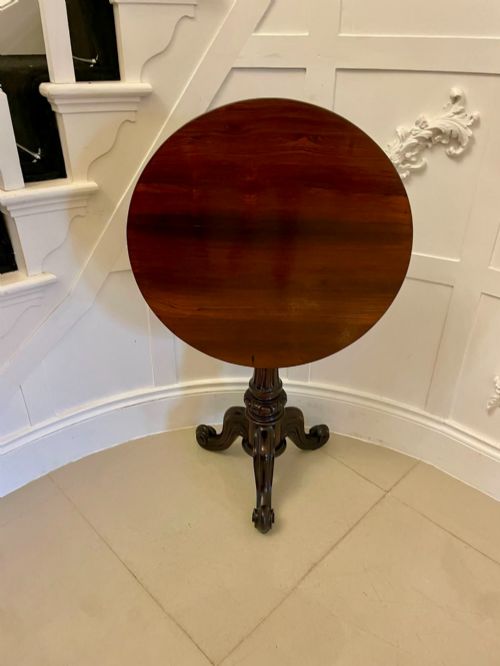


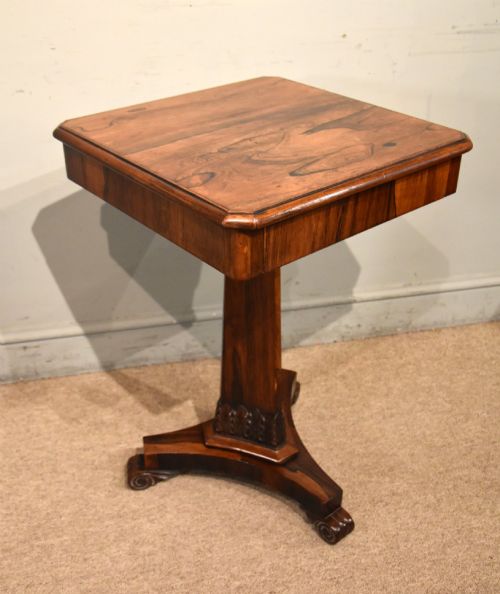
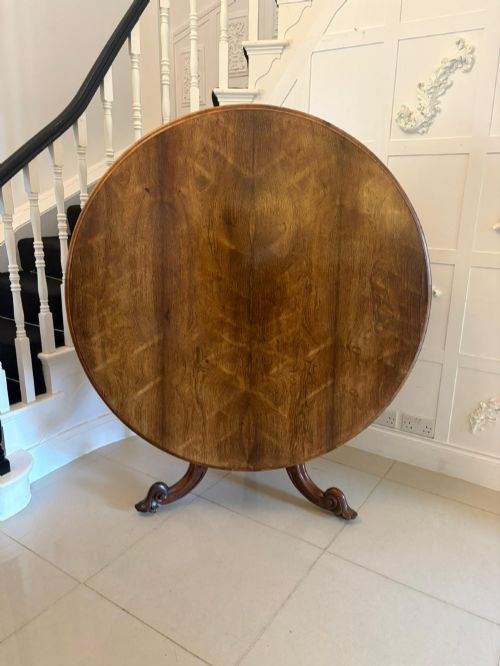
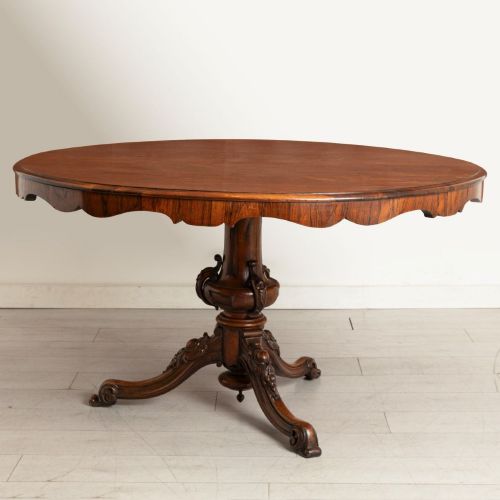
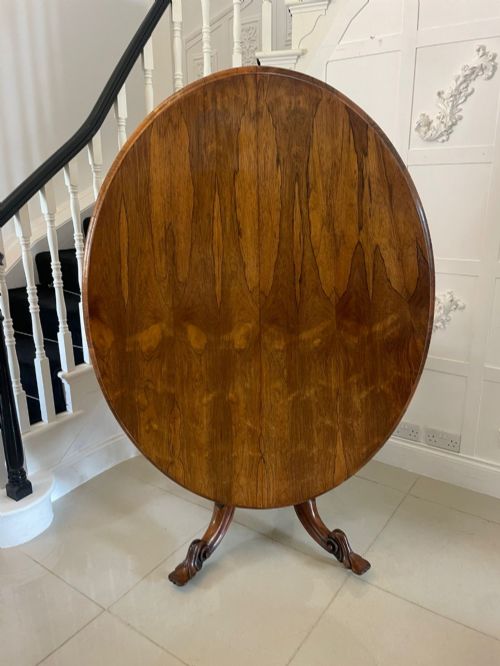
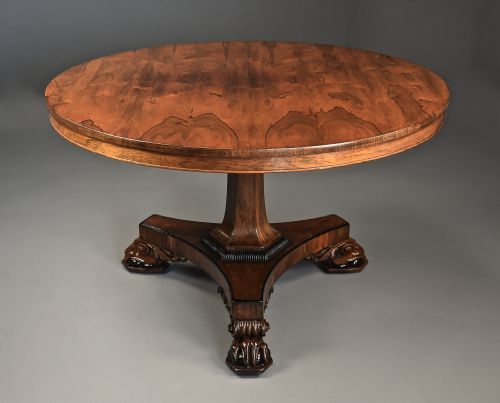
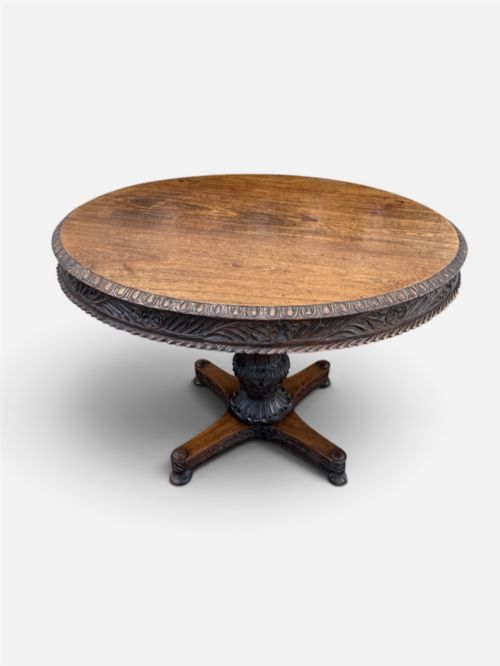
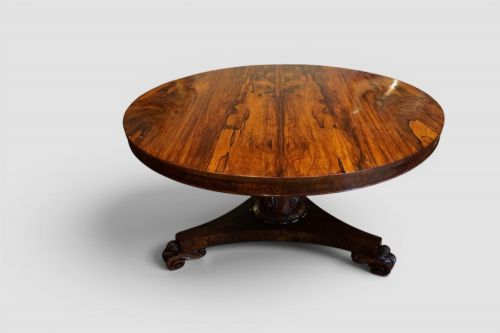
Carved Rosewood Tilt Table
A carved rosewood tilt table combines dense tropical timber with a folding mechanism that saves floor space when not in use.
Carved Rosewood Tilt Table
A carved rosewood tilt table is a piece of furniture designed with a hinged top that pivots from a vertical position for storage to a horizontal surface for dining or display.
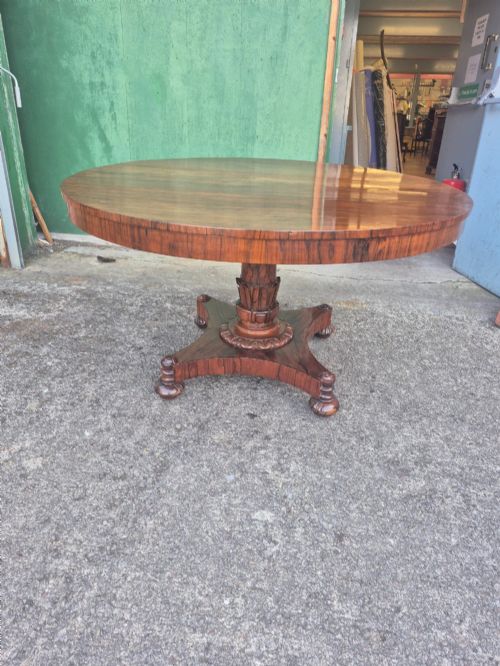
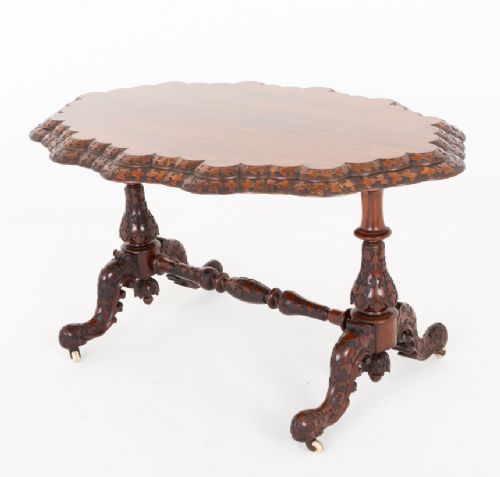
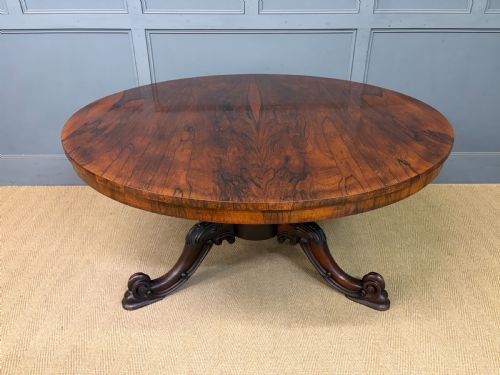
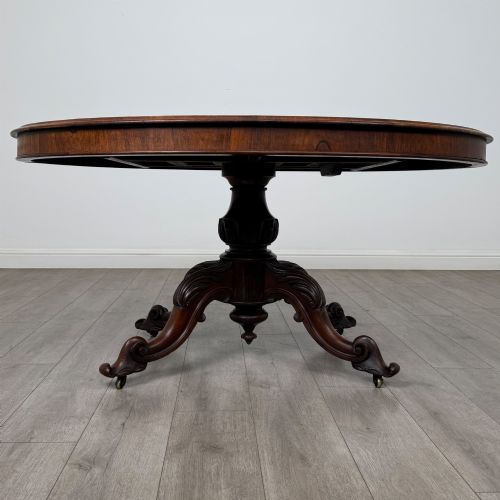
The pieces on this page span the Georgian, Regency, William IV and Victorian periods, taking forms such as circular breakfast tables, loo tables and occasional pieces.
Materials and construction
Makers utilised dense rosewood, sometimes alongside mahogany, satinwood or albuera wood, often applying veneers over solid timber cores to display rich grain patterns.
Bases frequently incorporate brass fittings, carved solid rosewood elements, and occasionally mother-of-pearl inlay as seen in Anglo-Indian examples.
Some tables tilt so the card players of the past could clear the room for dancing after their game.
Factors of quality
Quality rests upon the crispness of the hand carving on the pedestal and base, and the stability of the tilting mechanism over time.
The choice of figured rosewood veneers and the precision of the joinery on the circular or square tops separate standard pieces from workshop productions.
Gillows·Peters of Genoa
The Carved Rosewood Tilt Table Glossary
- Tilt-top table
- A table with a hinged top that pivots to a vertical position when not in use. This design allowed large tables to stand against walls in smaller rooms.
- Loo table
- A large round Victorian table used for the card game loo. These tables typically feature heavily carved tilt tops on central pedestals.
- Triform base
- A three-sided pedestal base often resting on scrolled feet. It provides stability for heavy rosewood dining and breakfast tables.
- Veneer
- A thin layer of figured rosewood applied to a secondary timber base. This technique exposed decorative grain patterns without using solid scarce woods throughout.
Carved Rosewood Tilt Table: Frequently Asked Questions
How do I use a tilt table daily?
Release the brass catch beneath the top to pivot the surface flat for dining or display. Lock the mechanism securely before placing items on the table.
Return the top to its vertical position against the wall when you need to reclaim floor space in smaller rooms.
How do I distinguish William IV from Victorian pieces?
William IV furniture typically dates from the 1830s and displays bold classical proportions with heavy scrolling and architectural details. Rosewood grain tends to be richly figured during this era.
Victorian pieces from the 1850s onward often introduce more eclectic carving styles, slender turned pedestals, and occasional inlaid details.
Where should I place a tilt table?
Place a breakfast or centre table in the middle of a room where people can walk around the pedestal base. Ensure there is enough clearance to operate the tilting mechanism safely.
When tilted vertically, the table can stand flat against a perimeter wall as a decorative panel displaying the wood grain.