


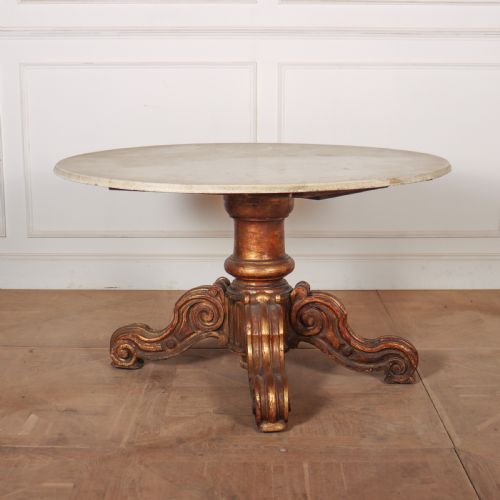


Marble Top Dining Table
A marble top dining table brings a cool, durable surface to a room, drawing on periods from the Victorian era to the 1930s.
Marble Top Dining Table
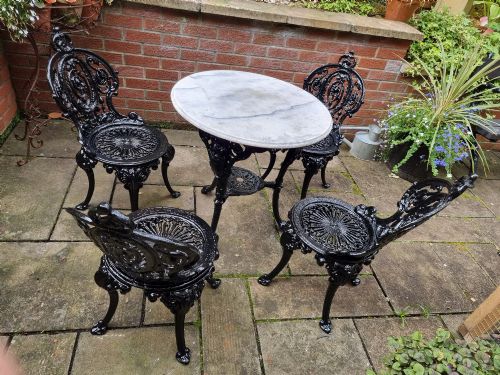
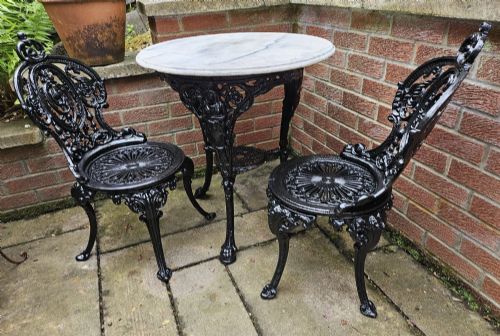
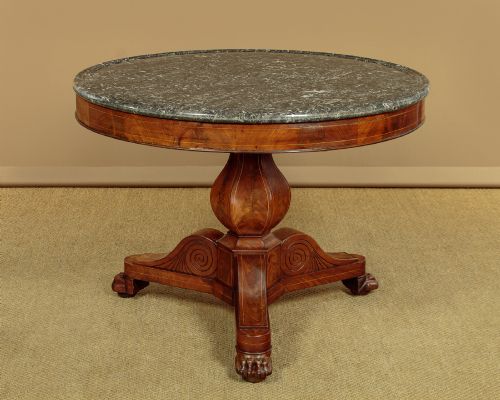
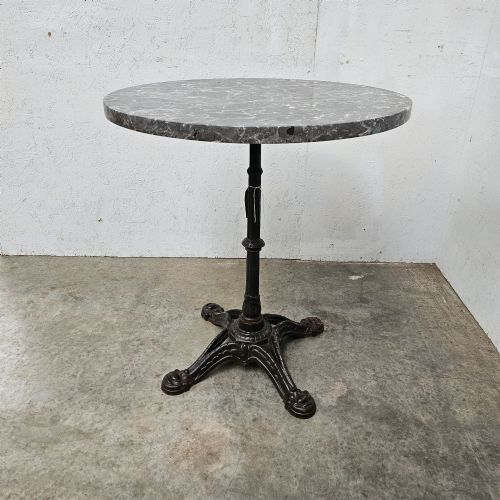
A marble top dining table selection on this page centres on circular and garden designs, drawing from periods such as the Victorian era, the nineteenth century, and the 1930s. These pieces span forms like bistro sets, centre tables, breakfast tables, and garden sets, alongside related sideboards and credenzas.
The versions most likely to be met here combine stone surfaces with bases of cast iron or walnut, reflecting styles from French Bistro and French Industrial to Italian Neoclassical and Victorian design.
How they were made
Makers shaped these tables using solid marble paired with structural materials like cast iron and walnut, sometimes incorporating intricate inlay work and burr walnut veneers. Iron bases provided sturdy support for heavy stone surfaces, particularly in bistro and garden settings.
Surface details relied on the natural veining of the marble, while wooden elements utilised traditional joinery and cabinet-making techniques seen in nineteenth-century sideboards and breakfast tables.
Listings incorporate materials such as grey marble, cast iron, walnut, and mirror glass across pieces dated from 1850 to the 1930s.
What varies in quality
The standard of a piece rests on the selection and finish of the stone, alongside the weight and detail of the supporting base. Tables featuring fine purple marble or precise inlay work display a higher degree of craftsmanship than simpler utilitarian examples.
Structural integrity between the heavy top and the cast iron or timber frame dictates the durability of the piece, separating grander revival styles from everyday commercial items.
The Marble Top Dining Table Glossary
- Gueridon
- A small round table, typically supported by a single central column or pillar. These pieces often feature marble tops and originated in seventeenth-century France.
- Credenza
- A utilitarian sideboard or buffet cabinet used for storing and serving food. Victorian examples often incorporate fine timber veneers and mirror glass.
- Inlay
- A decorative technique where contrasting materials are inserted into a recessed surface to form a pattern. Italian circular tables frequently utilise this method with coloured marbles.
- Cast Iron
- A strong, heavy alloy poured into moulds to create intricate structural bases. This material is common in bistro and garden tables from the nineteenth and early twentieth centuries.
Marble Top Dining Table: Frequently Asked Questions
How do I clean a marble top?
Use a damp cloth and mild soap to wipe the stone surface regularly. Avoid acidic cleaners that can etch the polished finish over time.
Dry the surface thoroughly after cleaning to prevent water spots from forming on older stone.
Can these tables be used outdoors?
Certain garden and bistro sets feature cast iron bases built to withstand outdoor conditions. However, monitoring exposure to severe weather helps preserve both the metal and the stone.
Bringing vulnerable timber or delicate inlaid pieces indoors during winter months prevents unnecessary wear.
How do I identify a Victorian piece?
Look for characteristic timber choices such as walnut and burr walnut, alongside traditional construction methods. Stylistic cues often align with revival movements popular during the nineteenth century.
Comparing the specific hardware and joinery against dated examples helps confirm the period of manufacture.
Are these tables heavy?
Solid stone surfaces combined with cast iron or dense hardwood bases create substantial weight. Moving these pieces typically requires more than one person to avoid structural damage.
Positioning the table carefully on a level floor ensures stability once it reaches its final location.