


Carved Rosewood Caddy
A carved rosewood caddy is a dense, heavily figured wooden container designed for dry leaf storage, prized for rich grain and intricate relief work.
Carved Rosewood Caddy
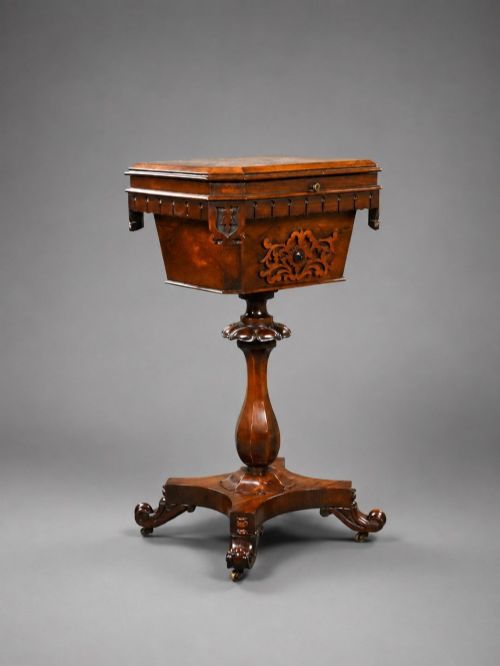
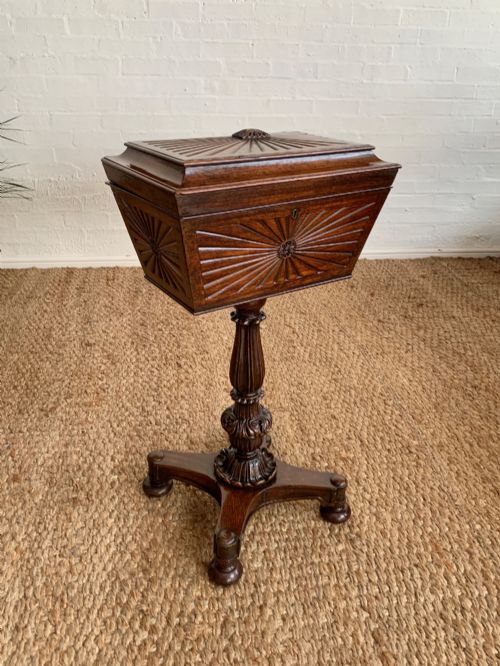
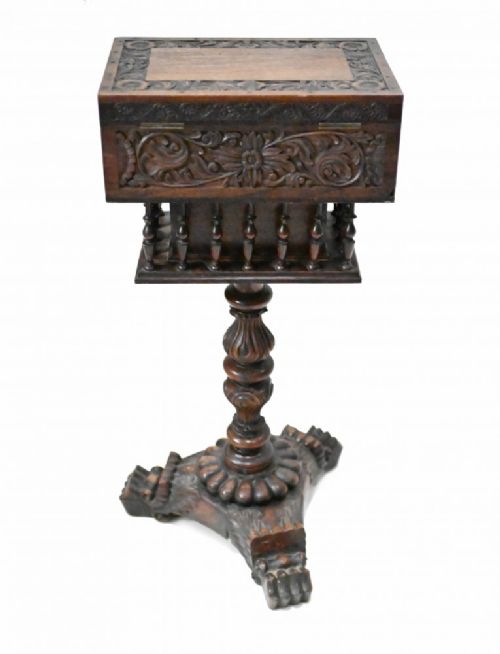
A carved rosewood caddy is a container made for storing dry tea leaves, appearing primarily across nineteenth century periods including Regency, William IV, and Victorian eras. These boxes take forms such as sarcophagus shapes, miniature sideboards, and larger work tables or teapoys fitted with caddy tops.
How they were made
Makers utilised dense exotic woods such as rosewood and padouk, shaping them into sarcophagus forms and fitted tables. These surfaces received meticulous hand carving, alongside decorative contrasting accents using brass, bone, and mother of pearl.
Interiors were lined with fine materials like velvet to protect the stored contents, while structural elements incorporated sturdy joinery to support heavy lids and revolving mechanisms on specialised tables.
Decorative embellishments across the site include brass, bone, mother of pearl, and velvet highlights.
What varies in quality
The depth and crispness of the relief carving separate standard boxes from exceptional examples, as skilled carvers achieved sharp, three-dimensional foliage and geometric motifs. The natural figuring and colour contrast of the rosewood timber further dictate the visual appeal of each piece.
Internal complexity also defines the standard of a piece, with fitted compartments, original velvet linings, and intact brass hardware marking out finer examples from simpler storage containers.
The Carved Rosewood Caddy Glossary
- Tea Caddy
- A box or container designed specifically for storing tea leaves before brewing. These vessels often included internal lidded compartments to keep different tea varieties separate.
- Teapoy
- A small table or stand supporting a tea caddy, sometimes featuring a pillar and claw base or a fitted interior for storage. They became popular in drawing rooms during the nineteenth century.
- Sarcophagus
- A heavy, flared box shape resembling an ancient stone coffin, frequently utilised for nineteenth century tea caddies and jewellery boxes to give a monumental presence.
- Padouk
- A heavy, durable tropical hardwood with reddish tones, often utilised in Anglo-Indian colonial furniture and carved pieces. It provides a dense substrate for intricate chisel work.
- Work Table
- A multi-functional piece of furniture incorporating storage space for sewing and needlework, often featuring a caddy top or compartmented drawer.
Carved Rosewood Caddy: Frequently Asked Questions
What is a tea poy?
A tea poy is a small freestanding table or stand designed to hold tea canisters or function as a tea caddy itself. These pieces often feature internal compartments for storing dry leaves.
They appear in various nineteenth century styles, sometimes incorporating revolving mechanisms or pillars, serving both decorative and practical roles in period drawing rooms.
How do I date a rosewood caddy?
Dating relies on examining the overall architectural style, such as Regency curves, William IV proportions, or Victorian ornamentation. Form, hardware types, and construction methods offer further clues.
Secondary materials like brass inlay or specific internal configurations help narrow down the period within the nineteenth century.
What was inside a tea caddy?
Original tea caddies contained two or three lidded canisters, often made from metal or wood, used to separate different varieties of expensive tea leaves. Many also featured a central glass mixing bowl.
Because tea was a costly commodity, these containers were securely locked to protect the contents from domestic staff.
How do I care for rosewood?
Rosewood benefits from stable indoor humidity and protection from direct sunlight, which can fade the rich natural grain and colour over time. Gentle dusting with a dry cloth is sufficient for routine maintenance.
Avoid placing these pieces near heat sources, as extreme temperature changes can cause the dense timber or decorative inlays to warp or crack.