

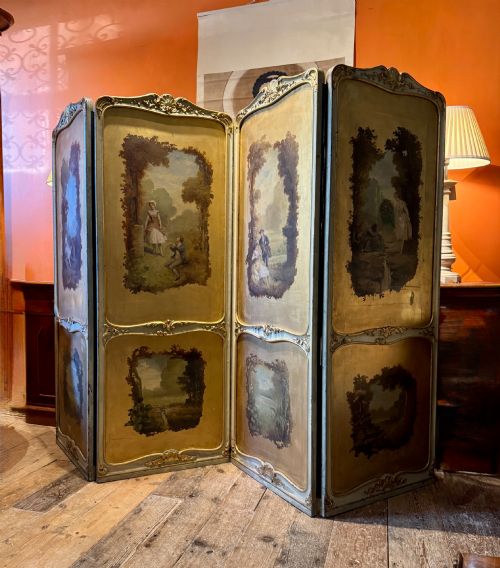
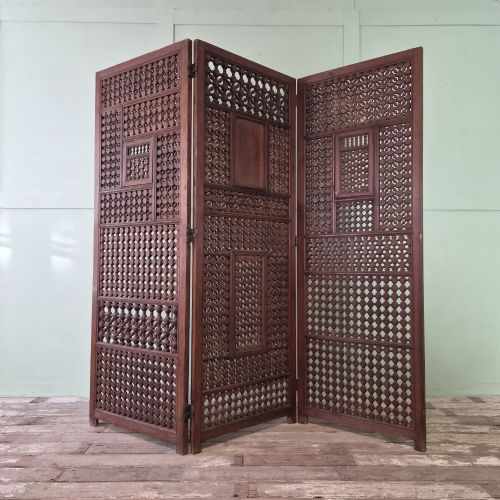
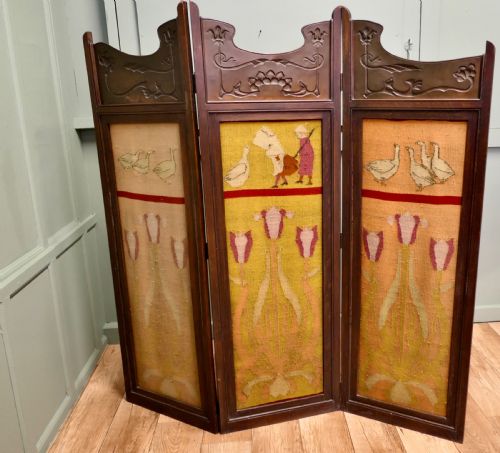

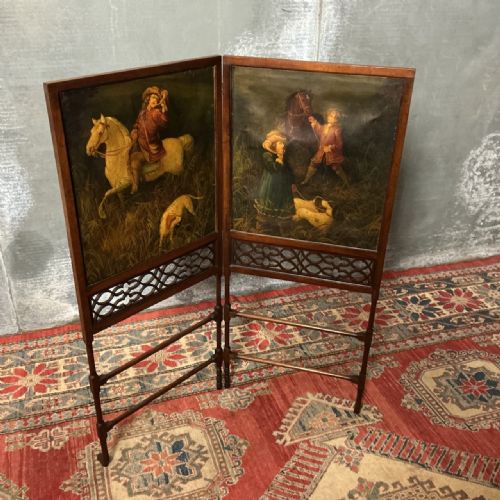


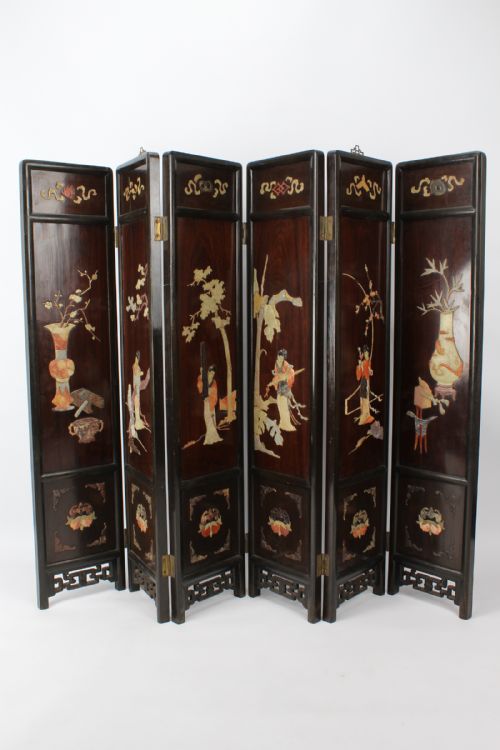


Carved Room Divider
A carved room divider creates space and privacy with weight and presence, joining carved wood, lacquer and folding panels across centuries of design.
Carved Room Divider
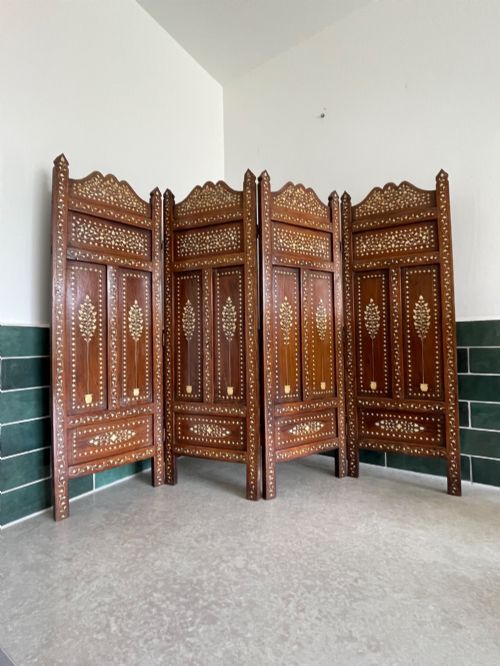
A carved room divider organises an interior through articulated folding panels that shift the geometry of a room. When you search for a carved room divider, you meet multi-fold architectural screens originating from diverse traditions, notably Chinese coromandel lacquer work, Japanese bone-inlaid hardwood panels, and Indian fretwork designs.
The objects span the nineteenth century through the early decades of the twentieth century, including smaller privacy screens and modesty screens alongside grand six-fold and eight-fold barriers. Materials range from dense hardwood and padauk to walnut and giltwood, often fitted with intricate carvings or painted surfaces.
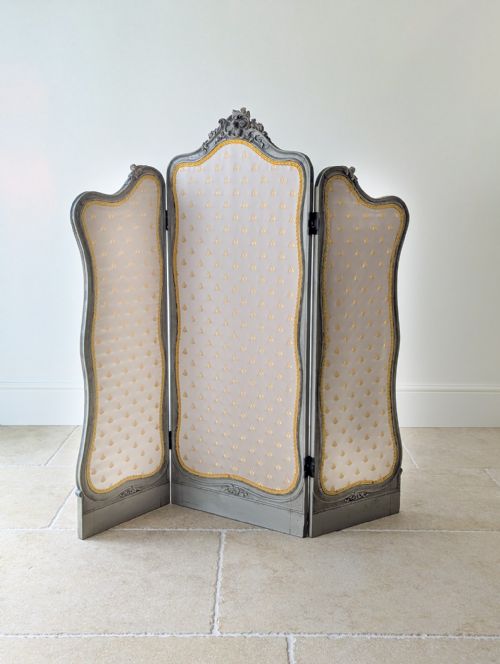
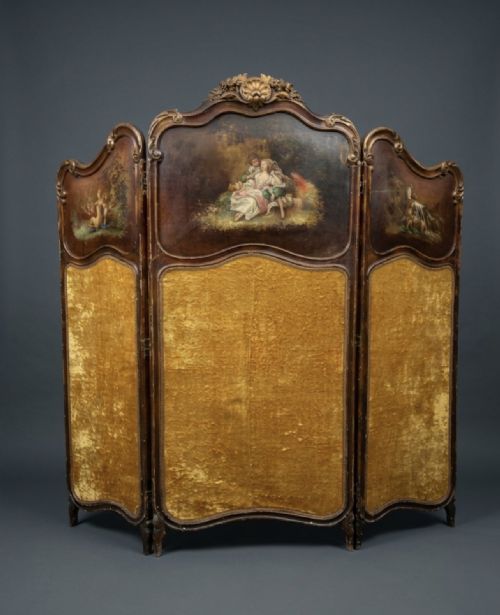
Regional styles dominate the selection, bringing together French Rococo Revival frames, Chinoiserie motifs, and Anglo-Indian craftsmanship. These pieces serve practical functions of division while introducing layered textures and deep relief carving to domestic spaces.
Materials and Technique
Construction relies on solid timbers like mahogany, walnut, and Asian hardwoods joined to form stable multi-hinged frames. Lacquer work involves building up multiple layers of resin and pigment, which artisans then carve deeply to expose contrasting underlayers or apply detailed inlays of bone and hardstone.
Surface ornamentation combines joinery with decorative arts, incorporating hand-painted pastoral or oriental scenes, oil paintings, and needlepoint or wool panels. Metal hinges and mounts secure the folding leaves, allowing smooth movement across multiple panels.
Carved Room Divider Retail Price Guide 2026
Typical asking prices for carved room divider among the pieces listed under this phrase on Sellingantiques today, from the lower quarter to the upper quarter. They describe what is for sale here now, not the wider market.
One unexpected photographic prop screen from the Victorian era reminds us that these architectural dividers once doubled as backdrops for family portraits.
Craftsmanship and Depth
Quality rests in the depth and precision of the carving, where crisp undercutting and well-defined relief separate superior panels from flat surface decoration. The integrity of the wood and the stability of the folding hinges dictate how well the structure bears its own weight over multiple folds.
The sophistication of the surface finish further distinguishes the pieces, from meticulously applied coromandel lacquer and detailed bone inlay to finely balanced painted compositions. Sustained clarity in the decorative motifs and robust joinery throughout the frame mark the higher standard.
Paul Sormani
The Carved Room Divider Glossary
- Mashrabiya
- An architectural wooden screen characterised by intricate latticework formed from turned wooden bobbins. It filters light and air while providing privacy.
- Padauk
- A dense tropical timber valued for its durability and rich reddish-brown colour. It provides a sturdy structural base for heavily carved Asian furniture.
- Fretwork
- Ornamental perforated woodwork created by cutting patterns through thin boards. It appears frequently in decorative panels and structural framing.
- Modesty screen
- A small portable screen historically used to shield a person from drafts or direct observation in a room. These items often feature painted or fabric-inlaid panels.
Carved Room Divider: Frequently Asked Questions
How are carved room dividers used today?
These pieces function to zone open-plan spaces, conceal storage areas, or create private corners within larger rooms. Their folding design allows them to adapt to different layouts and wall lengths.
Beyond practical division, they act as large-scale vertical art installations that introduce historic texture, rich colour, and intricate relief work directly into modern interiors.
What materials make up these screens?
Construction primarily utilises woods such as mahogany, walnut, padauk, and assorted Asian hardwoods. Surfaces frequently incorporate layered lacquer, brass hardware, and textile panels.
Many examples feature decorative additions including carved bone inlays, hardstone appliqués, painted canvases, and needlepoint inserts that reflect specific regional traditions.
How do I care for a lacquered screen?
Protect lacquered and wooden surfaces from direct sunlight and extremes in temperature or humidity to prevent warping and cracking. Dust regularly with a soft, dry cloth.
Avoid chemical polishes and moisture, which can damage aged lacquer finishes and delicate painted details. Handle folding hinges with care when repositioning the panels.
How do I distinguish between regional styles?
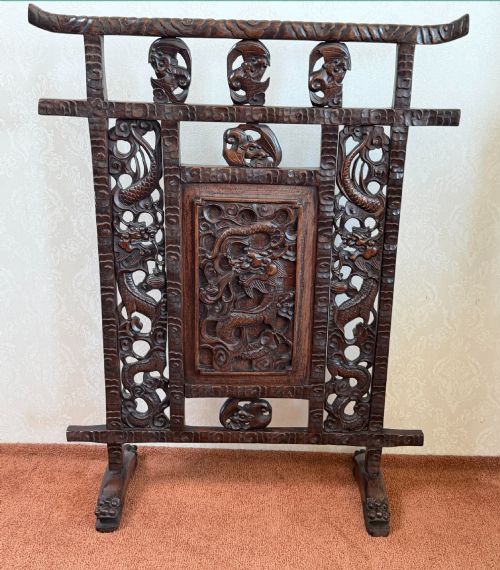
Chinese screens often display deep coromandel lacquer, detailed landscapes, or dragon motifs carved into dense hardwoods. Japanese pieces frequently utilise bone inlay and lacquer work with naturalistic motifs.
European interpretations, such as French Rococo Revival or English Chinoiserie examples, employ painted canvases, giltwood frames, and classic revival ornamentation.