



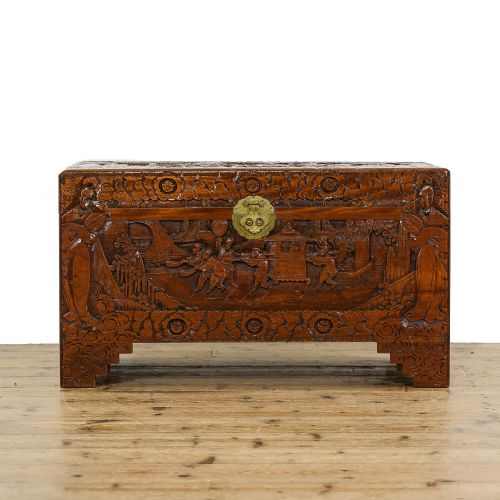


Carved Relief Storage Trunk
A carved relief storage trunk offers deep utility and rich surface detail, combining robust timber construction with elaborate sculptural carving.
Carved Relief Storage Trunk
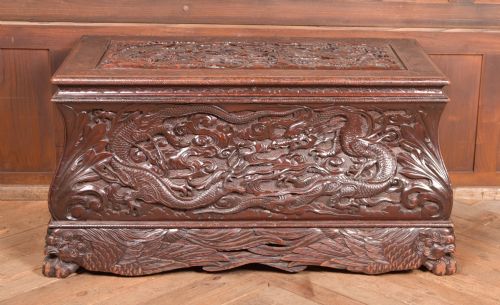
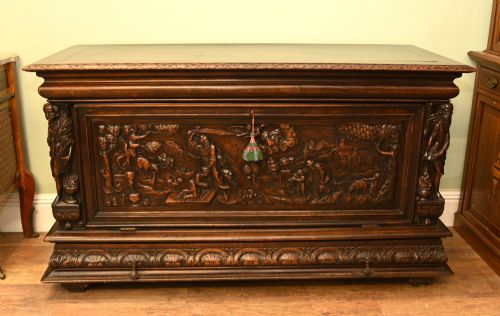
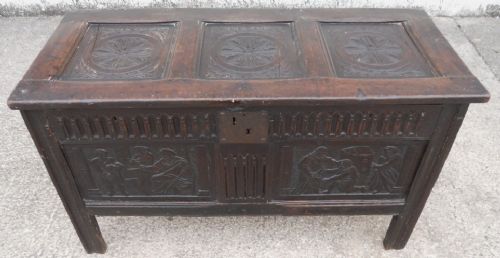
When you search for a carved relief storage trunk, you encounter substantial timber chests and boxes designed primarily for storage and travel. These pieces take the form of blanket boxes, luggage chests, and storage trunks.
The versions most commonly met on this page span the 19th century and the early 20th century, particularly originating from Chinese export workshops and Indian regional makers. They often utilise aromatic woods suited to protecting textiles.
Alongside standard rectangular chests, variations include cabinet on chest formats and smaller decorative boxes sharing the same characteristic carved relief surfaces.
Materials and construction methods
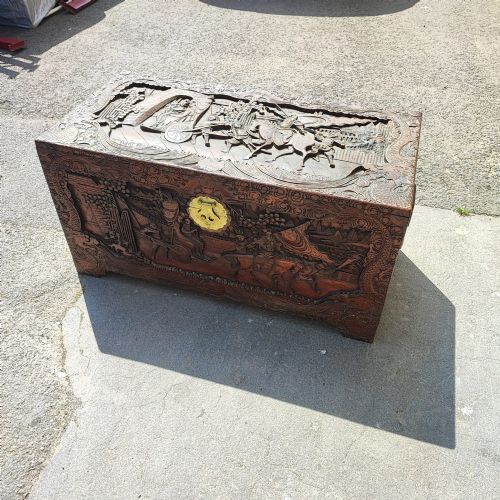
These pieces are constructed predominantly from solid timbers such as camphor wood and teak, alongside traditional oak in European examples. Camphor wood is chosen for its natural insect-repellent properties, making it ideal for blanket storage.
Surfaces are worked in deep relief carving, depicting intricate scenes, figures, and floral motifs. Some pieces also feature applied brass hardware, corner brackets, and contrasting lacquer finishes to protect and ornament the exterior.
Carved Relief Storage Trunk Retail Price Guide 2026
Typical asking prices for carved relief storage trunk among the pieces listed under this phrase on Sellingantiques today, from the lower quarter to the upper quarter. They describe what is for sale here now, not the wider market.
Listings span from the mid-18th century through to the 1930s, featuring oak, teak, and camphor wood.
Distinctions in quality
Quality in a carved relief storage trunk rests heavily on the depth, crispness, and complexity of the chisel work. Finer examples display deeply undercut relief figures and balanced composition across all visible sides, whereas simpler pieces rely on shallow surface incisions.
The choice and stability of timber also dictate standard, with dense, well-seasoned camphor wood or teak indicating superior craftsmanship. Furthermore, the integration of original brass mounts and sturdy internal construction separates exceptional pieces from standard utility items.
The Carved Relief Storage Trunk Glossary
- Relief carving
- Carving that projects from a background surface rather than being incised into it. This technique creates strong shadow and depth across the timber.
- Camphor wood
- An aromatic hardwood native to Asia, prized for its distinct scent and resistance to moths. It forms the primary body of many export chests.
- Blanket box
- A deep chest traditionally used for storing linens, blankets, and woollens. These domestic storage items often feature hinged lids.
- Chinese export
- Goods manufactured in China specifically for Western markets from the 18th century onwards. These items often blend traditional Eastern motifs with European functional forms.
Carved Relief Storage Trunk: Frequently Asked Questions
What were these trunks originally used for?
These trunks served primarily as secure containers for clothing, valuable textiles, and personal belongings during maritime and overland travel. Their robust construction protected contents from dust, dampness, and pests.
Over time, many functioned domestically at the foot of a bed or within a bedroom for storing heavy winter blankets and household linens.
How do I date a camphor wood chest?
Dating relies on examining the style of the carving, the type of brass hinges and handles, and the construction marks left by hand tools. Earlier 19th-century pieces often feature denser timber and hand-hammered hardware.
Later 20th-century examples tend toward more stylised, repetitive carving patterns and standardised metal fasteners.
How do I care for camphor wood?
Keep the timber away from direct heat sources and sudden temperature shifts to prevent the solid wood from splitting. Dust regularly with a dry cloth and avoid heavy modern polishes.
Allowing the wood to breathe maintains the natural aromatic qualities that protect stored textiles.
Can these chests be used as coffee tables?
Their flat lids and sturdy frames make them suitable for alternative domestic uses such as low tables or window seating. Ensure the hinges and lid support remain stable if utilised in a dual capacity.
Using a glass top can protect the carved surface from daily wear and spills.