






Carved Red Lacquer
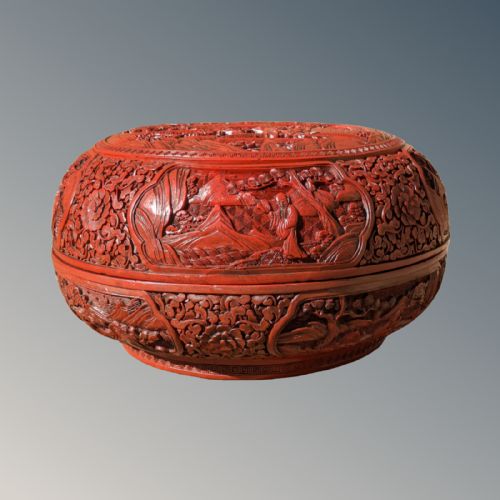
Carved red lacquer objects bring deep vermilion depth and intricate layered surfaces into a room.
Carved Red Lacquer
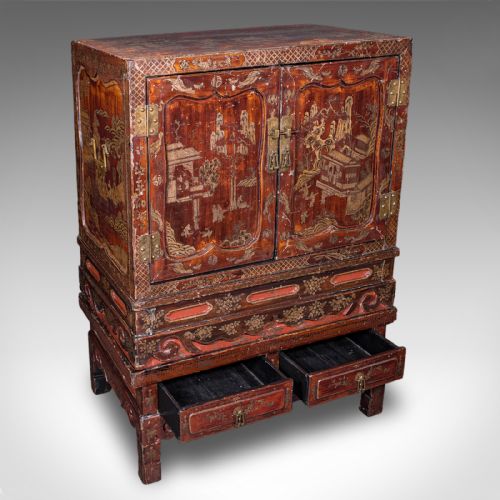
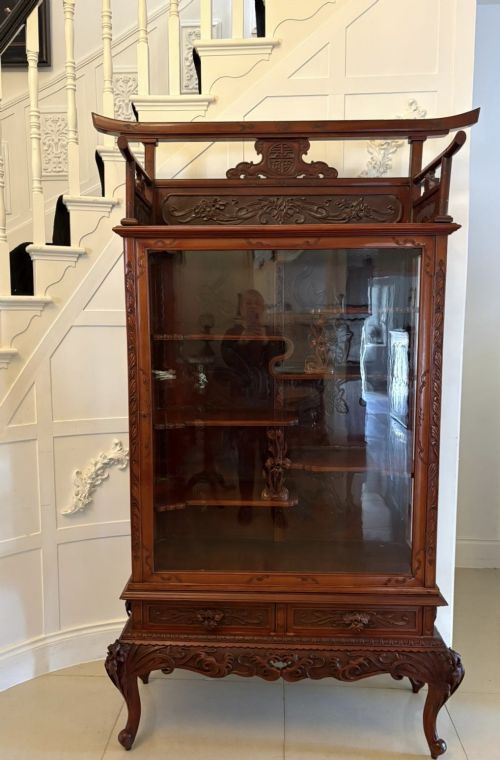
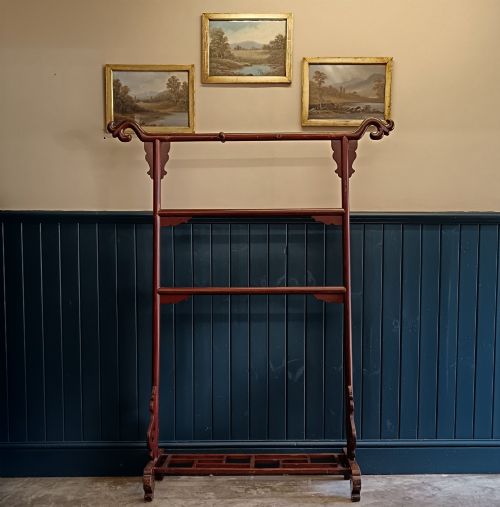
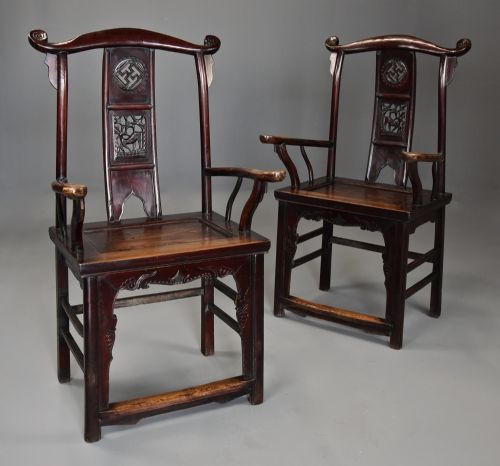
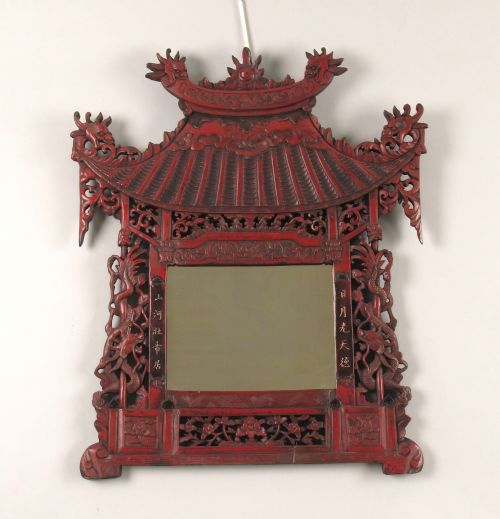
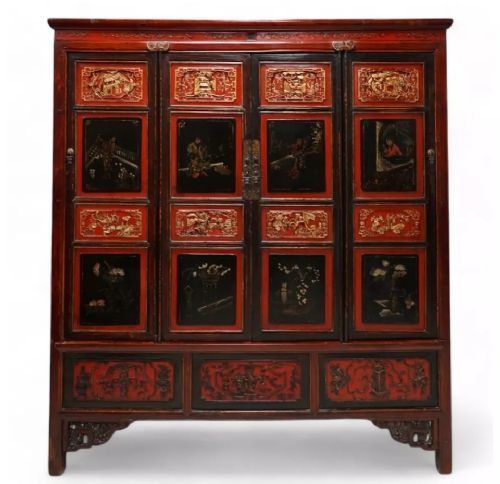
Carved red lacquer items span functional furniture and decorative display pieces, encompassing marriage cabinets, armchairs, screens, and tables alongside smaller vases and boxes.
The objects met most frequently on this page originate from nineteenth-century Chinese and Japanese workshops, often executed in elm or supporting carved wooden substrates.
Buyers encounter distinct regional interpretations, ranging from traditional Chinese Qing Dynasty wedding furniture to Japanese Meiji plaques and screens.
Materials and Technique
The creation of carved red lacquer relies on building numerous successive layers of sap onto a core material such as wood or elm before carving intricate designs into the hardened surface.
Makers occasionally combined the build-up of lacquer with complementary media, incorporating elements of gilt wood, gold leaf, and painted detailing to accentuate depth and relief.
Substrates provide structural integrity beneath the lacquer layers, with sturdy timbers like Chinese elm supporting heavy armchairs, cabinets, and folding screens.
Carved Red Lacquer Retail Price Guide 2026
Typical asking prices for carved red lacquer among the pieces listed under this phrase on Sellingantiques today, from the lower quarter to the upper quarter. They describe what is for sale here now, not the wider market.
Listings feature items incorporating lacquer, wood, elm, brass, gold leaf, glass, and gilt across the nineteenth century and early twentieth century.
Judging the Work
Depth of carving and clarity of detail distinguish finer pieces, where artisans cut through multiple strata of lacquer to reveal crisp edges and balanced compositional layers.
The integrity of the underlying wooden structure and the stability of the lacquer surface govern the overall merit of an item.
Patina and the preservation of original pigment or gilt highlights indicate how well an object has retained its intended visual impact over centuries.
The Carved Red Lacquer Glossary
- Lacquer
- A durable resin derived from specific trees, applied in multiple coats to form a hard, smooth protective finish. It takes considerable time to dry and cure between each layer.
- Cinnabar
- A bright scarlet mineral form of mercuric sulphide traditionally used to pigment the upper layers of red lacquer. It provides the characteristic vivid colour found in classical carved pieces.
- Elm
- A tough, fibrous timber utilised extensively in Chinese cabinet-making and chair production. Its grain accommodates heavy lacquer applications without warping easily.
- Chinoiserie
- A European artistic style reflecting Chinese aesthetic motifs and techniques, popularised during various historic periods. It often appears on cabinets, mirrors, and stands.
- Pediment
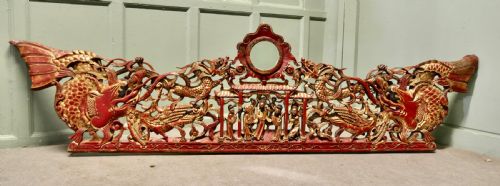
- An architectural decorative element mounted above furniture or architectural openings. In these listings, carved temple pediments display elaborate pictorial relief work.
Carved Red Lacquer: Frequently Asked Questions
Where should I place a red lacquer screen?
Folding screens suit living spaces or bedrooms where they function as room dividers or decorative wall backdrops. Their height and colour draw the eye, making them effective focal points against neutral walls.
Keep them away from direct sunlight and excessive humidity to protect the integrity of the lacquer layers and prevent timber movement.
How do I clean carved lacquer furniture?
Dust surfaces gently with a soft, dry microfibre cloth to remove particles without abrasive contact. Avoid chemical polishes, modern detergents, or excessive water.
Maintain stable indoor humidity levels to ensure the wood beneath the lacquer does not expand or contract.
Are these items from the Qing Dynasty?
Several pieces originate from the Qing Dynasty period, whilst others date through the nineteenth and early twentieth centuries. Makers continued traditional carving methods across generations.
Examine the construction methods, timber choice, and carving style alongside the listed dates to understand each piece's era.