





Carved Pine Chest
These carved pine chest examples offer honest domestic storage, uniting utilitarian timber construction with expressive carved or painted decoration.
Carved Pine Chest
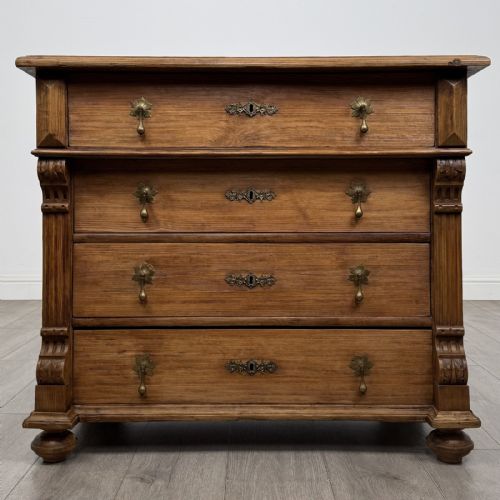
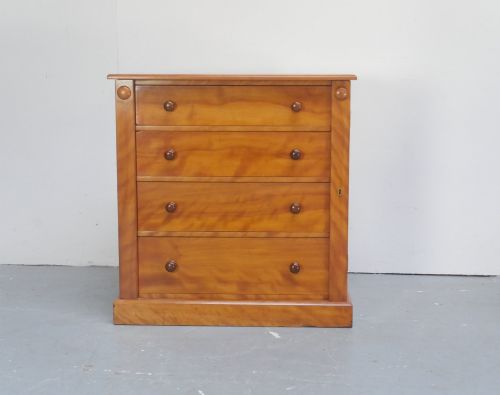
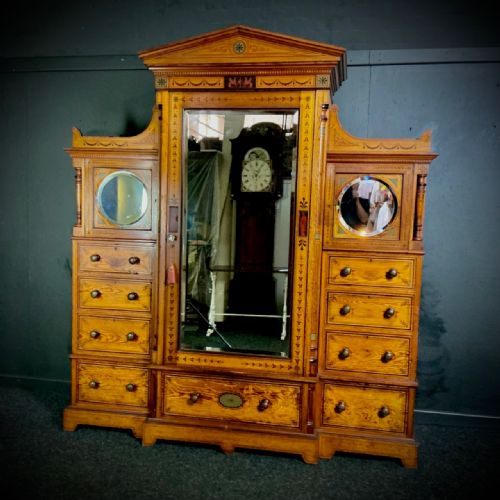
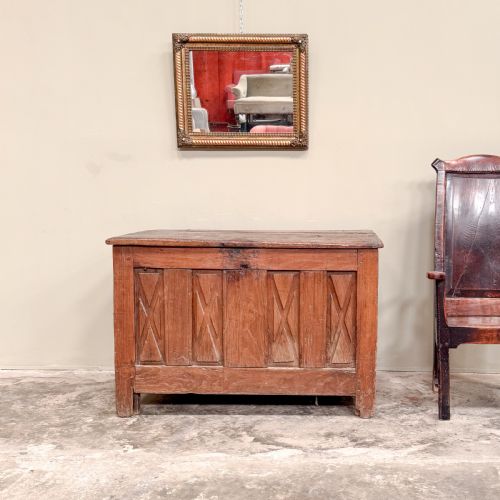
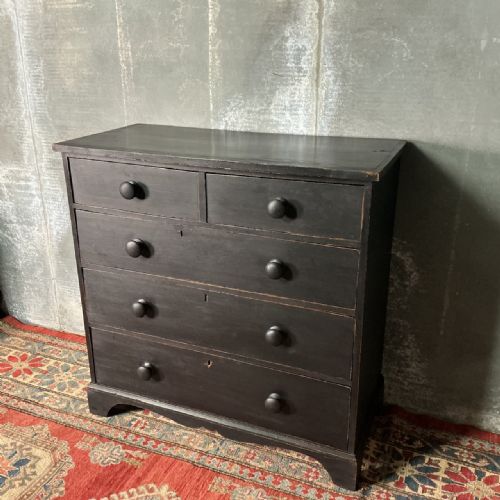
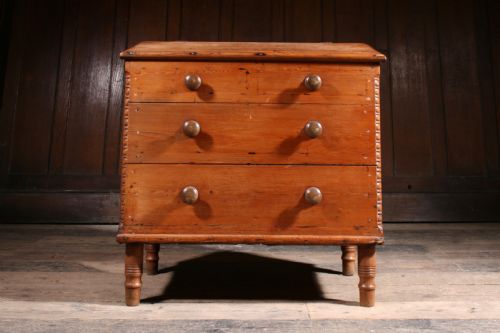
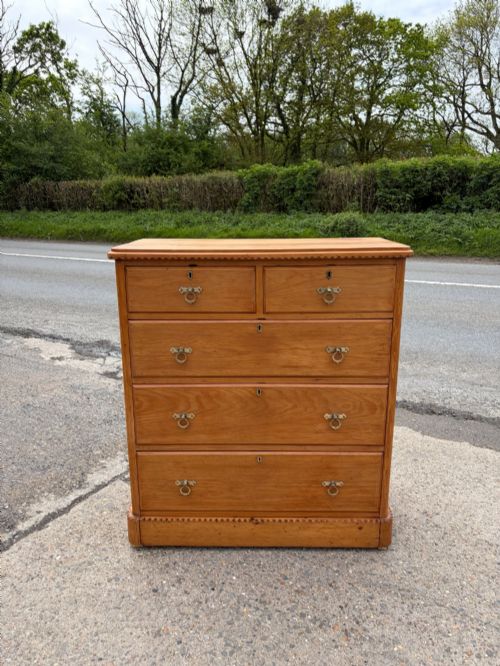
A carved pine chest takes several distinct domestic forms, ranging from capacious Georgian and Victorian mule chests and blanket boxes to fitted drawer configurations. You are most likely to encounter nineteenth century chests of drawers and provincial coffers on this page, reflecting the dominant survival of Victorian and earlier regional pieces.
The regional variety spans English country workshops alongside French, Spanish, Dutch, and Scandinavian provincial origins. These pieces range from grand armoires and linen presses to miniature apprentice cabinets and small decorative tramp art boxes.
Materials and construction
Makers relied principally upon native and imported pine, alongside resilient pitch pine for heavier structural demands. Secondary timbers such as oak occasionally reinforce internal elements, while iron, brass, and glass provide functional hardware and decorative pulls.
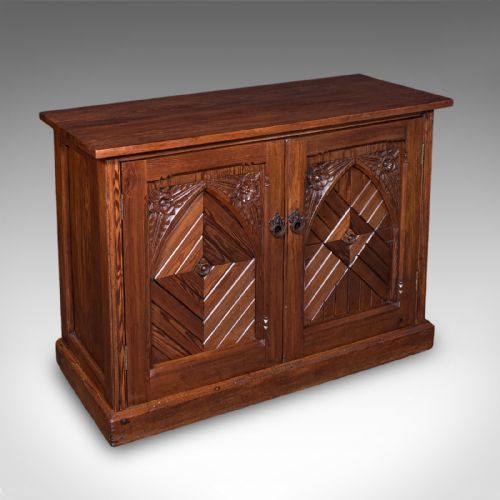
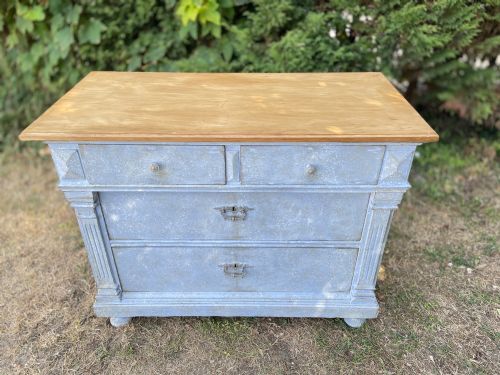
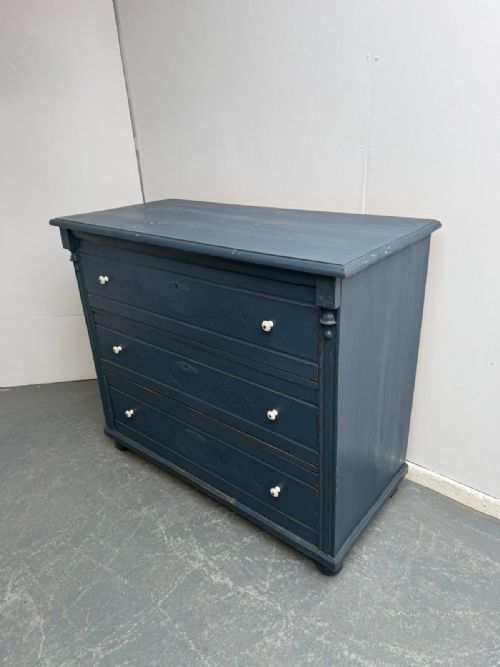
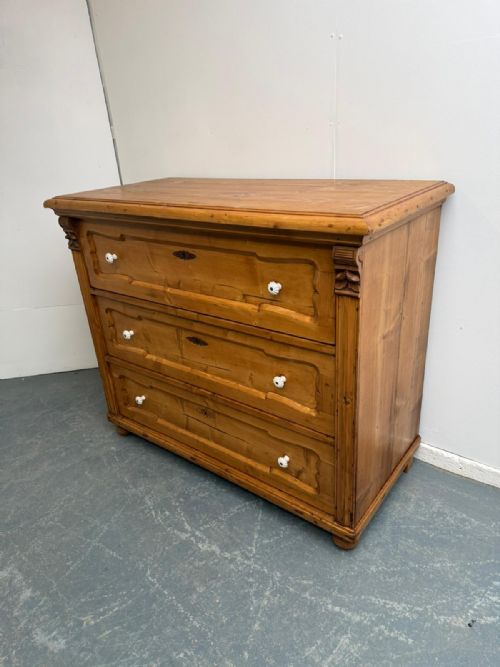
Surfaces display a clear division between wax-finished natural timber and applied paint schemes, including original blue and teal pigments. Joinery techniques unite panelled construction with applied mouldings, diamond-point carving, and Moorish style surface detailing.
Carved Pine Chest Retail Price Guide 2026
Typical asking prices for carved pine chest among the pieces listed under this phrase on Sellingantiques today, from the lower quarter to the upper quarter. They describe what is for sale here now, not the wider market.
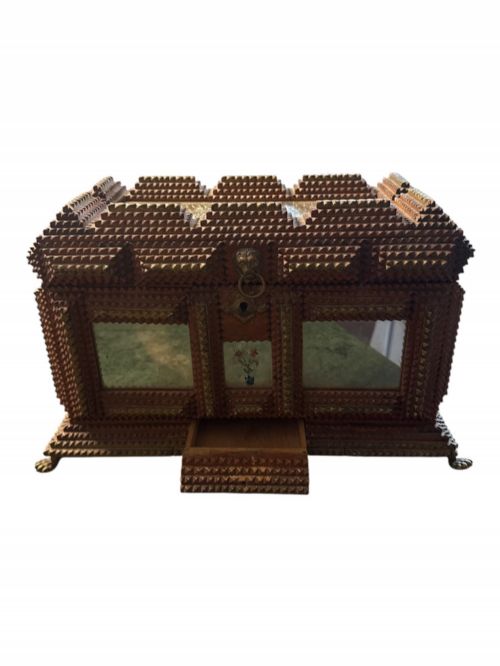
Sweetheart tramp art boxes were whittled by soldiers and travellers during quiet hours, turning packing crate scraps into tokens of affection.
Judging the work
Quality rests upon the crispness of the carved detail and the integrity of the timber framing. Pieces that retain their original painted surfaces or historic wax patination stand apart from later alterations.
Proportion and scale dictate the visual success of each piece, distinguishing modest utilitarian items from ambitious revival and baroque commodes.
The Carved Pine Chest Glossary
- Mule chest
- A storage chest fitted with one or more drawers beneath the main internal compartment. This form bridges the traditional blanket box and the chest of drawers.
- Tramp art
- A style of decorative woodwork created by self-taught makers using notched and chip-carved discarded cigar boxes and packing crates. Pieces executed in this manner often display dense, layered geometric patterns.
- Commode
- A low chest of drawers, frequently referencing continental European cabinet-making traditions. Examples on this page include French provincial and baroque revival interpretations.
- Pitch pine
- A dense, resinous softwood sourced primarily from North America, valued for its durability and prominent grain pattern. Victorian cabinet-makers utilised it for robust furniture subject to heavy use.
Carved Pine Chest: Frequently Asked Questions
How do I date a pine chest?
Dating relies upon examining construction methods, timber preparation marks, and hardware types used within the carcass and drawer linings. Hand-cut joints and original paint layers provide secure chronological indicators.
Stylistic cues such as Georgian panelling or Victorian proportions further help place a piece within its proper nineteenth or eighteenth century context.
Were these chests painted originally?
Many regional and continental European pieces received decorative paint finishes when first made, ranging from simple blue and teal coats to elaborate baroque revival schemes. Paint protected the softwood and added colour to simple domestic interiors.
Surviving historic paint layers remain highly desirable to collectors who value untouched surface patination over stripped timber.
Where were pine chests used?
These pieces served practical storage needs across domestic spaces, from farmhouse bedrooms and hallways to grander reception rooms. Linen, blankets, and personal garments were safely housed within their deep interiors.
Smaller formats like miniature chests and decorative boxes functioned on tabletops or served as apprentice pieces to demonstrate joinery skills.
How should I care for waxed pine?
Maintain waxed pine surfaces by applying natural beeswax sparingly and buffing with a soft cloth to preserve the sheen. Avoid placing timber furniture near direct heat sources or strong sunlight to prevent warping and drying.
Gentle dusting preserves the accumulated patination built up across centuries of domestic use.