

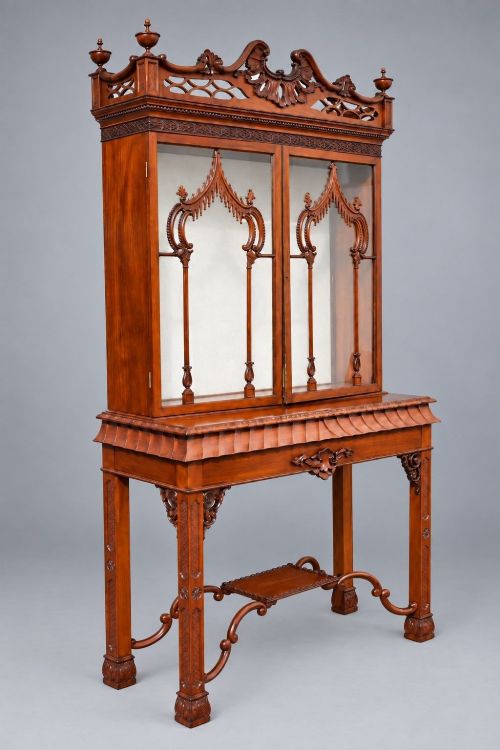
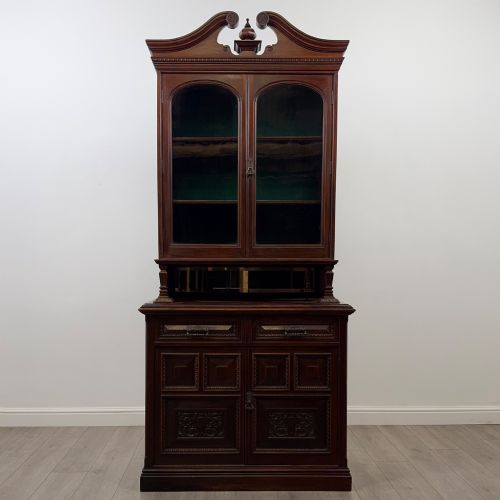
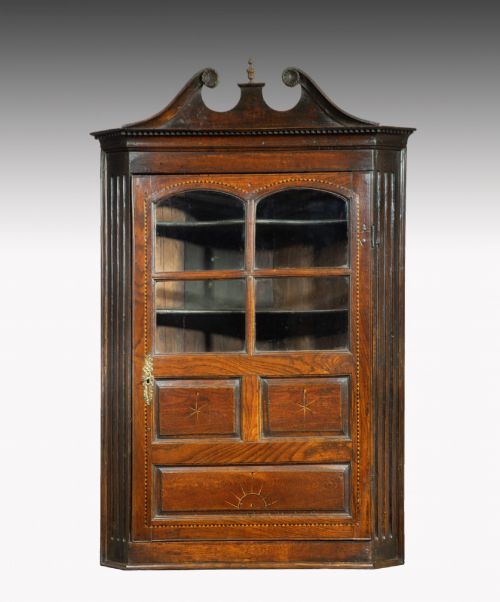


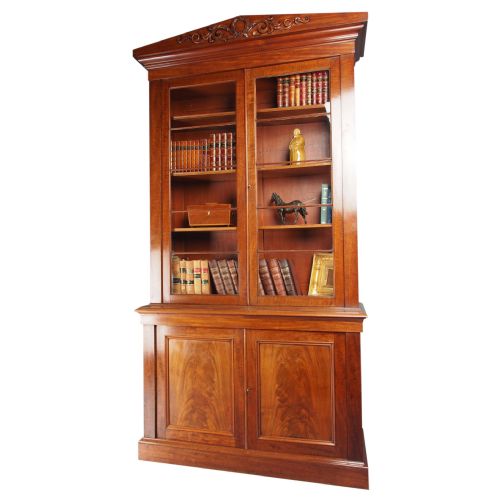


Carved Pediment Cupboard
A carved pediment cupboard is a notable storage piece defined by its architectural crown, offering classic display and utility for the traditional interior.
Carved Pediment Cupboard
A carved pediment cupboard stands as a distinctive storage solution encountered in forms such as display cabinets, bookcases, wall cabinets, corner cupboards, and armoires. These pieces typically combine enclosed storage or shelving with a prominent architectural pediment top, serving both functional and decorative purposes in the room.
The selections available here span several key eras, prominently featuring Georgian and Victorian examples alongside 18th century, 19th century, and Edwardian pieces. Buyers will encounter various timber constructions and revivalist aesthetics that reflect the shifting tastes of British and continental cabinet makers.
Common formats range from tall bookcase cabinets and hanging corner cupboards to specialised display units featuring glass panels and brass hardware. Each iteration demonstrates how historical design motifs were adapted for domestic storage over successive centuries.
How they were made
Cabinet makers utilised dense hardwoods such as mahogany, oak, burr walnut, and bleached oak as the primary structural materials for these cupboards. Timber selection dictated both the load-bearing capacity and the visual grain pattern of the finished architectural facade.
Decorative embellishments often involved wood inlay, marquetry, and intricate pediment carving executed by hand. Glazed doors incorporate glass panels, while internal shelving and exterior mounting points frequently integrate brass components to ensure durability.
Carved Pediment Cupboard Retail Price Guide 2026
Typical asking prices for carved pediment cupboard among the pieces listed under this phrase on Sellingantiques today, from the lower quarter to the upper quarter. They describe what is for sale here now, not the wider market.
The listings span the 18th century, Georgian, Victorian, Edwardian, and 1930s periods, executed in mahogany, oak, walnut, and fruitwood.
What varies in quality
The standard of a carved pediment cupboard is largely determined by the depth and precision of the woodwork and the selection of figured timber veneers. Finer examples display crisp detailing in the carved pediments and harmonious grain matching across the doors and panels.
Construction methods and the integrity of the original hardware also differentiate standard production from superior pieces. Well-executed revival styles maintain proportions and joinery techniques that respect the historical precedents they imitate.
The Carved Pediment Cupboard Glossary
- Pediment
- The decorative architectural crowning feature situated above the main body of the cupboard. It often takes a triangular, arched, or broken form to draw the eye upward.
- Marquetry
- The art of applying decorative pieces of veneer to a structure to form intricate pictorial or geometric patterns. This technique frequently employs fruitwood and walnut.
- Bijouterie
- A specialised glass-fronted display cabinet originally intended for the presentation of small valuable items and curiosities. These pieces often sit upon slender legs or table bases.
- Chippendale
- A revival style drawing on the 18th-century designs associated with Thomas Chippendale, characterised by elaborate fretwork and classical proportions. It saw notable popularity during the Victorian era.
- Corner Cupboard
- A space-saving storage unit constructed with a triangular footprint designed to fit snugly into the meeting point of two walls. They appear in both standing and hanging formats.
Carved Pediment Cupboard: Frequently Asked Questions
Where should I place a corner cupboard?
These units fit directly into room corners to utilise otherwise overlooked dead space.
They work well in dining rooms or hallways to provide accessible display or storage without crowding the floor area.
How do I care for mahogany surfaces?
Dust the timber regularly with a soft, dry cloth to prevent the accumulation of grit.
Avoid placing the furniture in direct sunlight or near heat sources to protect the polished finish and natural wood.
What is the difference between a display cabinet and a bookcase?
Display cabinets typically feature glass doors or glazed panels designed to showcase decorative objects and china.
Bookcases are primarily built with open shelving to hold collections of bound volumes rather than exhibition items.
How do I identify a Victorian piece?
Victorian cabinets often display heavier proportions and revivalist influences such as Chinese Chippendale or architectural motifs.
Examination of the interior construction and timber backing can also help confirm the nineteenth-century production period.