

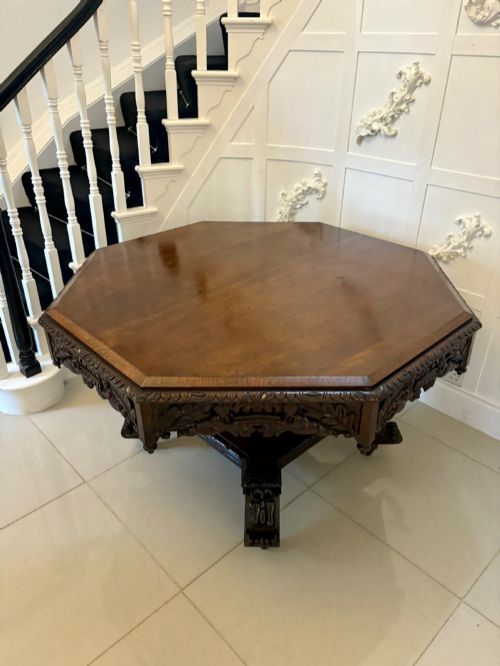
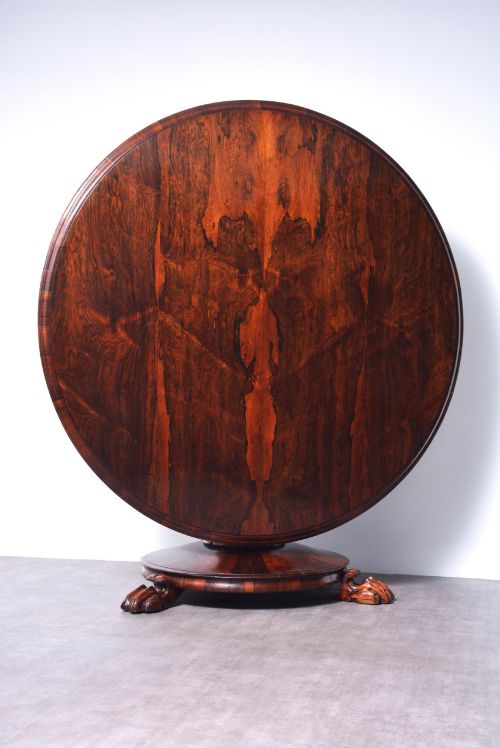
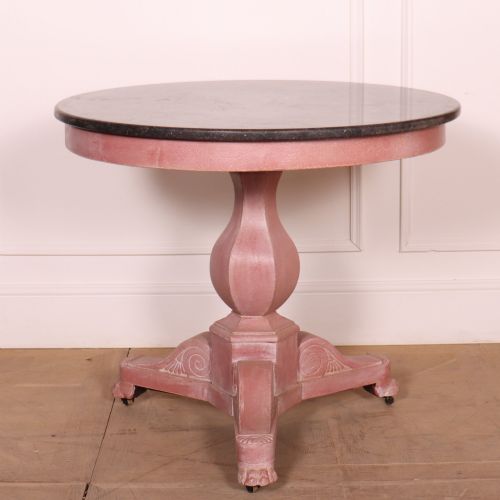
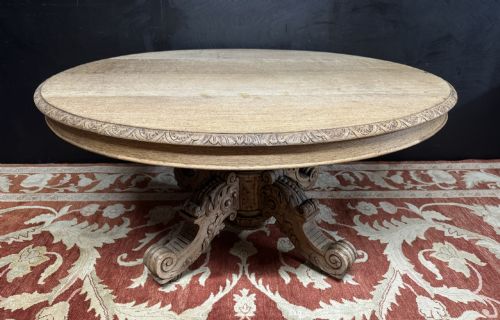
Carved Pedestal Center Table
A carved pedestal centre table commands the middle of a room, offering a freestanding surface shaped by Victorian, Regency, and William IV hands.
Carved Pedestal Center Table
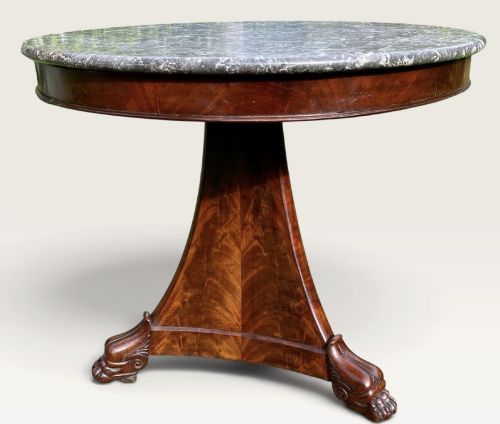
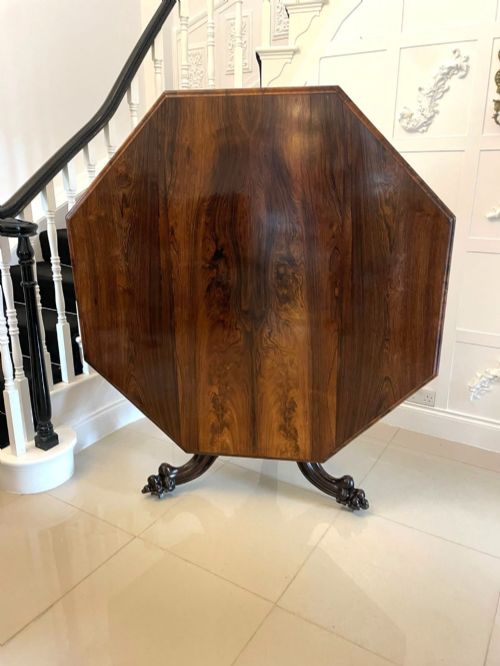
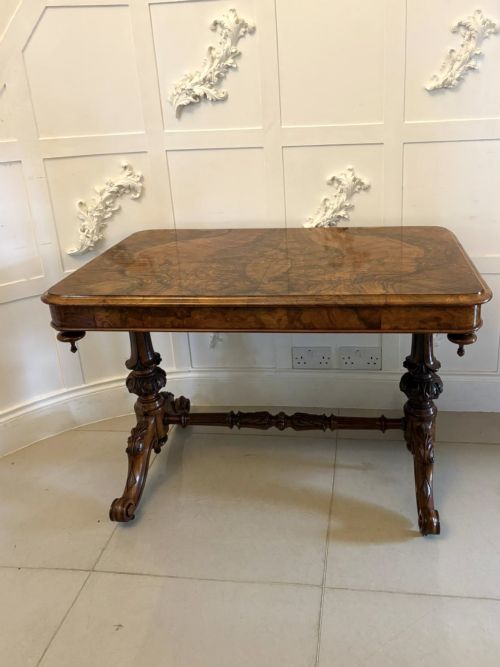
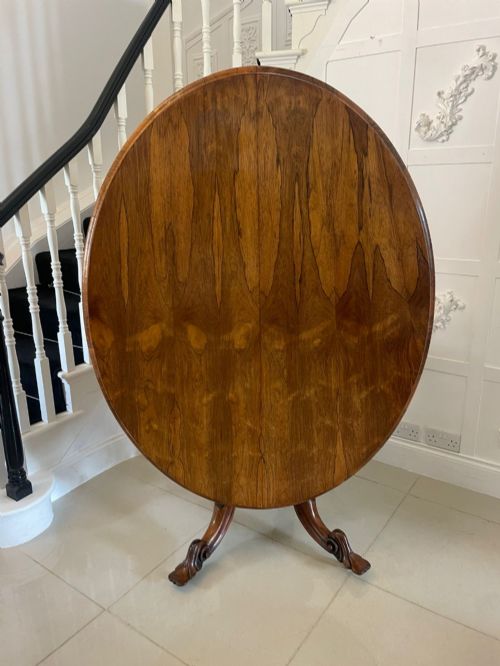
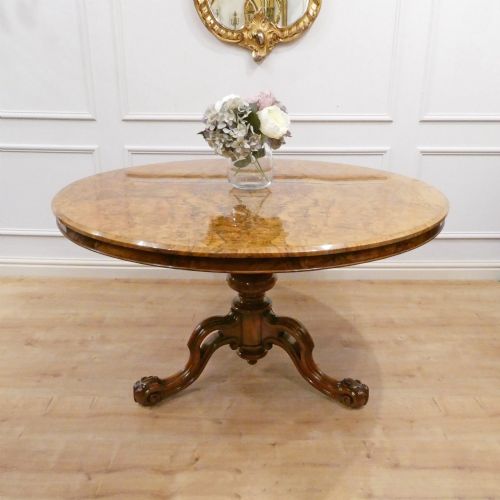
A carved pedestal centre table is a freestanding piece designed to be viewed from all sides, standing independently in the middle of a room rather than pushed against a wall. The examples encountered here span the 18th century, the Regency and William IV periods, the Victorian era, and into the early 20th century.
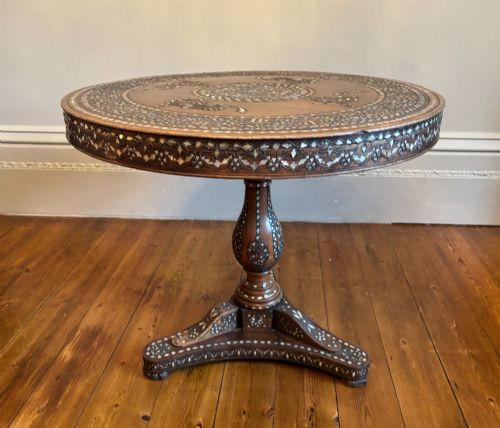
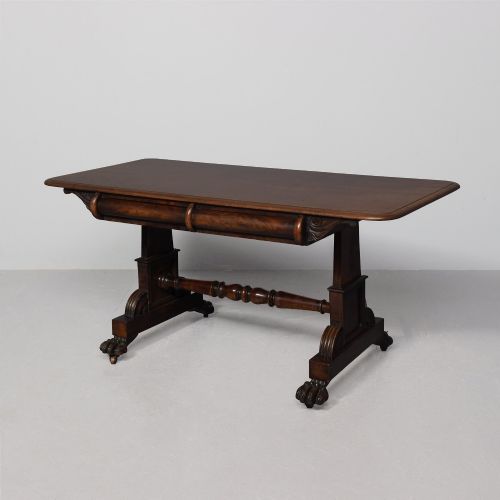
Forms recorded in the evidence range from circular breakfast tables and tilt-top designs to drum tables, library tables, and occasional pieces. Makers utilised diverse stylistic influences including Anglo-Indian craftsmanship, French gueridon forms, and Jacobean revivals.
How They Were Made
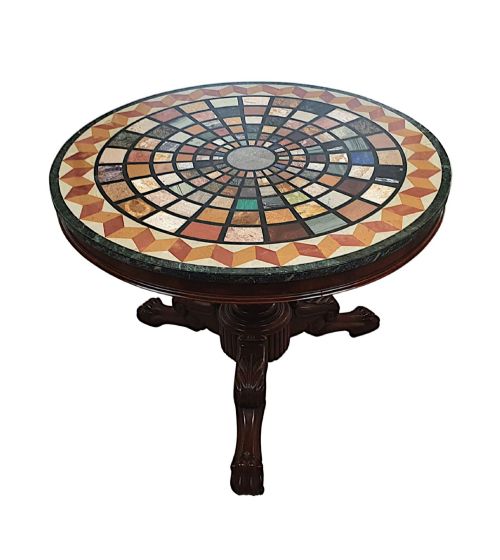
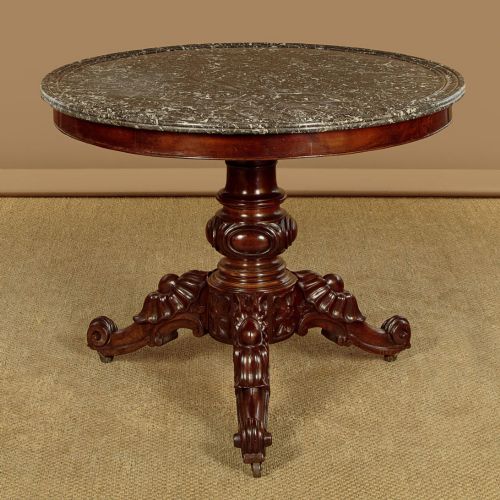
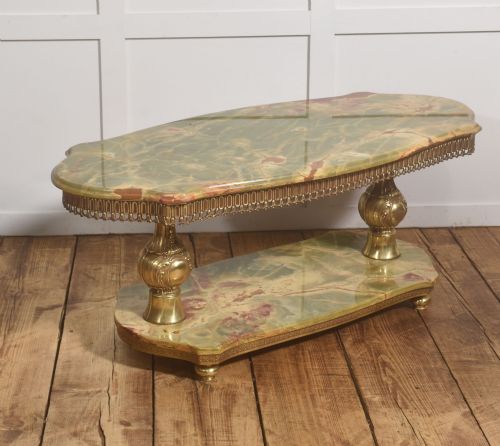
Cabinet makers constructed these tables using dense timbers such as mahogany, rosewood, burr walnut, oak, and satin birch, often applying flame veneers or intricate marquetry inlay. Many surfaces incorporated decorative accents including brass mounts, mother-of-pearl inlay, pietra dura, and inset marble or green onyx tops.
Pedestal supports frequently featured heavy central pillars resting on platform bases with carved scroll feet or tripod legs. Structural execution relied on solid joinery to sustain the weight of thick tabletops, particularly on tilt-top and large library variants.
Carved Pedestal Center Table Retail Price Guide 2026
Typical asking prices for carved pedestal center table among the pieces listed under this phrase on Sellingantiques today, from the lower quarter to the upper quarter. They describe what is for sale here now, not the wider market.
Cabinet makers sometimes hid secret compartments inside drum tables for private correspondence.
What Varies in Quality
Quality rests upon the selection of timber and the precision of the grain matching, particularly on burr walnut and flame mahogany surfaces where figured veneers define the visual depth. Lesser examples rely on plain timber boards, whereas superior items display continuous, symmetrical veneer patterns across the top.
The crispness of the carving on the central pedestal and base separates standard workshop production from accomplished cabinet work. Hand-carved scrolling, gilding, and specialised inlays such as pietra dura or mother-of-pearl indicate a higher grade of manufacture.
Gillows·Richard Bridgens·T & G Seddon·Peters of Genoa·Ralph Turnbull
The Carved Pedestal Center Table Glossary
- Tilt-top table
- A table with a mechanism that allows the surface to pivot vertically into a locked position when not in use. This design allowed furniture to be stored against walls in smaller rooms.
- Gueridon
- A small circular French table supported by a central column or figures. These tables frequently feature marble slabs inset into wooden frames.
- Drum table
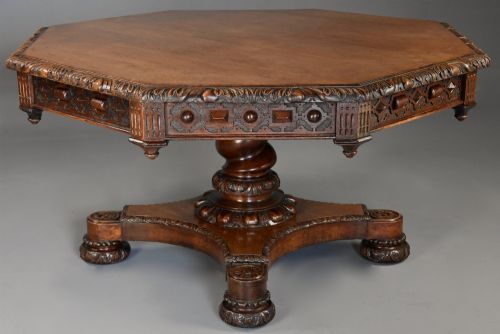
- A circular library table with a deep frieze containing drawers, resembling the shape of a drum. They typically rest on a single turned pillar with tripod legs.
- Pietra dura
- An artistic technique using cut and fitted polished coloured stones to create intricate inlaid designs. It appears on tabletops to form floral or geometric mosaics.
- Marquetry inlay
- The art of applying decorative pieces of veneer to a structural structure to form pictorial or geometric patterns. Makers utilised contrasting woods to achieve tonal variation.
Carved Pedestal Center Table: Frequently Asked Questions
Where should a centre table go?
These tables are designed to stand freely in the middle of a room rather than against a perimeter wall. Their finished appearance on all sides allows them to function as central focal points.
In larger spaces, they receive foot traffic and serve as display surfaces for lighting, books, or decorative objects. Placing one in an entrance hall or a principal drawing room respects its original purpose as a freestanding piece.
What is a breakfast table?
A breakfast table is a nineteenth-century dining table, typically circular, supported by a central pillar and a heavy carved base. Many examples feature tilt-top mechanisms.
Despite the name, these pieces served multiple functions in period homes, operating as work tables or card tables during the day. Their pedestal construction provided comfortable legroom around the entire perimeter.
How do I identify a Regency table?
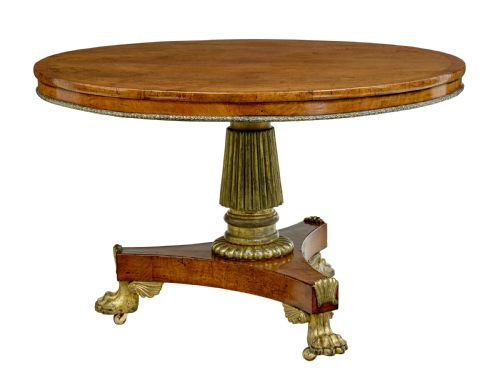
Regency tables date from the early nineteenth century and often display classical architectural influences, including reeded columns and brass inlay. Timbers like dark mahogany predominate in this period.
Proportions tend to be balanced and restrained, drawing on Greek and Roman design motifs. Pedestal bases frequently feature carved paw feet or sabre legs with brass casters.
How do I care for antique wood?
Maintaining antique timber requires stable indoor humidity levels and protection from direct sunlight and heat sources. Sudden environmental changes cause wood to warp and veneers to lift.
Applying occasional specialist wax feeds the finish without building up residue. Dusting with a soft, dry cloth preserves the patina developed over centuries.