
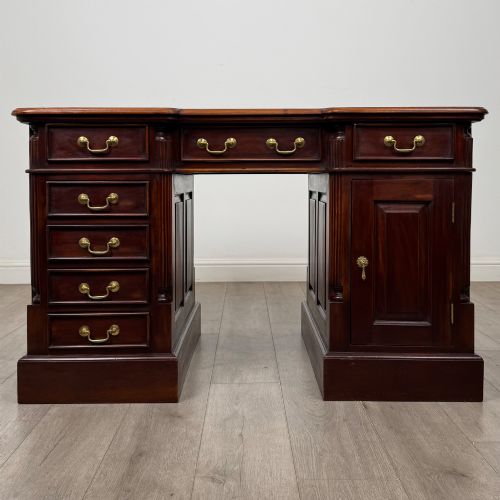
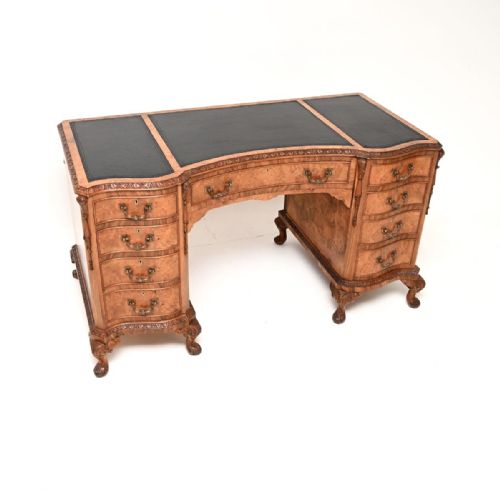
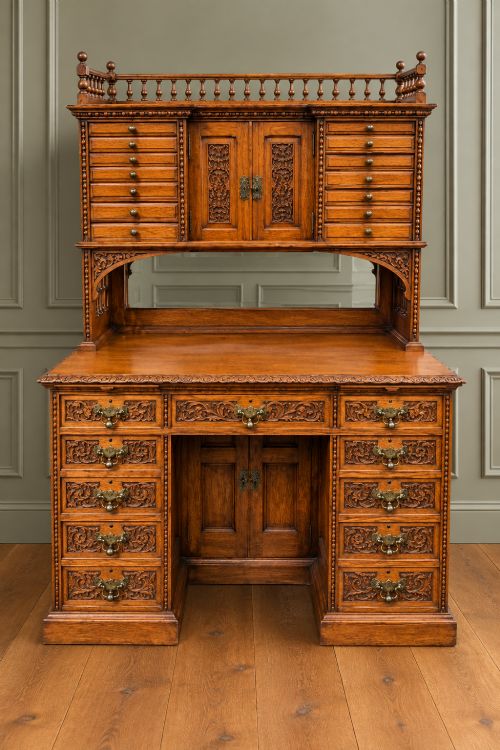
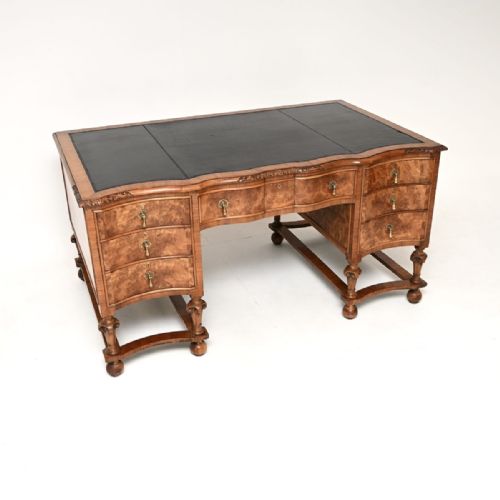
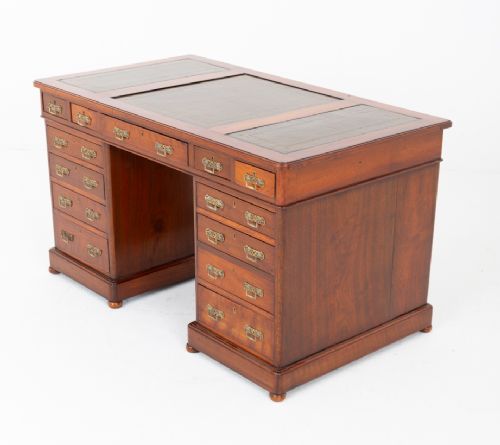
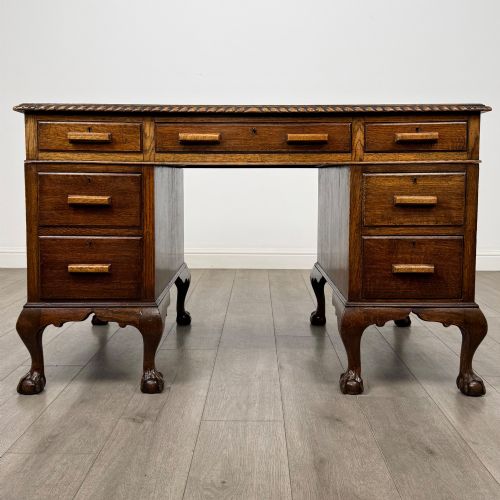
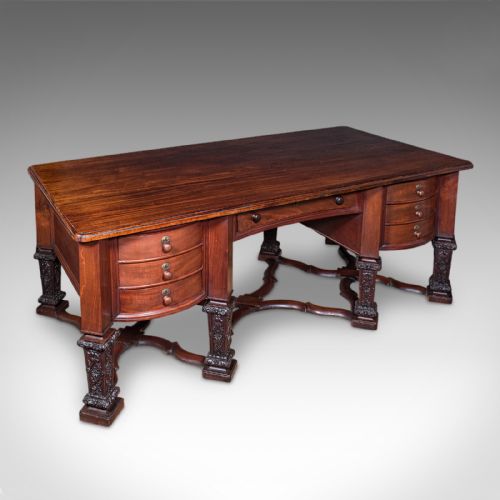
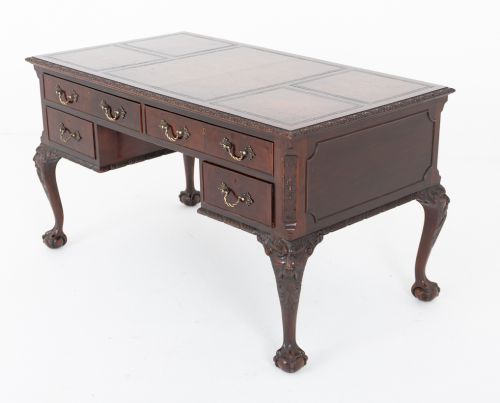
Carved Partner Writing Desk
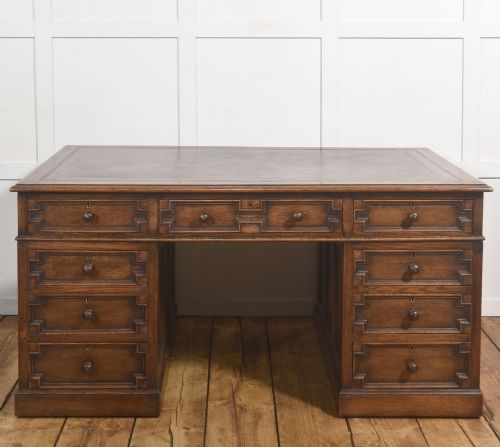
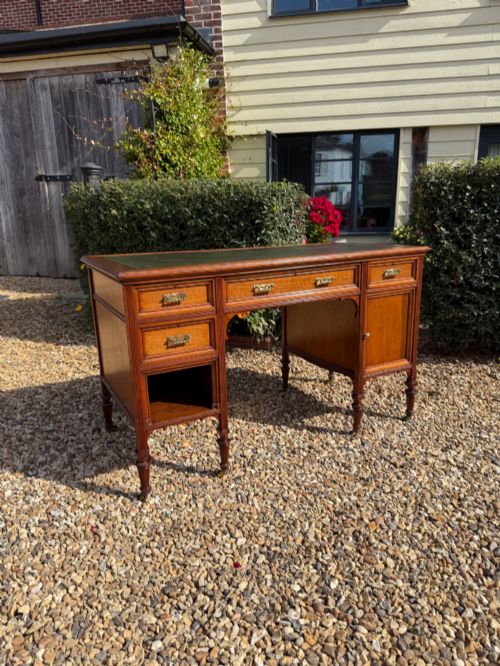
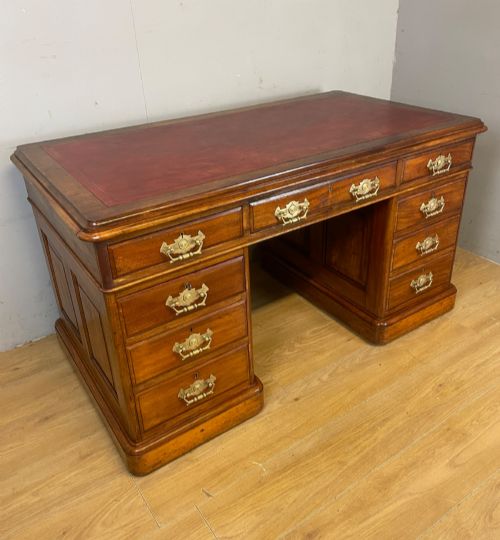
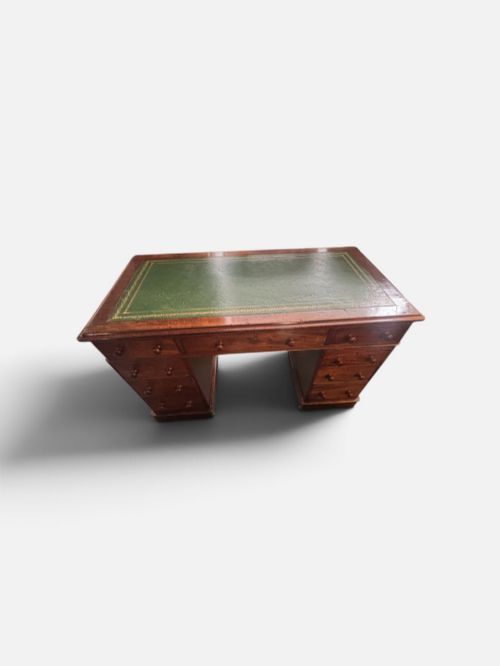
A carved partner writing desk provides double-sided workspace for dual use, uniting substantial storage with detailed timber ornamentation.
Carved Partner Writing Desk
A carved partner writing desk is designed for two people to work opposite one another, featuring drawers and cupboards accessible from both sides. These large tables and pedestal forms emerge frequently from the nineteenth century, including Victorian, Edwardian and George IV periods.
The prevailing style relies on solid timber construction ornamented with carving, often accompanied by inset leather writing surfaces. Examples range from pedestal desks to library tables, spanning revival aesthetics such as Chippendale, Gothic and Queen Anne.
Makers and workshops construct these large pieces in mahogany, oak, walnut and padauk, frequently incorporating brass hardware. The double-sided layout separates them from standard single-sided writing desks.
Materials and construction methods
Cabinet makers utilise dense hardwoods including mahogany, oak, walnut, burr walnut and padauk to build the main structure and drawers of each desk. These timbers are selected for their grain pattern and structural strength, supporting heavy use across twin working faces.
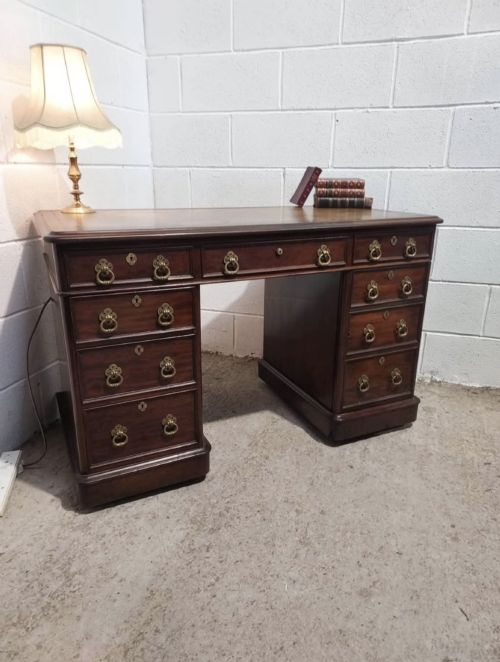
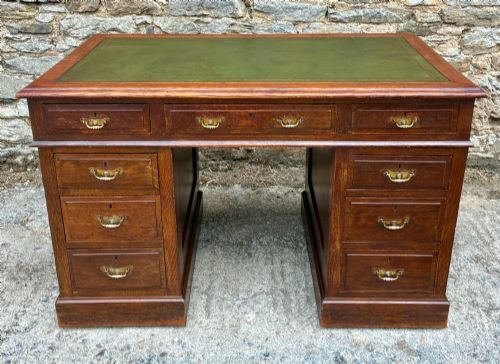
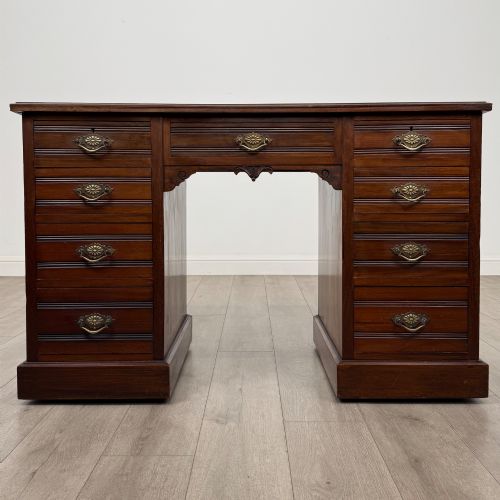
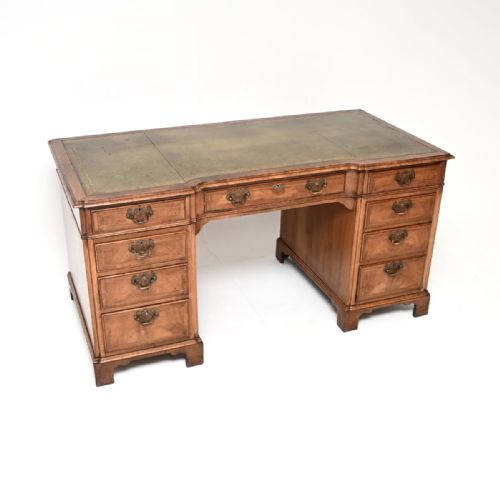
Surface details include hand-carved ornamentation applied to mouldings, drawer fronts and legs, alongside inset panels of leather for the writing surface. Brass handles, escutcheons and lion paw feet provide functional and decorative accents.
Construction techniques divide the large body into manageable sections, such as three-part pedestal assemblies, allowing transport of heavy oak and mahogany carcases.
Listings feature eighteenth and nineteenth century revivals alongside Victorian, Edwardian and Regency periods in mahogany, oak and walnut.
Distinctions in craftsmanship and materials
Quality rests upon the selection of timber veneers and solid woods, where figured oak, burr walnut and dense padauk indicate higher tier production. Plain secondary timbers and repetitive machine work distinguish standard output from finer atelier pieces.
The depth and crispness of the hand-carving separate ordinary surfaces from exceptional ones. Sharp undercut details on oak foliage or mahogany scrolls demonstrate superior bench skill.
Internal drawer construction, including dovetailed joints and matching secondary woods, reflects the underlying standard of the maker.
Maple and Co·Whytock and Reid of Edinburgh·Gillows Lancaster
The Carved Partner Writing Desk Glossary
- Partners desk
- A large double-sided desk designed for two people to sit opposite each other, featuring drawers and cupboards on both faces.
- Pedestal desk
- A heavy freestanding desk consisting of two independent drawer pedestals supporting a single top.
- Burr walnut
- A prized timber veneer showing swirling knot formations, utilised on high-status Victorian and Edwardian furniture.
- Padauk
- A dense tropical hardwood with reddish tones, seen on nineteenth-century Anglo-Indian carved pieces.
- Kneehole desk
- A desk with a central recess for the user's legs, flanked by pedestals of drawers.
Carved Partner Writing Desk: Frequently Asked Questions
What is a partner writing desk?
A partner writing desk is a large double-sided desk built so two people can work facing each other. It includes drawers and storage accessible from both sides.
These pieces typically date from the nineteenth century and use hardwoods like mahogany, oak and walnut with carved details.
Are these desks double-sided?
Yes, true partner desks feature working drawers and cupboards on both operational sides. This allows two users to sit opposite each other.
Single-sided kneehole desks look similar from the front but have dummy drawers or plain panels on the reverse.
What woods were used?
Cabinet makers utilised dense hardwoods including mahogany, oak, walnut, burr walnut, rosewood and padauk. These materials provided the necessary strength for large pedestal forms.
In-sets of leather typically form the writing surface across the top.