


Carved Panel Oak Commode
A carved panel oak commode brings heavy timber and early joinery straight into a room, offering practical storage with deep historical presence.
Carved Panel Oak Commode
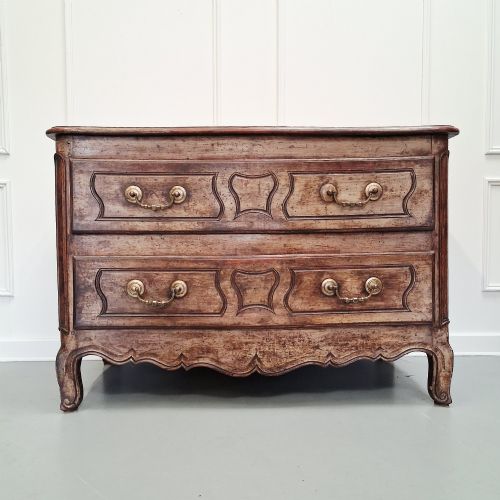
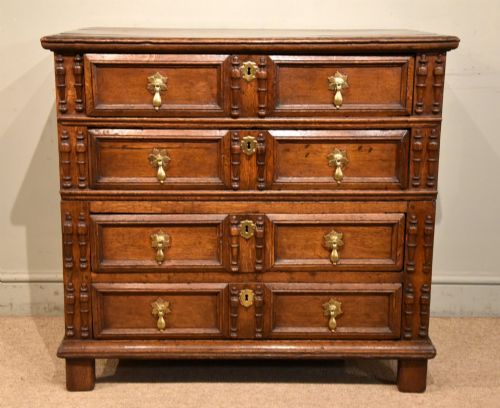
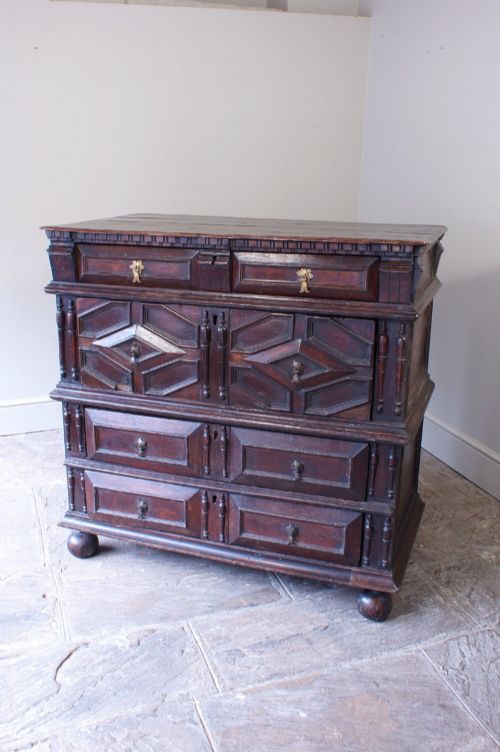
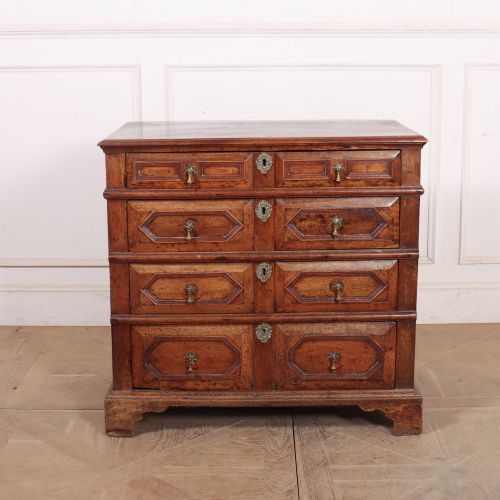
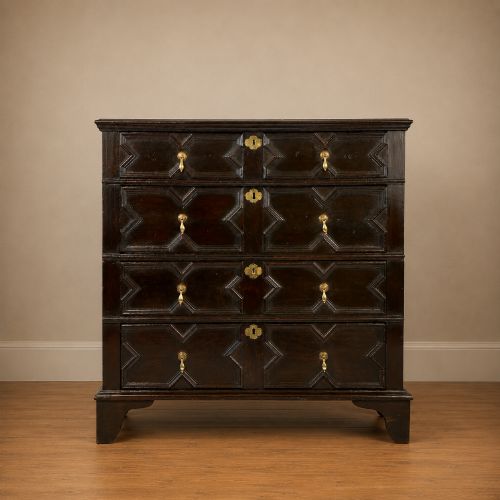
A carved panel oak commode or chest of drawers represents heavy seventeenth and eighteenth century storage furniture, drawing on Jacobean, Charles II, William and Mary, and Georgian styles. These pieces range from English workshops to French provincial makers, spanning the seventeenth century through to seventeen hundred and mid-eighteenth century examples.
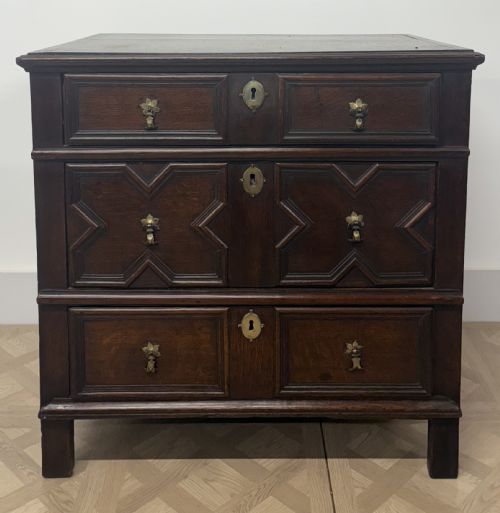
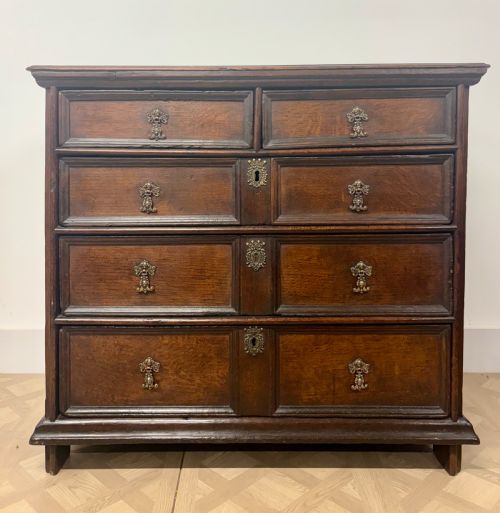
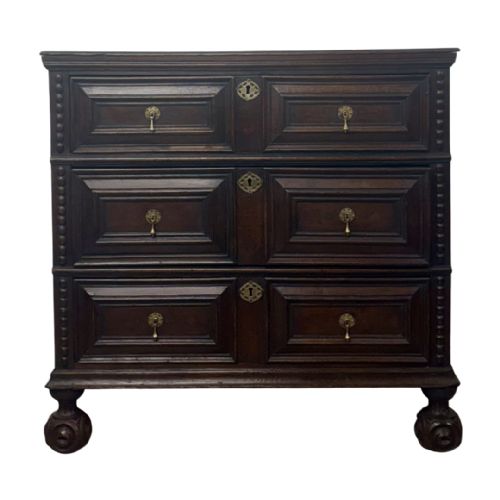
Most entries encountered on this page belong to the seventeenth century and William and Mary periods, presenting substantial wooden chests constructed in single or two-part formats. The forms rely heavily on oak timber, carrying carved panels and moulded drawer fronts that define their period character.
How they were made
Construction relies primarily on solid oak, shaped with hand-carved panels and geometric moulding that define seventeenth century joinery. The timber receives structural support from iron and brass hardware, securing heavy drawers and two-part frames.
Joiners built these chests using traditional framing techniques, integrating applied mouldings and geometric panel designs directly onto the oak carcase. The surfaces show the clear marks of hand-tooling across the timber panels and structural joints.
Styles represented include Jacobean, Charles II, William and Mary, and French provincial designs.
What varies in quality
The sophistication of the carved panels and the precision of the geometric mouldings separate simpler utility chests from more ambitious cabinetwork. Finer examples display crisper relief carving on the oak and more complex arrangement of drawer fronts.
The integrity of the timber surfaces and the originality of the brass and iron hardware dictate the overall character of an individual piece. The depth of the period patination on the oak grain further distinguishes superior survivals from later alterations.
The Carved Panel Oak Commode Glossary
- Oak
- A dense, durable hardwood utilised extensively in seventeenth and eighteenth century cabinetmaking. Its prominent grain pattern accepts deep carving and geometric moulding.
- Geometric
- A decorative style employing applied mouldings in rectilinear patterns across drawer fronts. This technique gained prominence during the Charles II and William and Mary periods.
- Two-part
- A cabinet construction method where a chest is built in upper and lower sections for ease of transport. This format is typical of larger seventeenth century oak chests.
- Jacobean
- An early seventeenth century design style characterised by heavy proportions and linear carved ornamentation. It forms a key stylistic influence for many pieces on this page.
Carved Panel Oak Commode: Frequently Asked Questions
How do I date a seventeenth century oak chest?
Dating relies on examining the construction methods, timber preparation, and decorative styles such as geometric mouldings or carved panels. Seventeenth century examples typically show hand-split oak boards and traditional joined frames.
Comparing the hardware, such as iron or brass drop handles and escutcheons, provides further chronological context. Regional variations between English and French provincial workshops also help narrow down the period of origin.
Where were these pieces used originally?
These chests functioned primarily as essential storage furniture in bedrooms, halls, and parlours of substantial seventeenth and eighteenth century homes. Their robust construction was designed to hold household textiles, garments, and valuables.
Over time, surviving examples transitioned from utilitarian storage into prominent display pieces within period and traditional interiors. Their heavy timber presence anchors modern room schemes effectively.
How do I care for antique oak furniture?
Maintaining antique oak involves keeping the timber away from direct heat sources and sudden humidity fluctuations to prevent wood splitting. Regular gentle dusting preserves the natural finish of the wood.
Applying a traditional beeswax polish occasionally helps nourish the oak grain and maintain the historical patination. Avoid modern silicone-based cleaners that can damage the antique surface over time.