



Carved Painted Settee
A carved painted settee brings continental elegance into a room through shaped timber frames and decorative pigment.
Carved Painted Settee
A carved painted settee is a long wooden seat designed for multiple occupants, defined here by surface decoration and relief work rather than plain timber. You will find these pieces spanning the eighteenth, nineteenth, and twentieth centuries, with French and Swedish origins appearing most frequently among the listings.
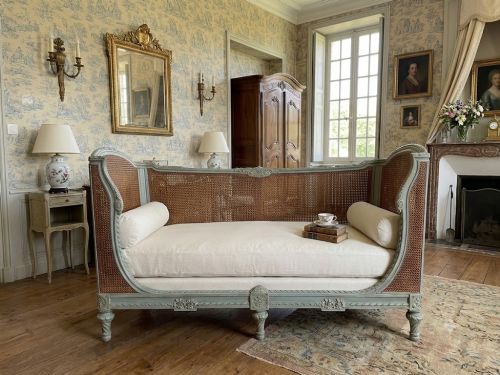
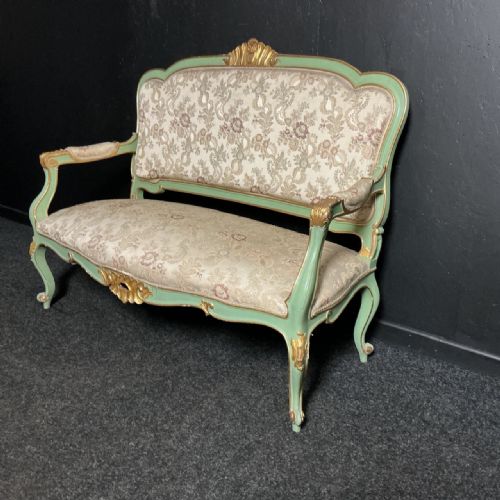
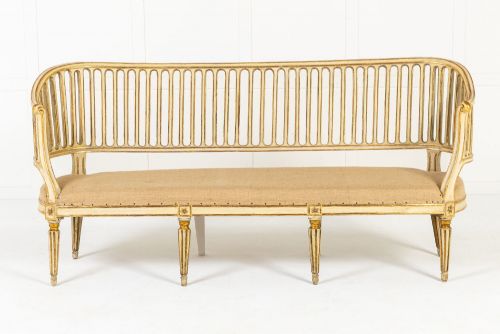
The selection ranges from robust eighteenth-century Swedish and Italian designs to lighter French Louis XVI style canapés and nineteenth-century daybeds. Forms extend from triple-back settees and two-seat sofas to benches and caned bergères, showing diverse regional interpretations of neoclassical and revival styles.
Makers and workshops across Europe produced these seats using beech and other woods, finished with layered paint, cream tones, or gilding. Many examples incorporate woven cane panels or traditional upholstery in fabric and linen to provide comfortable seating.
Materials and construction
Craftsmen shaped the structural frames from solid timbers such as beech and teak, applying hand-carved relief work to rails, arms, and legs. This woodwork serves as the physical foundation for both the decorative scheme and the upholstered or caned seating areas.
Surfaces received specialised treatments of paint, polychrome pigment, or gilt, sometimes layered over gesso to highlight the carved details. Caning was woven tightly into open frames to create resilient backs and seats, while alternative versions utilised fabric, linen, and tapestry over traditional padding.
Materials recorded across the inventory include beech, teak, cane, linen, and traditional paint finishes.
Distinctions in quality
Quality rests upon the crispness of the hand-carved detail and the architectural proportion of the frame, where fluid curves and balanced lines distinguish finer artisan work from simpler production. The handling of the painted surface, whether through restrained polychrome, nuanced ageing, or careful gilding, also marks the distinction.
The integrity of original construction methods, from the tightness of the joinery to the condition of early cane work or upholstered foundations, separates robust examples from those requiring extensive intervention. Pieces that retain their original painted finishes without heavy modern overpainting command greater interest among collectors.
John Tesch
The Carved Painted Settee Glossary
- Canapé
- A traditional French term for a decorative sofa or settee, often featuring an exposed carved wooden frame. These pieces typically reflect formal interior styles of their respective periods.
- Bergère
- An enclosed upholstered armchair or settee with solid upholstered sides resting on the arms. This form provides a distinct, enclosed seating profile compared to open-frame designs.
- Gustavian
- The Swedish neoclassical style spanning the late eighteenth and early nineteenth centuries. It is characterised by lighter colour palettes, restrained carving, and functional elegance.
- Polychrome
- Decoration employing multiple colours applied to wood or plaster surfaces. This technique appears frequently on continental European seating to add visual depth.
- Fluted
- Decorative vertical grooves carved into wooden legs or structural columns. This classical detail is a common feature on neoclassical and Louis XVI style furniture.
Carved Painted Settee: Frequently Asked Questions
How do I place a carved painted settee in a modern room?
These settees work effectively as focal points in living spaces, halls, or bedrooms where their decorative frames can be viewed directly. Pair them with neutral walls to let the painted finish and carved details stand out.
Ensure there is sufficient clearance around the piece so the silhouette and proportions remain visible. They mix well with both contemporary and traditional furnishings when balanced thoughtfully.
What is the difference between a settee and a daybed?
A settee is built primarily for seated conversation, featuring a defined backrest and arms designed to accommodate multiple people upright. Daybeds incorporate extended proportions or adjustable ends intended for reclining as well as sitting.
Within the listings, daybeds like the canapé corbeille offer a deeper, more enclosed lounge format compared to standard two-seat sofas.
How do I identify a Gustavian settee?
Gustavian pieces originate from Sweden and reflect a distinct Scandinavian interpretation of French neoclassical design. Look for restrained carved motifs, fluted legs, and lighter painted surfaces often finished in soft greys or creams.
These settees prioritize balanced proportions and functional simplicity over elaborate ornamentation.
How should I care for original painted wood surfaces?
Dust the carved frame regularly with a soft, dry cloth to prevent the accumulation of dirt within the recesses of the relief work. Avoid liquid cleaners, chemical polishes, or abrasive materials that can strip or soften historic paint.
Keep the settee away from direct sunlight and sudden temperature shifts to protect both the timber substrate and the delicate surface finish.