

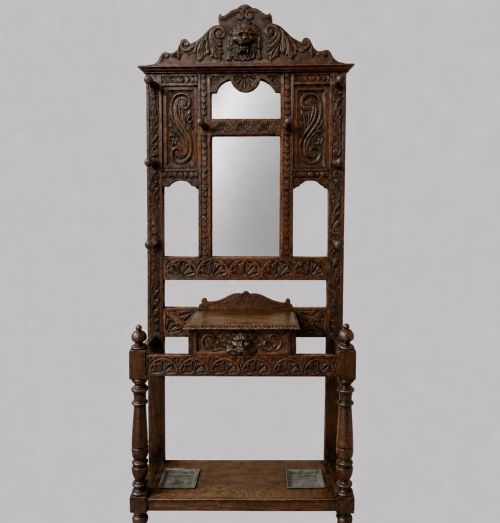


Carved Oak Tree Stand
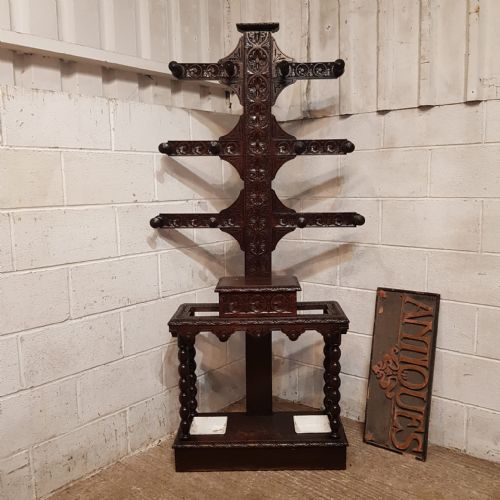
A carved oak tree stand greets visitors with organic timber and rustic utility, anchoring the entrance hall in period style.
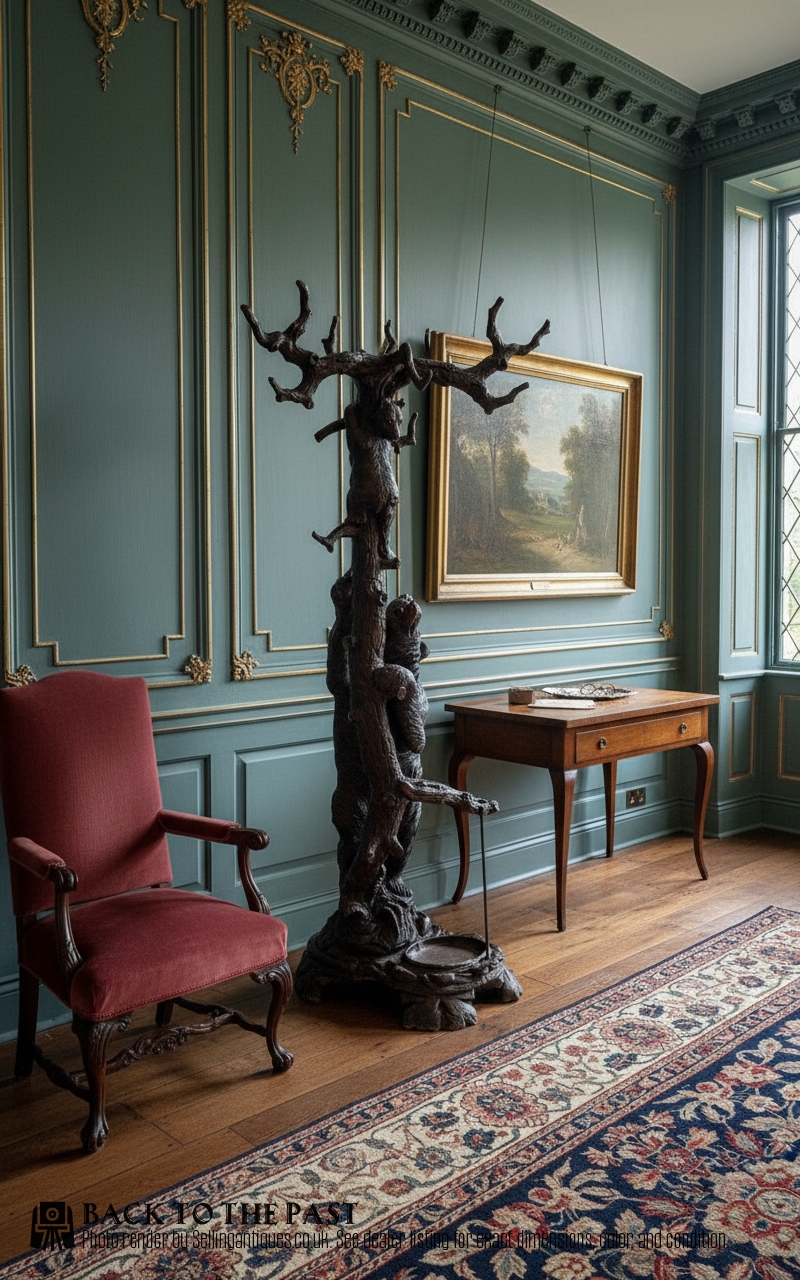
Carved Oak Tree Stand
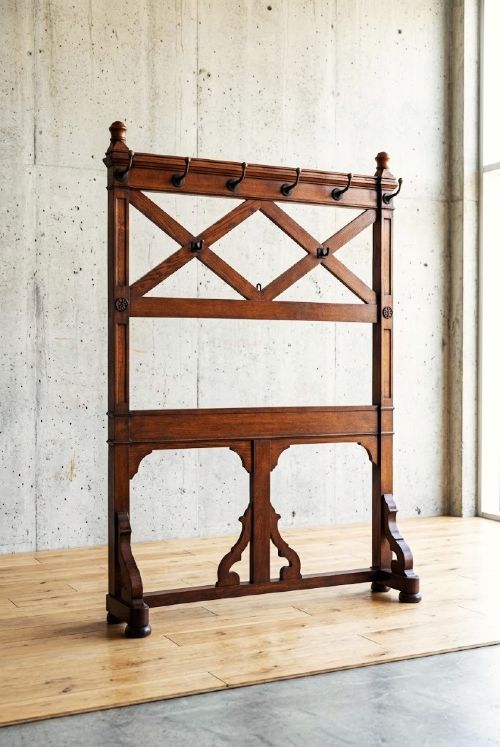
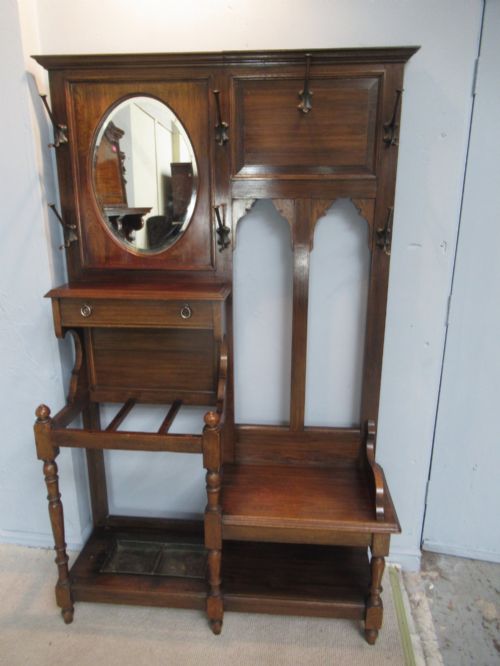
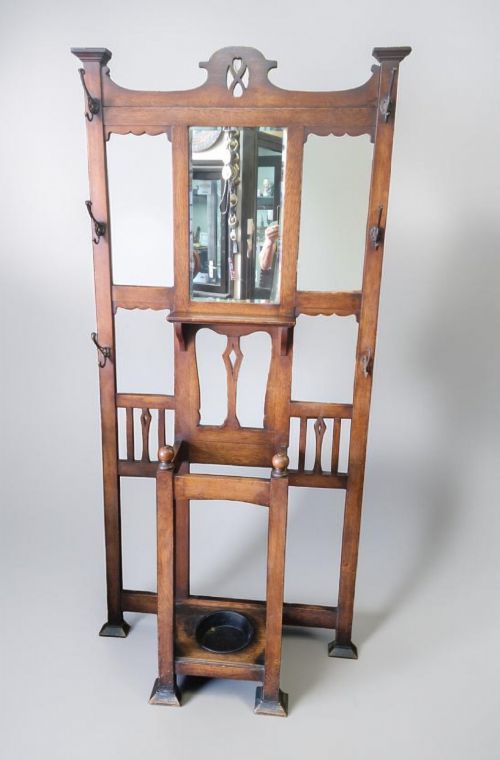
A carved oak tree stand serves as a substantial piece of hall furniture designed to hold coats, hats, and umbrellas upon entry.
These items emerge most frequently from the Victorian and Edwardian eras, spanning the nineteenth and early twentieth centuries.
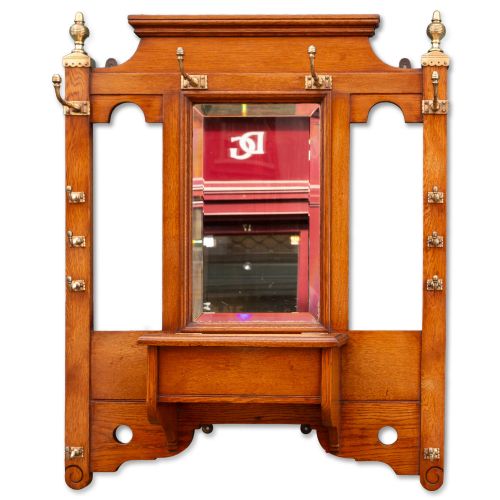
The category encompasses diverse formats including hallstands, coat stands, hall seats, and wall-mounted racks made predominantly of oak.
Judging Quality
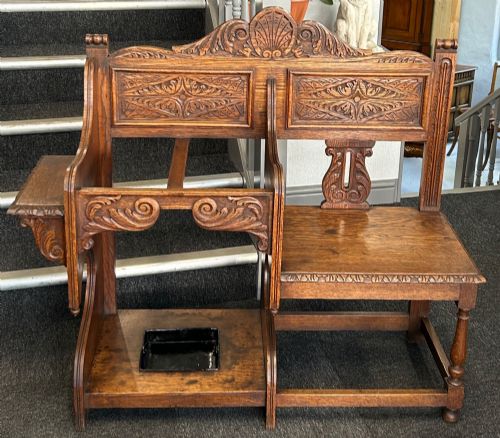
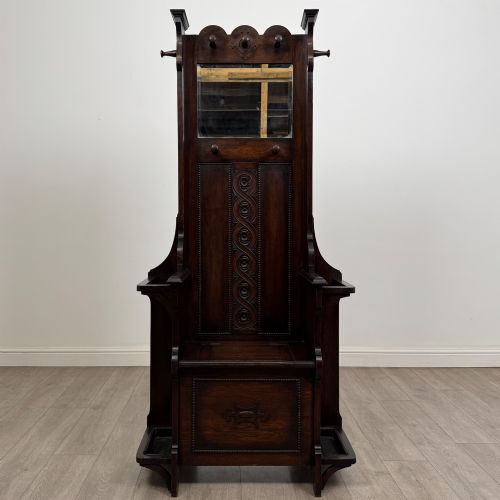
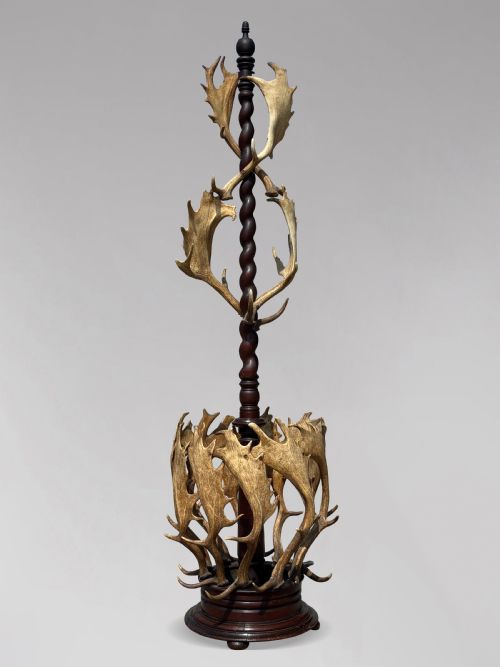
Distinction lies in the depth and ambition of the hand-carved detail, ranging from simple linear mouldings to elaborate figural expressions like the Greenman or Black Forest wildlife motifs.
Structural integrity and the retention of original hardware, such as brass coat hooks and metal umbrella trays, determine the standing of an individual piece.
Listings feature oak alongside mahogany, brass, cast iron, and mirrored glass across the Victorian and Edwardian periods.
J. Parker of Woodstock·William Whiteley
The Carved Oak Tree Stand Glossary
- Greenman
- A sculptural mask of a face surrounded by or made from leaves and branches, frequently carved into the crest of Victorian hall stands.
- Hallstand
- A tall piece of entrance furniture combining coat hooks, a mirror, and a base for umbrellas and walking sticks.
- Black Forest
- A style of deeply carved wooden furniture originating in Switzerland, known for naturalistic animal and forest motifs.
- Gothic Revival
- An architectural and decorative style drawing on medieval forms, characterised by pointed arches and heavy carved oak.
- Arts and Crafts
- A design movement promoting traditional craftsmanship and simple forms, appearing in hall furniture around nineteen-ten.
Carved Oak Tree Stand: Frequently Asked Questions
What is a carved oak tree stand?
It is a piece of entrance hall furniture designed to hold outdoor garments and umbrellas, constructed primarily from oak with naturalistic branch or tree-like carving.
These functional items date mainly from the Victorian and Edwardian periods and often include mirrors and drip trays.
How do I date a hall stand?
Dating relies on the stylistic clues within the woodwork, such as Gothic Revival arches from the mid-nineteenth century or simpler Arts and Crafts lines from nineteen-ten.
Associated materials like brass hooks and cast iron pans also help place the piece within the Victorian or Edwardian eras.
Where were these stands placed?
They stood directly in the entrance hall or vestibule of period homes to greet guests and receive outdoor wear immediately upon entry.
Their upright form made efficient use of narrow hallway spaces while offering storage for hats, coats, and walking sticks.